

Intellectual Property Release Agreement
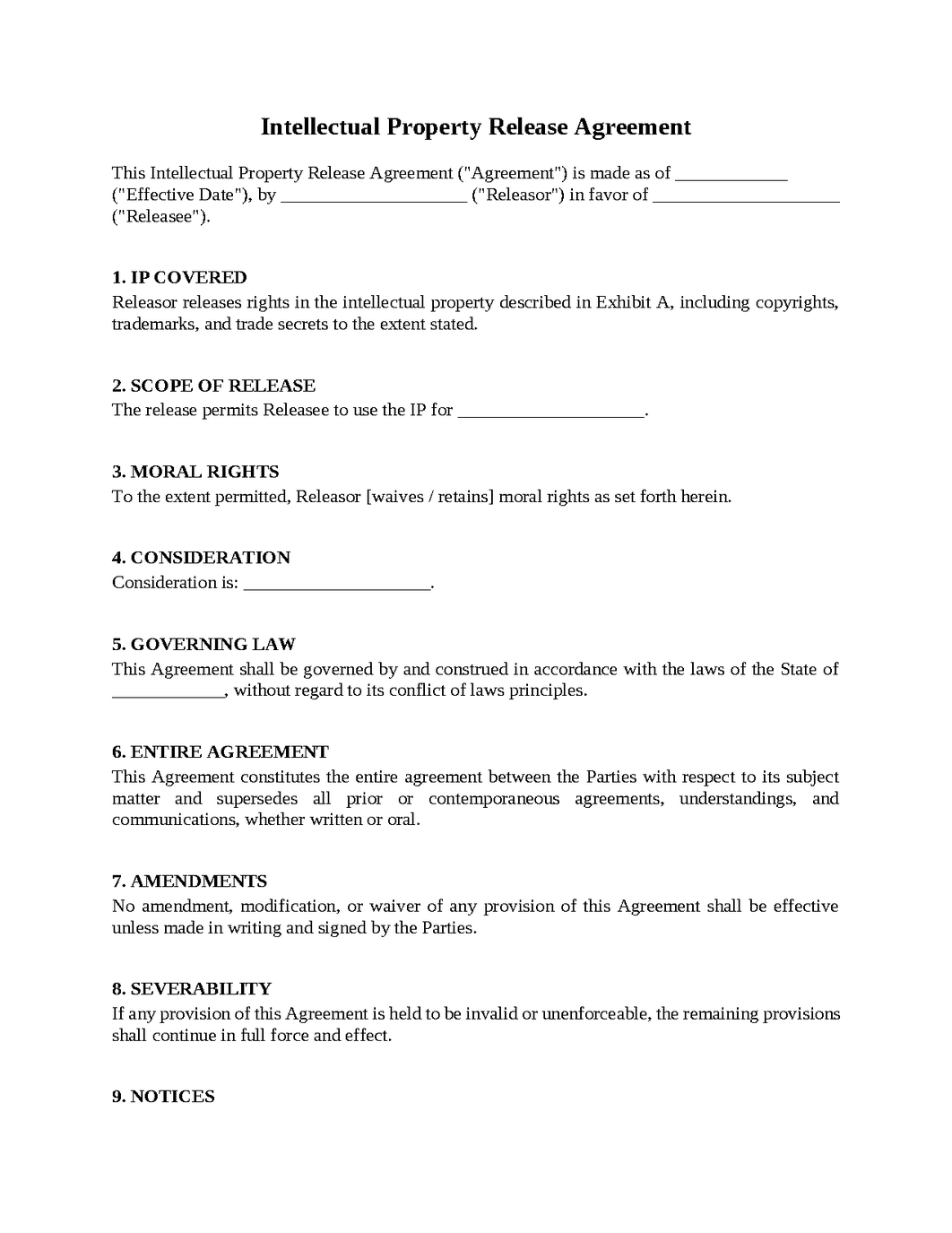
An Intellectual Property Release Agreement is a legal contract through which one party releases, transfers, assigns, waives, or relinquishes rights relating to intellectual property, including copyrights, trademarks, patents, trade secrets, inventions, designs, software, creative works, proprietary information, and other intangible assets. These agreements are commonly used in business acquisitions, employment transitions, contractor relationships, technology development projects, licensing disputes, startup formations, joint ventures, and settlement negotiations. Because intellectual property often represents significant business value and may continue generating revenue for many years, disputes frequently arise when ownership rights and usage rights are not documented clearly. A carefully drafted Intellectual Property Release Agreement helps establish certainty regarding intellectual property ownership while reducing the risk of future claims.
A Contractor Later Claims Ownership of the Work
A growing technology company hires an independent contractor to develop software features for a new product.
The contractor completes the work successfully, receives payment, and the company incorporates the resulting code into its commercial platform. Both parties move forward believing the project has concluded without issue.
Several years later, the software becomes a significant source of revenue for the company. The contractor begins reviewing old project records and concludes that ownership of certain portions of the code was never transferred properly.
The company believes the Intellectual Property Release Agreement gave it full rights to use, modify, and commercialize the work. The contractor argues that only limited usage rights were intended and that ownership remained with the creator.
What began as a completed project becomes a dispute regarding who actually owns the intellectual property underlying a successful product.
To help avoid this problem, an Intellectual Property Release Agreement should clearly identify the intellectual property involved and specify whether ownership, usage rights, or both are being transferred.
An Employee Creates Valuable Intellectual Property
A company employs an engineer to develop new products and improve internal processes.
During the course of employment, the engineer creates inventions, documentation, designs, and technical improvements that significantly benefit the business. At the time, everyone assumes the company owns the resulting intellectual property.
After leaving the organization, the former employee becomes involved with a competing business and claims ownership of certain inventions developed during employment. The former employee believes some of the work was created independently and falls outside the scope of company ownership.
The company argues that the Intellectual Property Release Agreement and related employment documents transferred all relevant rights. The former employee believes the company is claiming ownership far beyond what was originally intended.
The disagreement becomes particularly important because the technology has substantial commercial value.
To help prevent these issues, an Intellectual Property Release Agreement should clearly define the intellectual property being released and explain how ownership rights apply to works created during the relevant relationship.
The Intellectual Property Is Used in Unexpected Industries
A designer creates branding materials for a startup entering a niche market.
The parties execute an Intellectual Property Release Agreement, and the startup begins using the materials as part of its business operations. Initially, the use of the intellectual property remains limited to the industry contemplated when the project was completed.
Years later, the company expands into entirely new markets and begins using the same intellectual property across multiple products, services, and geographic regions. The original creator becomes uncomfortable with the broader applications.
The company believes the release granted unrestricted rights to use the intellectual property wherever business opportunities arise. The creator believes the original understanding was tied to a much narrower purpose.
The disagreement centers on whether the release was intended to cover future uses that were never specifically discussed.
To help avoid these problems, an Intellectual Property Release Agreement should clearly address the scope of authorized use and explain whether future industries, products, and commercial applications are included.
Multiple Contributors Claim Rights
A startup develops a new product through the combined efforts of founders, employees, contractors, consultants, and outside advisors.
As the project evolves, numerous individuals contribute ideas, designs, software code, documentation, and strategic concepts. Everyone focuses on building the business and pays little attention to formal ownership documentation.
Several years later, the company seeks outside investment and potential buyers begin reviewing intellectual property ownership. During due diligence, questions emerge regarding whether every contributor properly transferred rights to the company.
Certain contributors believe they retain ownership interests in portions of the intellectual property. The company believes the work was created for its benefit and should belong entirely to the business.
The uncertainty threatens financing opportunities and delays important transactions.
To help prevent these issues, an Intellectual Property Release Agreement should clearly identify contributors, specify the rights being released, and ensure that ownership is documented consistently across all participants.
A Former Owner Challenges Future Modifications
A business acquires intellectual property through an Intellectual Property Release Agreement as part of a larger transaction.
Following the acquisition, the new owner invests substantial resources into improving, modifying, and expanding the acquired assets. The intellectual property evolves significantly beyond its original form.
The former owner later objects to certain modifications and believes the changes alter the nature of the original work in undesirable ways. The new owner argues that ownership includes the right to modify, adapt, improve, and commercialize the intellectual property without further approval.
Both parties agree that the original transfer occurred. The disagreement focuses on what rights accompany ownership after the transfer is complete.
The dispute becomes increasingly significant as the modified intellectual property generates additional revenue and commercial success.
To help avoid these problems, an Intellectual Property Release Agreement should clearly address modification rights, derivative works, improvements, and the ongoing rights of both the transferring and receiving parties.
Intellectual Property Release Agreements are essential tools for establishing certainty regarding the ownership and use of valuable intangible assets. However, issues involving contractor-created works, employee inventions, future commercial uses, multiple contributors, and modification rights can become significant sources of conflict when expectations are not documented clearly. A carefully drafted Intellectual Property Release Agreement provides a structured framework for allocating ownership and protecting intellectual property rights. When prepared thoughtfully, it can reduce uncertainty, support business growth, facilitate transactions, and provide lasting clarity for all parties involved.

Get started with Upsign today!
Easily send, sign and track your documents