

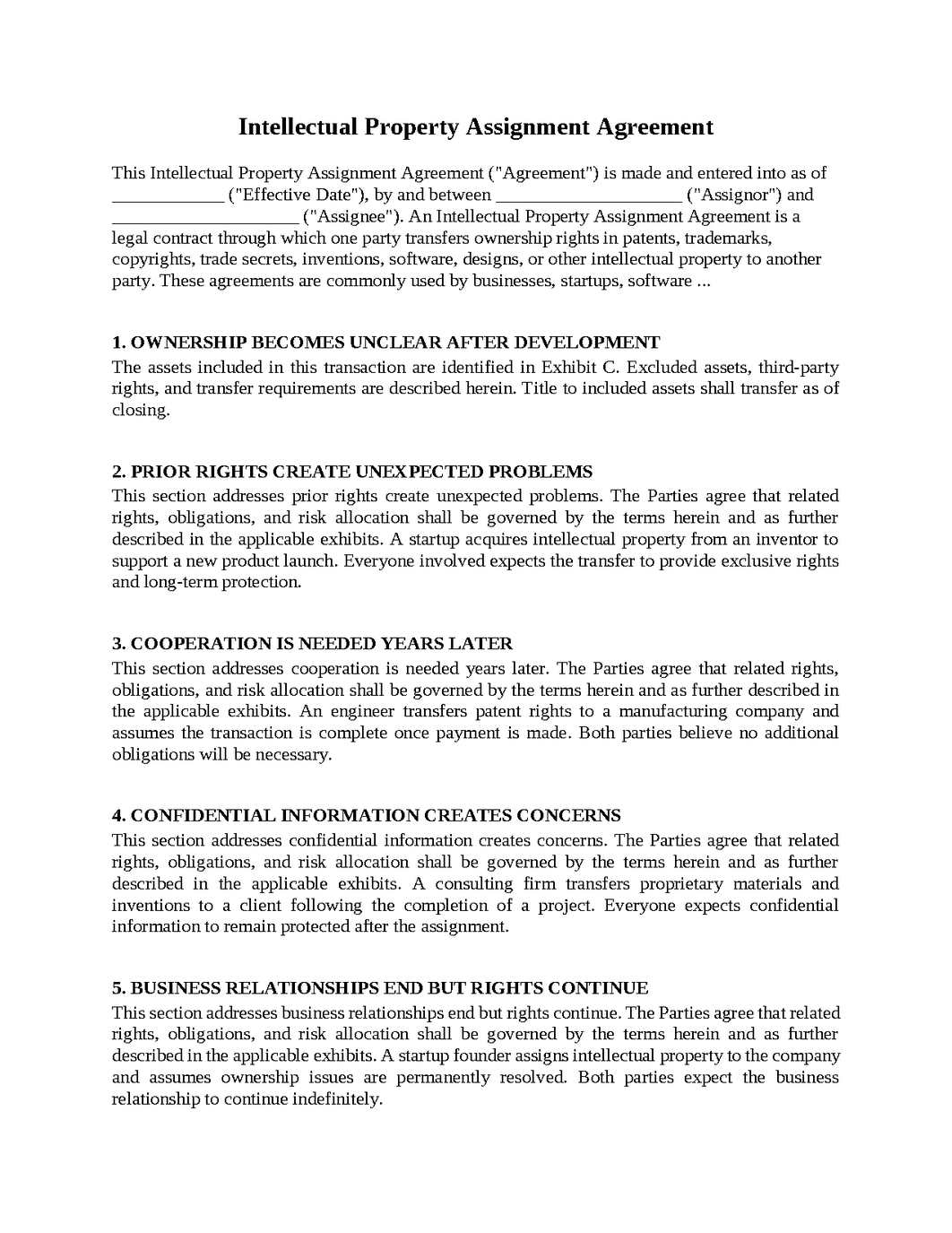
Intellectual Property Assignment Agreement
An Intellectual Property Assignment Agreement is a legal contract through which one party transfers ownership rights in patents, trademarks, copyrights, trade secrets, inventions, software, designs, or other intellectual property to another party. These agreements are commonly used by businesses, startups, software developers, inventors, employees, consultants, and investors seeking to ensure that valuable intellectual assets are properly owned and protected. An Intellectual Property Assignment Agreement typically addresses the assets being transferred, representations regarding ownership, confidentiality obligations, future cooperation requirements, and procedures governing disputes and termination. Because intellectual property often represents significant commercial value, disputes can arise when expectations regarding ownership and rights are not documented clearly. A carefully drafted Intellectual Property Assignment Agreement helps establish certainty and protect the interests of both assignors and assignees.
Ownership Becomes Unclear After Development
A software company hires an independent developer to create specialized applications and expects the finished product to become part of the company's core business. Both parties believe their relationship is straightforward and assume ownership issues are well understood.
After several years of successful collaboration, questions arise regarding who owns certain source code and enhancements developed during the project. Different interpretations create uncertainty regarding future rights.
The company believes payment for development services should provide complete ownership because the software was created for business purposes. The developer believes certain tools and ideas originated independently and argues that not every component was intended to transfer. As the value of the technology increases, tensions emerge regarding ownership rights.
To help avoid this problem, an Intellectual Property Assignment Agreement should clearly identify the assets being transferred and define the rights retained by each party.
Prior Rights Create Unexpected Problems
A startup acquires intellectual property from an inventor to support a new product launch. Everyone involved expects the transfer to provide exclusive rights and long-term protection.
As the company begins commercializing the technology, another party claims that portions of the invention were previously licensed or assigned elsewhere. Questions arise regarding whether the seller possessed the authority to transfer the rights.
The startup believes the inventor should bear responsibility because ownership representations were essential to the transaction. The inventor believes the conflicting claims are without merit and argues that reasonable efforts were made to disclose relevant information. As legal expenses increase, disagreements emerge regarding responsibility for the competing rights.
To help prevent these issues, an Intellectual Property Assignment Agreement should clearly establish ownership representations and define the consequences of inaccurate disclosures.
Cooperation Is Needed Years Later
An engineer transfers patent rights to a manufacturing company and assumes the transaction is complete once payment is made. Both parties believe no additional obligations will be necessary.
Several years later, regulatory filings and patent applications require additional signatures and technical information from the original inventor. Difficulties arise when the inventor becomes unavailable or unwilling to participate.
The company believes continued cooperation is necessary because protecting the intellectual property benefits the value of the original transaction. The inventor believes the obligations ended after the assignment and argues that further involvement should require additional compensation. As deadlines approach, tensions develop regarding ongoing responsibilities.
To help avoid these problems, an Intellectual Property Assignment Agreement should clearly establish future cooperation requirements and define the obligations that survive the transfer.
Confidential Information Creates Concerns
A consulting firm transfers proprietary materials and inventions to a client following the completion of a project. Everyone expects confidential information to remain protected after the assignment.
Over time, questions arise regarding the use of trade secrets and whether sensitive information has been disclosed improperly. Concerns increase as competitors introduce similar products.
The client believes protecting confidential information is essential because the intellectual property represents a valuable competitive advantage. The consultant believes reasonable safeguards were maintained and argues that industry knowledge cannot be completely restricted. As concerns increase, disagreements emerge regarding confidentiality obligations.
To help prevent these issues, an Intellectual Property Assignment Agreement should clearly establish confidentiality requirements and define how proprietary information will be protected.
Business Relationships End but Rights Continue
A startup founder assigns intellectual property to the company and assumes ownership issues are permanently resolved. Both parties expect the business relationship to continue indefinitely.
Eventually, changes in ownership and management lead the founder to leave the company. Questions arise regarding future inventions, prior work, and the continuing rights associated with assigned assets.
The company believes ownership rights should remain secure because investors and customers rely upon certainty. The former founder believes certain ideas and future developments should remain personal property and expects clear boundaries between assigned and retained assets. As the separation unfolds, disagreements emerge regarding the rights and obligations that survive the relationship.
To help avoid this problem, an Intellectual Property Assignment Agreement should clearly establish continuing rights and identify the obligations that remain effective after the parties no longer work together.
Intellectual Property Assignment Agreements are valuable tools that provide clarity regarding ownership of inventions, software, trademarks, and other valuable assets. However, issues involving ownership disputes, prior rights, future cooperation, confidentiality concerns, and post-relationship obligations can become significant sources of conflict when expectations are not documented clearly. A carefully drafted Intellectual Property Assignment Agreement provides a structured framework for allocating responsibilities and protecting the interests of both assignors and assignees. When prepared thoughtfully, it can reduce uncertainty, strengthen business relationships, facilitate innovation, and provide the foundation necessary for protecting valuable intellectual property.

Get started with Upsign today!
Easily send, sign and track your documents