

Insurance Brokerage Agreement
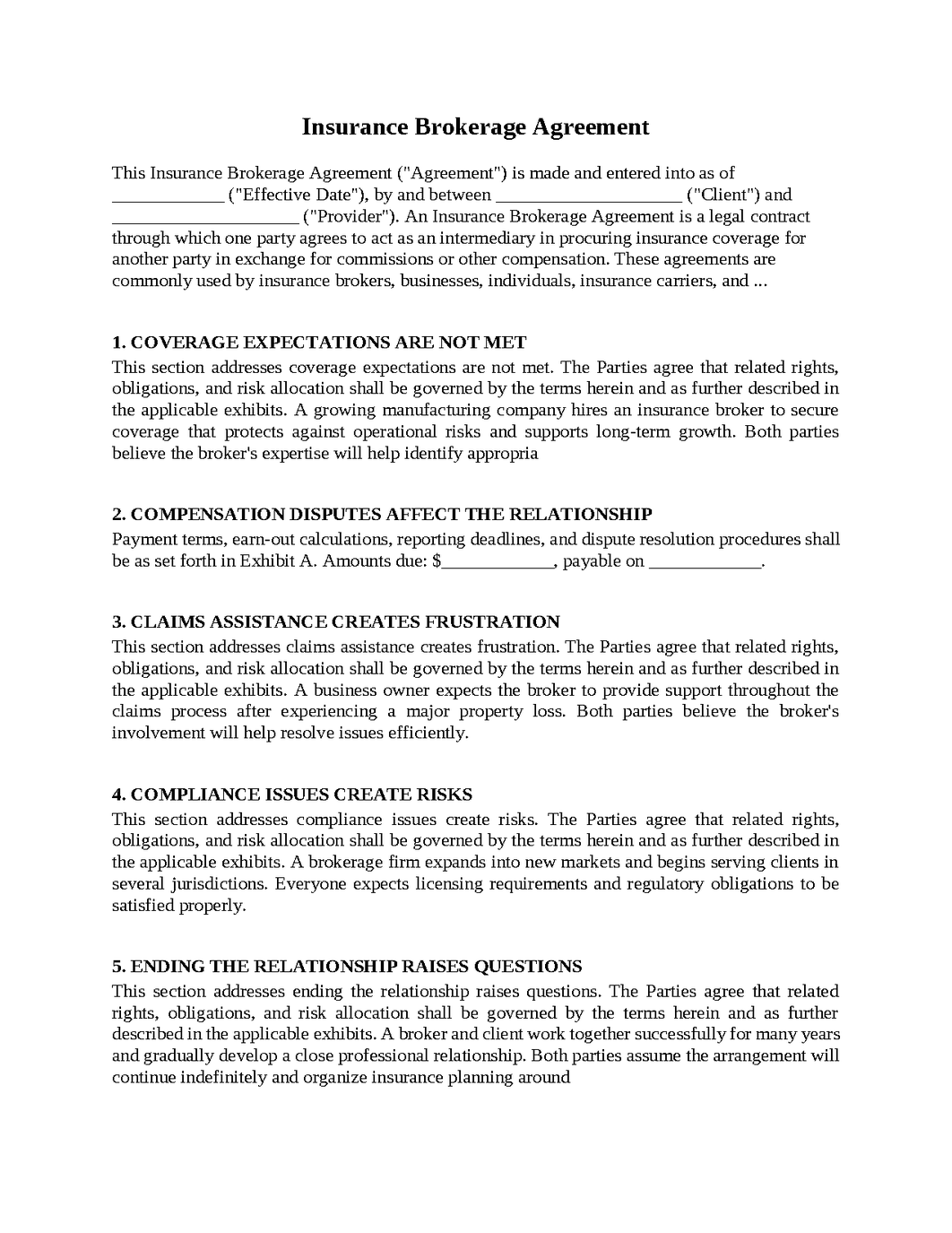
An Insurance Brokerage Agreement is a legal contract through which one party agrees to act as an intermediary in procuring insurance coverage for another party in exchange for commissions or other compensation. These agreements are commonly used by insurance brokers, businesses, individuals, insurance carriers, and commercial clients seeking access to a variety of insurance products and expertise. An Insurance Brokerage Agreement typically addresses the scope of services, compensation arrangements, licensing requirements, confidentiality obligations, duties of care, and procedures governing termination and disputes. Because brokers play an important role in advising clients and coordinating with insurers, disputes can arise when expectations regarding responsibilities and performance are not documented clearly. A carefully drafted Insurance Brokerage Agreement helps establish certainty and protect the interests of brokers and clients.
Coverage Expectations Are Not Met
A growing manufacturing company hires an insurance broker to secure coverage that protects against operational risks and supports long-term growth. Both parties believe the broker's expertise will help identify appropriate policies and minimize exposure.
Initially, the insurance program appears to satisfy the company's needs and operations continue without difficulty. Several years later, however, a significant loss occurs and management discovers that certain exposures were not covered.
The company believes the broker should have identified those risks because providing guidance and expertise was one of the primary reasons for retaining the broker. The broker believes the policies obtained reflected the information provided by the client and argues that no insurance program can eliminate every risk. As uncovered losses increase, tensions emerge regarding responsibility for the coverage gaps.
To help avoid this problem, an Insurance Brokerage Agreement should clearly establish the broker's responsibilities and define the scope of services being provided.
Compensation Disputes Affect the Relationship
A commercial client relies upon a broker to place policies with multiple carriers and expects compensation arrangements to remain transparent. Everyone involved assumes commissions and fees are clearly understood.
As coverage needs expand, questions arise regarding consulting fees, commissions, and contingent compensation received from insurance companies. Different expectations create confusion about how the broker is compensated.
The client believes all forms of compensation should be fully disclosed because transparency is essential to maintaining trust. The broker believes industry practices are well understood and argues that compensation arrangements are appropriate and customary. As financial questions increase, disagreements emerge regarding disclosure obligations.
To help prevent these issues, an Insurance Brokerage Agreement should clearly establish compensation arrangements and define how commissions and fees will be disclosed.
Claims Assistance Creates Frustration
A business owner expects the broker to provide support throughout the claims process after experiencing a major property loss. Both parties believe the broker's involvement will help resolve issues efficiently.
As the claim becomes more complicated, delays and disagreements with the insurance carrier create uncertainty. The client becomes frustrated with the pace of communications and the lack of progress.
The client believes the broker should advocate more aggressively because assistance during claims was one of the reasons for maintaining the relationship. The broker believes claims decisions ultimately belong to the insurer and argues that reasonable support has already been provided. As delays continue, tensions develop regarding the extent of the broker's obligations.
To help avoid these problems, an Insurance Brokerage Agreement should clearly establish the broker's role in claims administration and define the limits of those responsibilities.
Compliance Issues Create Risks
A brokerage firm expands into new markets and begins serving clients in several jurisdictions. Everyone expects licensing requirements and regulatory obligations to be satisfied properly.
During an audit, regulators identify deficiencies involving disclosures and documentation. Questions arise regarding whether industry requirements were followed consistently.
The clients believe compliance failures undermine confidence and expect brokers to maintain professional standards. The brokerage believes changing regulations and administrative complexities contributed to the issues and argues that corrective measures are already underway. As scrutiny increases, disagreements emerge regarding responsibility for maintaining compliance.
To help prevent these issues, an Insurance Brokerage Agreement should clearly establish regulatory obligations and define the procedures governing compliance and recordkeeping.
Ending the Relationship Raises Questions
A broker and client work together successfully for many years and gradually develop a close professional relationship. Both parties assume the arrangement will continue indefinitely and organize insurance planning around that expectation.
Eventually, the client decides to move its business to another brokerage firm. Questions arise regarding access to records, unpaid fees, and assistance with policy transitions.
The client believes a smooth transition is necessary to avoid disruptions and preserve coverage. The broker believes outstanding obligations should be resolved before providing additional support and expects contractual rights to be respected. As the relationship concludes, disagreements emerge regarding the rights and responsibilities that survive termination.
To help avoid this problem, an Insurance Brokerage Agreement should clearly establish termination procedures and identify the obligations that continue after the relationship ends.
Insurance Brokerage Agreements are valuable tools that allow brokers and clients to work together in identifying and managing risk. However, issues involving coverage expectations, compensation arrangements, claims assistance, regulatory compliance, and post-termination obligations can become significant sources of conflict when expectations are not documented clearly. A carefully drafted Insurance Brokerage Agreement provides a structured framework for allocating responsibilities and protecting the interests of both brokers and clients. When prepared thoughtfully, it can reduce uncertainty, strengthen professional relationships, improve transparency, and provide the foundation necessary for effective risk management.

Get started with Upsign today!
Easily send, sign and track your documents