

Hazardous Waste Disposal Agreement
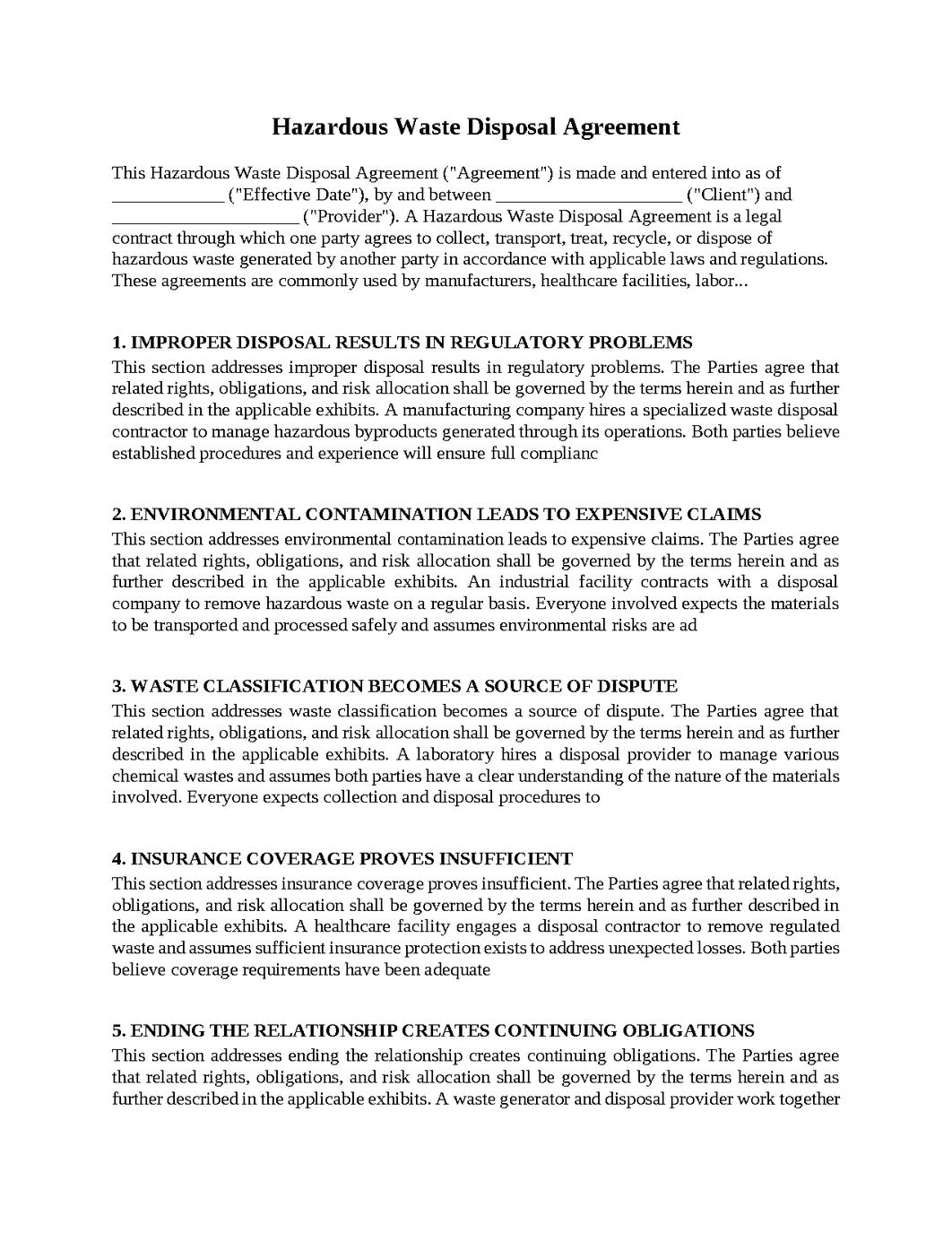
A Hazardous Waste Disposal Agreement is a legal contract through which one party agrees to collect, transport, treat, recycle, or dispose of hazardous waste generated by another party in accordance with applicable laws and regulations. These agreements are commonly used by manufacturers, healthcare facilities, laboratories, construction companies, energy producers, and industrial businesses that generate regulated waste streams. A Hazardous Waste Disposal Agreement typically addresses waste classifications, transportation requirements, regulatory compliance, insurance obligations, reporting requirements, and procedures governing liability and termination. Because hazardous waste presents significant environmental and legal risks, disputes can arise when expectations regarding responsibilities and compliance are not documented clearly. A carefully drafted Hazardous Waste Disposal Agreement helps establish certainty and protect the interests of both waste generators and disposal providers.
Improper Disposal Results in Regulatory Problems
A manufacturing company hires a specialized waste disposal contractor to manage hazardous byproducts generated through its operations. Both parties believe established procedures and experience will ensure full compliance with environmental regulations.
For several years, waste is collected and processed without incident. Eventually, regulators discover that certain materials were handled improperly and that disposal records contain deficiencies, leading to fines and increased oversight.
The manufacturer believes the disposal company should bear responsibility because regulatory compliance was one of the primary reasons for engaging a specialized provider. The disposal company believes inaccurate information regarding waste composition contributed to the problems and argues that both parties share responsibility. As penalties increase, tensions emerge regarding liability and compliance obligations.
To help avoid this problem, a Hazardous Waste Disposal Agreement should clearly establish regulatory responsibilities and define how violations and enforcement actions will be addressed.
Environmental Contamination Leads to Expensive Claims
An industrial facility contracts with a disposal company to remove hazardous waste on a regular basis. Everyone involved expects the materials to be transported and processed safely and assumes environmental risks are adequately managed.
During transportation and handling, a release occurs that contaminates surrounding property and requires extensive cleanup efforts. Government agencies and neighboring landowners become involved, increasing the financial consequences.
The waste generator believes the disposal company should bear responsibility because the materials were under its control when the incident occurred. The disposal company believes improper packaging and inaccurate descriptions of the waste contributed to the release and argues that responsibility should be shared. As cleanup costs increase, disagreements emerge regarding liability and indemnification.
To help prevent these issues, a Hazardous Waste Disposal Agreement should clearly establish liability provisions and define the procedures governing spills and environmental claims.
Waste Classification Becomes a Source of Dispute
A laboratory hires a disposal provider to manage various chemical wastes and assumes both parties have a clear understanding of the nature of the materials involved. Everyone expects collection and disposal procedures to proceed smoothly.
As regulations evolve, questions arise regarding whether certain substances were correctly classified and whether additional handling requirements apply. Delays and additional costs begin affecting operations.
The laboratory believes the disposal provider should identify classification issues because specialized expertise is part of the service being provided. The disposal company believes the generator is responsible for accurately describing the waste and argues that it relied on the information supplied. As compliance concerns increase, tensions develop regarding responsibility for proper classification.
To help avoid these problems, a Hazardous Waste Disposal Agreement should clearly establish waste identification requirements and define how classification disputes will be resolved.
Insurance Coverage Proves Insufficient
A healthcare facility engages a disposal contractor to remove regulated waste and assumes sufficient insurance protection exists to address unexpected losses. Both parties believe coverage requirements have been adequately addressed.
Following a significant environmental claim, questions arise regarding policy exclusions and whether certain damages are covered. Unexpected gaps in insurance expose both parties to substantial financial risks.
The healthcare facility believes the contractor should maintain comprehensive insurance because handling hazardous waste involves elevated risks. The contractor believes the agreed insurance requirements were satisfied and argues that additional coverage was never contemplated. As claims become more expensive, disagreements emerge regarding financial responsibility.
To help prevent these issues, a Hazardous Waste Disposal Agreement should clearly establish insurance requirements and define the scope of protection expected from each party.
Ending the Relationship Creates Continuing Obligations
A waste generator and disposal provider work together successfully for many years and gradually integrate reporting systems and compliance procedures. Both parties assume the relationship will continue indefinitely and structure operations accordingly.
Eventually, changing priorities lead one side to terminate the arrangement. Questions arise regarding pending collections, record retention requirements, unresolved claims, and continuing regulatory obligations associated with previously disposed materials.
The waste generator believes a smooth transition is essential to maintain compliance and avoid disruptions. The disposal company believes its obligations should conclude promptly and expects all outstanding balances to be paid before providing additional assistance. As the relationship ends, disagreements emerge regarding the responsibilities that survive termination.
To help avoid this problem, a Hazardous Waste Disposal Agreement should clearly establish termination procedures and identify the rights and obligations that continue after the relationship ends.
Hazardous Waste Disposal Agreements are valuable tools that allow organizations to manage dangerous materials responsibly while complying with complex environmental regulations. However, issues involving improper disposal, contamination claims, waste classification, insurance coverage, and post-termination obligations can become significant sources of conflict when expectations are not documented clearly. A carefully drafted Hazardous Waste Disposal Agreement provides a structured framework for allocating responsibilities and protecting the interests of both waste generators and disposal providers. When prepared thoughtfully, it can reduce uncertainty, strengthen commercial relationships, promote environmental stewardship, and provide the foundation necessary for safe and compliant waste management operations.

Get started with Upsign today!
Easily send, sign and track your documents