

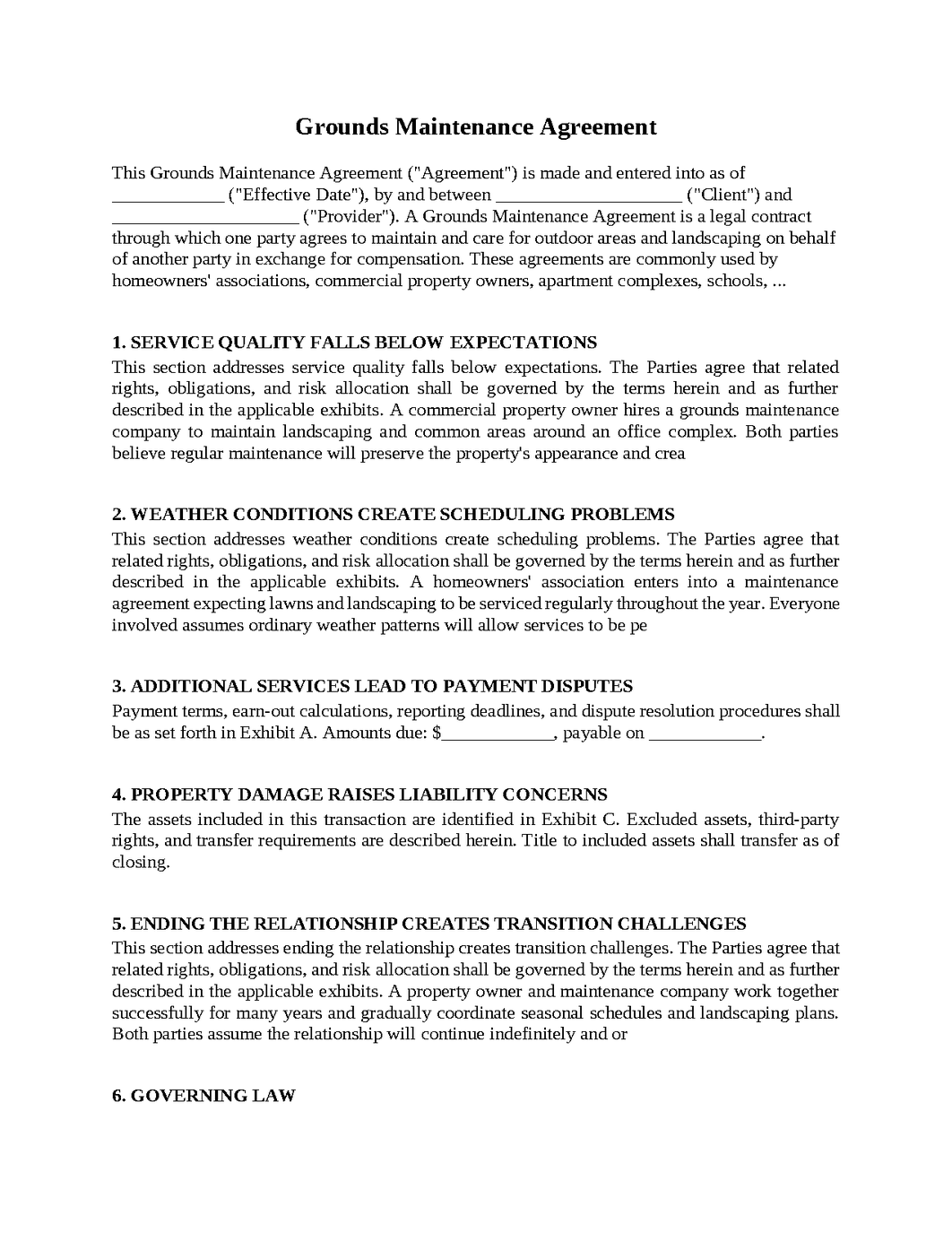
Grounds Maintenance Agreement
A Grounds Maintenance Agreement is a legal contract through which one party agrees to maintain and care for outdoor areas and landscaping on behalf of another party in exchange for compensation. These agreements are commonly used by homeowners' associations, commercial property owners, apartment complexes, schools, municipalities, and businesses seeking to preserve the appearance and functionality of their grounds. A Grounds Maintenance Agreement typically addresses mowing schedules, irrigation responsibilities, seasonal services, payment terms, performance standards, and procedures governing termination and disputes. Because landscaping and property maintenance are ongoing responsibilities that depend upon weather and changing conditions, disputes can arise when expectations regarding services and responsibilities are not documented clearly. A carefully drafted Grounds Maintenance Agreement helps establish certainty and protect the interests of both property owners and service providers.
Service Quality Falls Below Expectations
A commercial property owner hires a grounds maintenance company to maintain landscaping and common areas around an office complex. Both parties believe regular maintenance will preserve the property's appearance and create a positive impression for tenants and visitors.
For several seasons, services are performed consistently and the grounds remain attractive. Over time, however, weeds become more noticeable, shrubs are neglected, and irrigation problems affect the condition of the landscaping.
The property owner believes the maintenance company should provide a higher level of care because maintaining curb appeal was one of the primary reasons for entering the relationship. The service provider believes changing weather conditions and aging irrigation systems contributed to the problems and argues that reasonable efforts were made. As tenant complaints increase, tensions emerge regarding whether the services satisfy the agreed standards.
To help avoid this problem, a Grounds Maintenance Agreement should clearly establish service expectations and define performance standards for maintaining the property.
Weather Conditions Create Scheduling Problems
A homeowners' association enters into a maintenance agreement expecting lawns and landscaping to be serviced regularly throughout the year. Everyone involved assumes ordinary weather patterns will allow services to be performed according to schedule.
Unexpected storms, drought conditions, and excessive rainfall eventually disrupt maintenance schedules and affect the condition of the property. Residents begin questioning why services are not being performed as frequently as expected.
The association believes the contractor should have adjusted resources and scheduling to maintain consistent service. The contractor believes severe weather conditions made certain tasks impractical and argues that delays were unavoidable. As dissatisfaction among residents grows, disagreements emerge regarding responsibility for the interruptions.
To help prevent these issues, a Grounds Maintenance Agreement should clearly establish scheduling requirements and define how weather-related delays will be handled.
Additional Services Lead to Payment Disputes
A retail center contracts with a landscaping company to maintain lawns, trees, and common areas. Both parties believe the agreed pricing adequately reflects the anticipated workload.
During the year, unexpected requests involving tree removal, storm cleanup, and irrigation repairs require additional labor and equipment. Questions arise regarding whether those services are included within the original contract.
The property owner believes many of the tasks are part of maintaining the grounds and should be covered by the existing agreement. The contractor believes extraordinary services require additional compensation because they fall outside routine maintenance obligations. As invoices increase, tensions develop regarding the proper amount owed.
To help avoid these problems, a Grounds Maintenance Agreement should clearly establish the scope of services and define how additional work and expenses will be approved.
Property Damage Raises Liability Concerns
A business hires a grounds maintenance company to preserve landscaping and maintain outdoor areas. Everyone expects the work to be performed safely and without affecting surrounding improvements.
During routine maintenance, irrigation lines are damaged and landscaping equipment causes harm to parked vehicles and decorative structures. Questions arise regarding whether the damage resulted from negligence or preexisting conditions.
The property owner believes the maintenance company should bear responsibility because the damage occurred during its work. The contractor believes certain conditions existed before services were performed and argues that not all damages resulted from improper conduct. As repair costs increase, disagreements emerge regarding liability and insurance coverage.
To help prevent these issues, a Grounds Maintenance Agreement should clearly establish liability provisions and define how claims relating to property damage will be addressed.
Ending the Relationship Creates Transition Challenges
A property owner and maintenance company work together successfully for many years and gradually coordinate seasonal schedules and landscaping plans. Both parties assume the relationship will continue indefinitely and organize operations accordingly.
Eventually, changing priorities lead the owner to hire another provider. Questions arise regarding unfinished seasonal work, outstanding invoices, irrigation records, and responsibilities associated with ongoing maintenance plans.
The property owner believes a smooth transition is necessary to preserve the condition of the property and avoid disruptions. The contractor believes all financial obligations should be satisfied before providing additional assistance or records. As the relationship concludes, disagreements emerge regarding the obligations that survive termination.
To help avoid this problem, a Grounds Maintenance Agreement should clearly establish termination procedures and identify the rights and responsibilities that continue after the relationship ends.
Grounds Maintenance Agreements are valuable tools that help property owners preserve attractive and functional outdoor spaces while relying on professional expertise. However, issues involving service quality, weather-related delays, additional work, property damage, and post-termination obligations can become significant sources of conflict when expectations are not documented clearly. A carefully drafted Grounds Maintenance Agreement provides a structured framework for allocating responsibilities and protecting the interests of both parties. When prepared thoughtfully, it can reduce uncertainty, strengthen working relationships, preserve property values, and provide the foundation necessary for successful long-term maintenance services.

Get started with Upsign today!
Easily send, sign and track your documents