

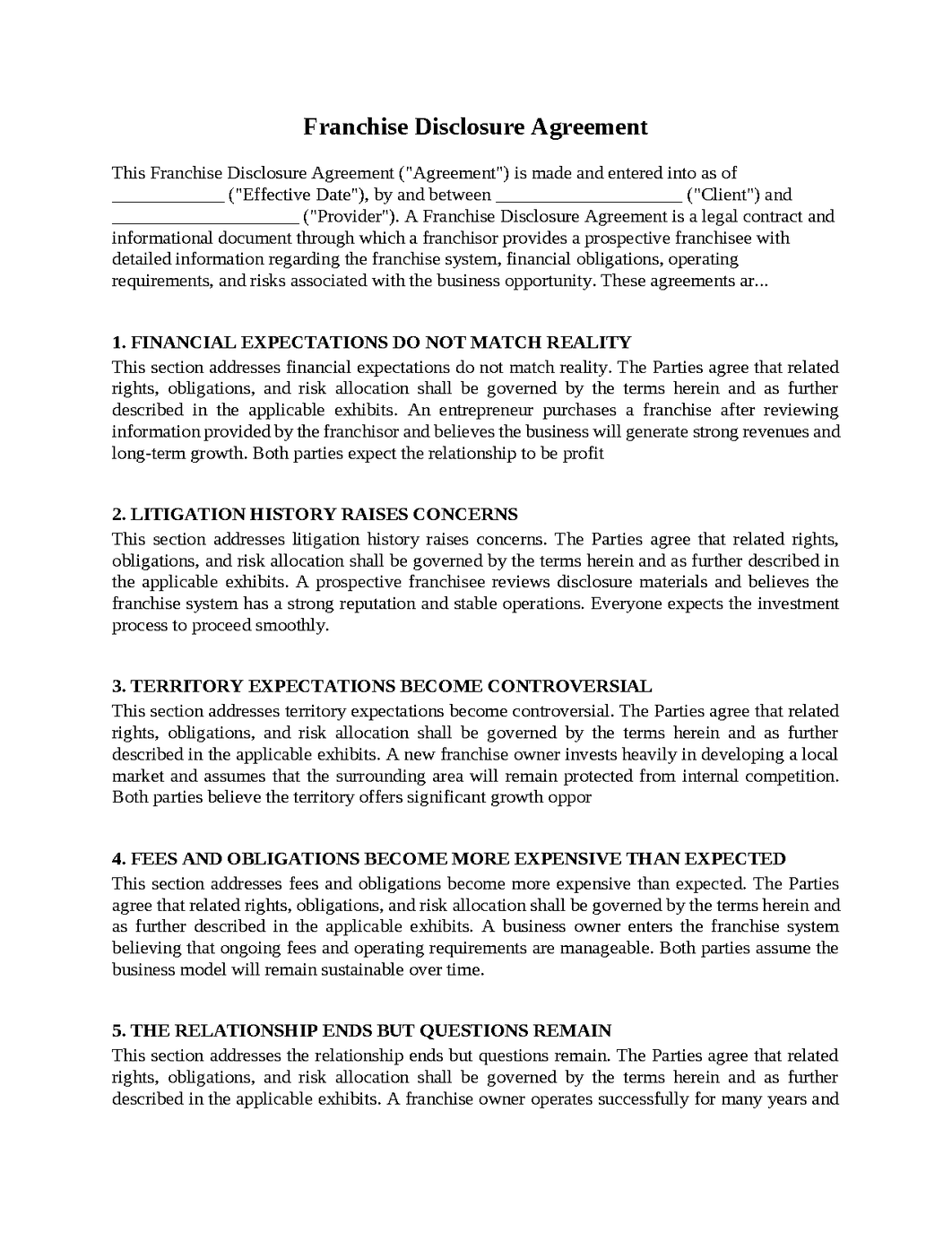
Franchise Disclosure Agreement
A Franchise Disclosure Agreement is a legal contract and informational document through which a franchisor provides a prospective franchisee with detailed information regarding the franchise system, financial obligations, operating requirements, and risks associated with the business opportunity. These agreements are commonly used by restaurants, retail chains, service providers, hospitality businesses, and other organizations expanding through franchising. A Franchise Disclosure Agreement typically addresses fees, territory rights, litigation history, financial performance representations, training obligations, and procedures governing the ongoing relationship between the parties. Because franchise investments often involve substantial financial commitments and long-term expectations, disputes can arise when assumptions regarding the opportunity and obligations are not documented clearly. A carefully prepared Franchise Disclosure Agreement helps establish transparency and protect the interests of both franchisors and franchisees.
Financial Expectations Do Not Match Reality
An entrepreneur purchases a franchise after reviewing information provided by the franchisor and believes the business will generate strong revenues and long-term growth. Both parties expect the relationship to be profitable and mutually beneficial.
During the first few years, sales are lower than anticipated and operating expenses exceed expectations. The franchisee begins questioning whether the opportunity was accurately presented before the investment was made.
The franchisee believes important information regarding expenses and risks should have been emphasized more clearly. The franchisor believes the disclosure materials accurately described the business and argues that success depends on local market conditions and management decisions. As financial pressures increase, tensions develop regarding whether expectations were established properly.
To help avoid this problem, a Franchise Disclosure Agreement should clearly present financial information and define the assumptions and risks associated with the business opportunity.
Litigation History Raises Concerns
A prospective franchisee reviews disclosure materials and believes the franchise system has a strong reputation and stable operations. Everyone expects the investment process to proceed smoothly.
After opening the business, the franchisee discovers that other franchise owners have previously pursued claims against the franchisor concerning operational practices and fees. Questions arise regarding whether those matters were fully disclosed before the investment was made.
The franchisee believes knowledge of prior disputes could have influenced the decision to purchase the franchise. The franchisor believes all required disclosures were made and argues that prior litigation does not necessarily reflect the quality of the franchise system. As trust begins to deteriorate, disagreements emerge regarding transparency.
To help prevent these issues, a Franchise Disclosure Agreement should clearly establish disclosure requirements and provide complete information regarding prior litigation and material risks.
Territory Expectations Become Controversial
A new franchise owner invests heavily in developing a local market and assumes that the surrounding area will remain protected from internal competition. Both parties believe the territory offers significant growth opportunities.
Several years later, the franchisor authorizes additional locations and expands digital sales programs. Customer traffic shifts, and the franchisee becomes concerned about increasing competition.
The franchisee believes the investment was made with the expectation of meaningful protection and expects the franchisor to preserve the value of the market. The franchisor believes changing customer preferences require flexibility and argues that territorial rights were explained in the disclosure documents. As revenues are affected, tensions emerge regarding what protections actually exist.
To help avoid these problems, a Franchise Disclosure Agreement should clearly describe territorial rights and define any limitations on exclusivity.
Fees and Obligations Become More Expensive Than Expected
A business owner enters the franchise system believing that ongoing fees and operating requirements are manageable. Both parties assume the business model will remain sustainable over time.
As the business grows, additional technology requirements, advertising contributions, and operational standards increase costs. The owner begins questioning whether those obligations were adequately explained before the investment.
The franchisee believes the total costs associated with operating the business exceeded what was reasonably expected. The franchisor believes the disclosure materials accurately described the obligations and argues that system improvements benefit all franchise owners. As profitability declines, disagreements emerge regarding whether expectations were established properly.
To help prevent these issues, a Franchise Disclosure Agreement should clearly establish fee structures and define the ongoing obligations associated with operating the franchise.
The Relationship Ends but Questions Remain
A franchise owner operates successfully for many years and both parties assume the relationship will continue indefinitely. Investments and business decisions are made with long-term expectations in mind.
Eventually, retirement plans and changing priorities lead the owner to leave the business. Questions arise regarding trademarks, noncompetition obligations, customer relationships, and post-termination rights.
The franchisee believes years of investment justify flexibility and a reasonable transition. The franchisor believes protecting the brand requires continued enforcement of important obligations. As the relationship comes to an end, disagreements emerge regarding the rights and responsibilities that survive termination.
To help avoid this problem, a Franchise Disclosure Agreement should clearly establish post-termination obligations and identify the responsibilities that continue after the franchise relationship concludes.
Franchise Disclosure Agreements are valuable tools that promote transparency and provide prospective franchisees with important information before making significant investments. However, issues involving financial expectations, litigation history, territorial rights, operating costs, and post-termination obligations can become significant sources of conflict when expectations are not documented clearly. A carefully prepared Franchise Disclosure Agreement provides a structured framework for promoting informed decisions and protecting the interests of both franchisors and franchisees. When drafted thoughtfully, it can reduce uncertainty, strengthen business relationships, encourage transparency, and provide the foundation necessary for successful franchise operations.

Get started with Upsign today!
Easily send, sign and track your documents