

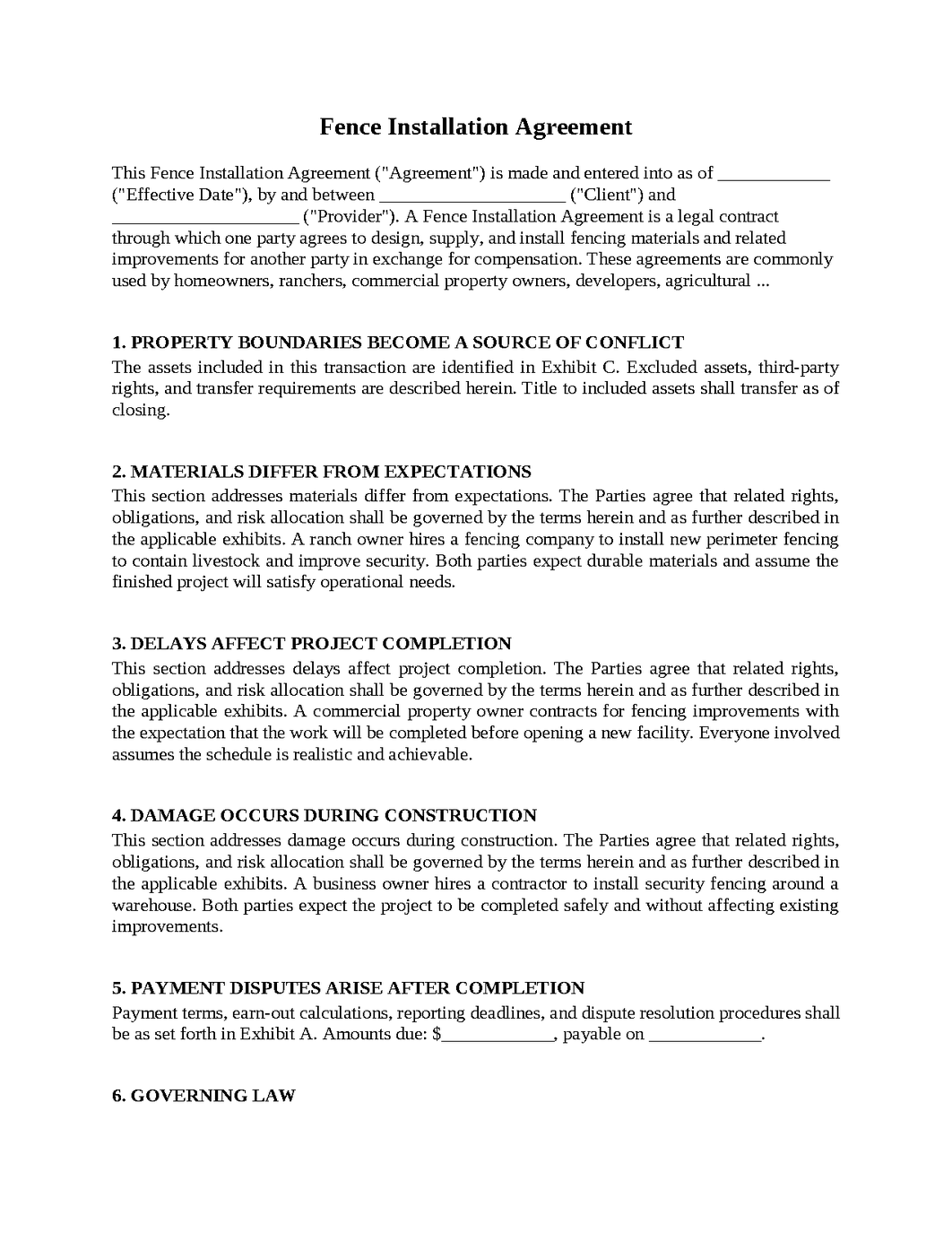
Fence Installation Agreement
A Fence Installation Agreement is a legal contract through which one party agrees to design, supply, and install fencing materials and related improvements for another party in exchange for compensation. These agreements are commonly used by homeowners, ranchers, commercial property owners, developers, agricultural operations, and contractors seeking to define the scope and expectations of a fencing project. A Fence Installation Agreement typically addresses materials, design specifications, property boundaries, payment terms, warranties, and procedures governing delays and disputes. Because fencing projects involve property rights and construction obligations, disputes can arise when expectations regarding performance and responsibilities are not documented clearly. A carefully drafted Fence Installation Agreement helps establish certainty and protect the interests of both property owners and contractors.
Property Boundaries Become a Source of Conflict
A homeowner hires a contractor to install a new fence around a residential property. Both parties believe the property lines are clearly established and expect the project to proceed without complications.
As construction begins, a neighboring property owner questions the location of the fence and claims that portions of the project extend beyond the true boundary line. Survey records and prior improvements create conflicting interpretations regarding the location of the property line.
The homeowner believes the contractor should continue the project based on the information originally provided. The contractor becomes concerned about liability and believes additional verification is necessary before proceeding. As tensions with neighboring owners increase, delays and uncertainty begin affecting the project.
To help avoid this problem, a Fence Installation Agreement should clearly establish responsibility for confirming property boundaries and define how disputes regarding survey information will be handled.
Materials Differ From Expectations
A ranch owner hires a fencing company to install new perimeter fencing to contain livestock and improve security. Both parties expect durable materials and assume the finished project will satisfy operational needs.
After installation begins, the owner notices that certain posts and fencing components differ from what was originally anticipated. Questions arise regarding quality, appearance, and long-term durability.
The owner believes the contractor should provide materials consistent with the original understanding because reliability is essential to protecting livestock. The contractor believes the materials satisfy industry standards and argues that substitutions were necessary due to supply issues. As concerns about future repairs increase, disagreements emerge regarding whether the work meets expectations.
To help prevent these issues, a Fence Installation Agreement should clearly establish material specifications and define procedures governing substitutions and changes.
Delays Affect Project Completion
A commercial property owner contracts for fencing improvements with the expectation that the work will be completed before opening a new facility. Everyone involved assumes the schedule is realistic and achievable.
Unexpected weather conditions, labor shortages, and supply chain disruptions eventually slow progress. Weeks pass beyond the anticipated completion date, affecting other construction activities and delaying operations.
The property owner believes the contractor should have anticipated potential obstacles and adjusted resources accordingly. The contractor believes the delays were caused by circumstances beyond reasonable control and argues that the schedule should be modified. As financial consequences increase, tensions develop regarding responsibility for the delays.
To help avoid these problems, a Fence Installation Agreement should clearly establish project timelines and define the procedures applicable when unexpected delays occur.
Damage Occurs During Construction
A business owner hires a contractor to install security fencing around a warehouse. Both parties expect the project to be completed safely and without affecting existing improvements.
During excavation and installation, underground utilities and landscaping features are damaged. Repair costs begin accumulating and questions arise regarding whether proper precautions were taken before construction started.
The property owner believes the contractor should bear responsibility because the damage occurred during the installation process. The contractor believes inaccurate information regarding utility locations and existing conditions contributed to the problem. As additional repairs become necessary, disagreements emerge regarding liability and insurance coverage.
To help prevent these issues, a Fence Installation Agreement should clearly establish responsibility for locating underground utilities and define how property damage claims will be handled.
Payment Disputes Arise After Completion
A homeowner and contractor complete a fencing project after several weeks of work. Both parties initially assume that final payment and closeout procedures will occur without difficulty.
Following completion, the homeowner raises concerns regarding appearance, gate alignment, and certain finishing details. The contractor believes the project satisfies the agreed specifications and expects prompt payment.
The homeowner believes some adjustments should be made before releasing the remaining balance. The contractor believes the issues are minor and argues that withholding payment is unreasonable. As communication becomes increasingly difficult, frustrations grow regarding the obligations that remain after construction has ended.
To help avoid this problem, a Fence Installation Agreement should clearly establish payment terms and define procedures for inspections, punch lists, and final acceptance.
Fence Installation Agreements are valuable tools that help property owners and contractors complete projects while establishing clear expectations regarding materials, schedules, and responsibilities. However, issues involving property boundaries, material quality, delays, construction damage, and final payments can become significant sources of conflict when expectations are not documented clearly. A carefully drafted Fence Installation Agreement provides a structured framework for allocating responsibilities and protecting the interests of both parties. When prepared thoughtfully, it can reduce uncertainty, preserve working relationships, support successful construction projects, and provide confidence throughout the installation process.

Get started with Upsign today!
Easily send, sign and track your documents