

Farm Management Agreement
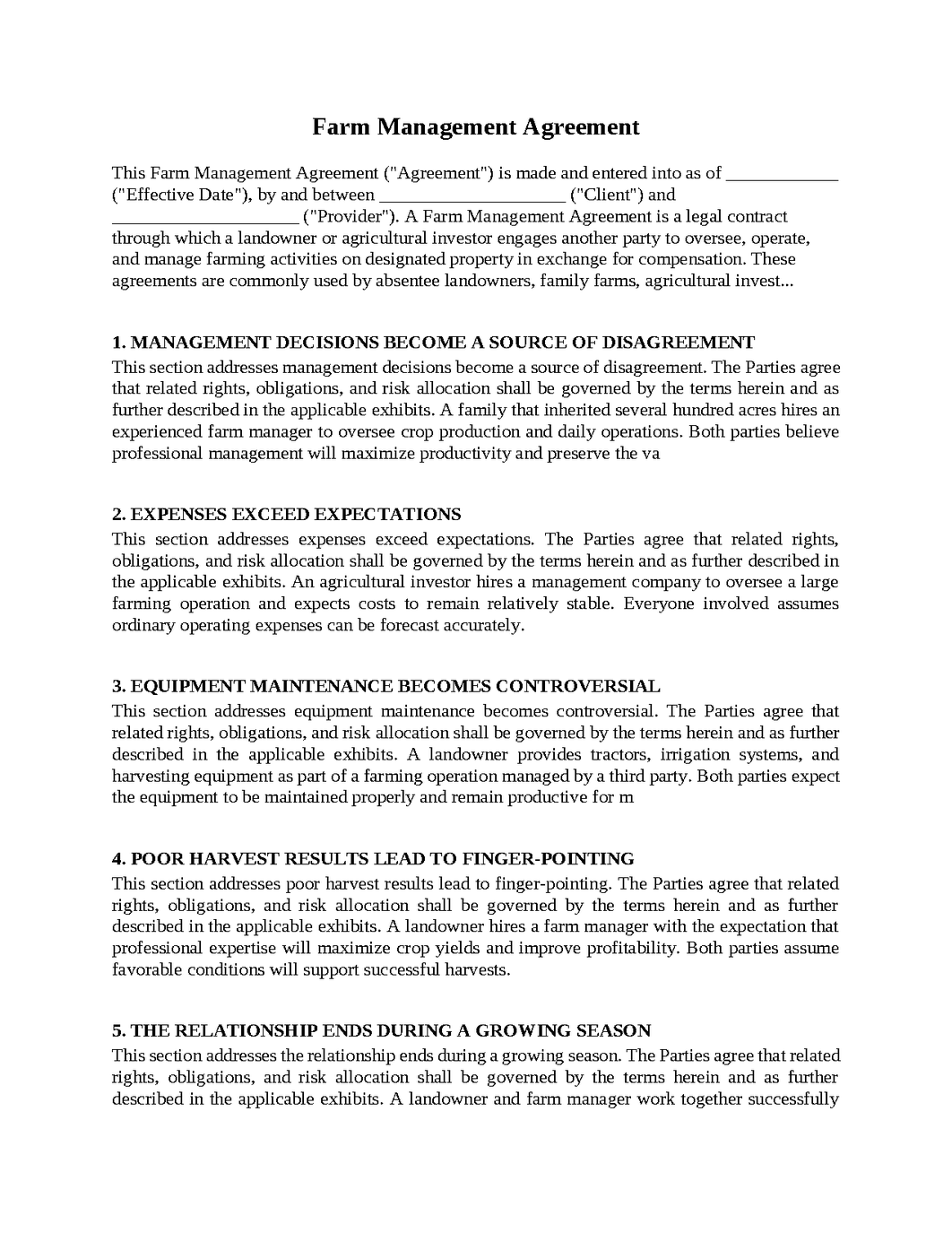
A Farm Management Agreement is a legal contract through which a landowner or agricultural investor engages another party to oversee, operate, and manage farming activities on designated property in exchange for compensation. These agreements are commonly used by absentee landowners, family farms, agricultural investors, ranch owners, and estates seeking professional management of crops, livestock, equipment, and personnel. A Farm Management Agreement typically addresses operational authority, compensation, budgeting, maintenance responsibilities, reporting obligations, and procedures governing termination and succession. Because agricultural operations involve fluctuating markets, weather risks, and significant capital investments, disputes can arise when expectations regarding management authority and performance are not documented clearly. A carefully drafted Farm Management Agreement helps establish certainty and protect the interests of both property owners and farm managers.
Management Decisions Become a Source of Disagreement
A family that inherited several hundred acres hires an experienced farm manager to oversee crop production and daily operations. Both parties believe professional management will maximize productivity and preserve the value of the property.
During the first few years, production remains strong and the relationship operates smoothly. Over time, however, disagreements emerge regarding crop selection, fertilizer applications, and investments in new equipment.
The owners believe major decisions should reflect the family's conservative approach and long-term priorities. The farm manager believes adapting to changing market conditions requires flexibility and argues that operational decisions should remain within the manager's authority. As profits fluctuate, tensions develop regarding who should control important decisions.
To help avoid this problem, a Farm Management Agreement should clearly establish management authority and define which decisions require owner approval.
Expenses Exceed Expectations
An agricultural investor hires a management company to oversee a large farming operation and expects costs to remain relatively stable. Everyone involved assumes ordinary operating expenses can be forecast accurately.
Unexpected increases in fertilizer prices, fuel costs, and equipment repairs significantly affect the annual budget. Additional expenditures become necessary to maintain productivity and preserve yields.
The property owner believes the manager should have controlled costs more effectively and provided earlier warnings about rising expenses. The manager believes changing market conditions and unexpected repairs made additional spending unavoidable. As profitability declines, disagreements emerge regarding responsibility for the increased costs.
To help prevent these issues, a Farm Management Agreement should clearly establish budgeting procedures and define how extraordinary expenses will be approved and allocated.
Equipment Maintenance Becomes Controversial
A landowner provides tractors, irrigation systems, and harvesting equipment as part of a farming operation managed by a third party. Both parties expect the equipment to be maintained properly and remain productive for many years.
As machinery ages, repairs become more frequent and replacement costs increase. Questions arise regarding whether maintenance has been performed adequately and who should bear the costs associated with major repairs.
The owner believes the manager should be responsible for preserving equipment because the machinery is essential to daily operations. The manager believes aging assets and normal wear contributed to the problems and argues that major capital expenditures should remain the responsibility of the owner. As equipment failures affect production, tensions increase regarding maintenance obligations.
To help avoid these problems, a Farm Management Agreement should clearly establish maintenance responsibilities and define how repair and replacement costs will be handled.
Poor Harvest Results Lead to Finger-Pointing
A landowner hires a farm manager with the expectation that professional expertise will maximize crop yields and improve profitability. Both parties assume favorable conditions will support successful harvests.
Unexpected weather conditions, pests, and market changes result in disappointing yields and lower revenues. Questions arise regarding whether different management decisions could have produced better results.
The owner believes the manager should be accountable because operational decisions were entrusted to the management company. The manager believes many factors affecting crop performance were beyond anyone's control and argues that no farming strategy guarantees success. As losses accumulate, frustrations develop regarding the standards by which performance should be measured.
To help prevent these issues, a Farm Management Agreement should clearly establish performance expectations and define the factors that affect the manager's responsibilities.
The Relationship Ends During a Growing Season
A landowner and farm manager work together successfully for many years and structure operations around the expectation of a continuing relationship. Both parties assume transitions can be addressed when necessary.
Unexpected changes in priorities eventually lead the owner to seek new management while crops are still in the field. Questions arise regarding unfinished work, crop proceeds, employee responsibilities, and access to records.
The farm manager believes continuity is necessary to protect the value of the crops and ensure an orderly transition. The owner believes a change in management should occur immediately and expects cooperation in transferring responsibilities. As harvest season approaches, disagreements emerge regarding the obligations that survive termination.
To help avoid this problem, a Farm Management Agreement should clearly establish termination procedures and identify the rights and responsibilities that continue after the relationship ends.
Farm Management Agreements are valuable tools that allow landowners to benefit from professional expertise while preserving the productivity and value of agricultural assets. However, issues involving management authority, unexpected expenses, equipment maintenance, poor harvest results, and termination during active operations can become significant sources of conflict when expectations are not documented clearly. A carefully drafted Farm Management Agreement provides a structured framework for allocating responsibilities and protecting the interests of both owners and managers. When prepared thoughtfully, it can reduce uncertainty, strengthen working relationships, support long-term planning, and provide the foundation necessary for successful agricultural operations.

Get started with Upsign today!
Easily send, sign and track your documents