

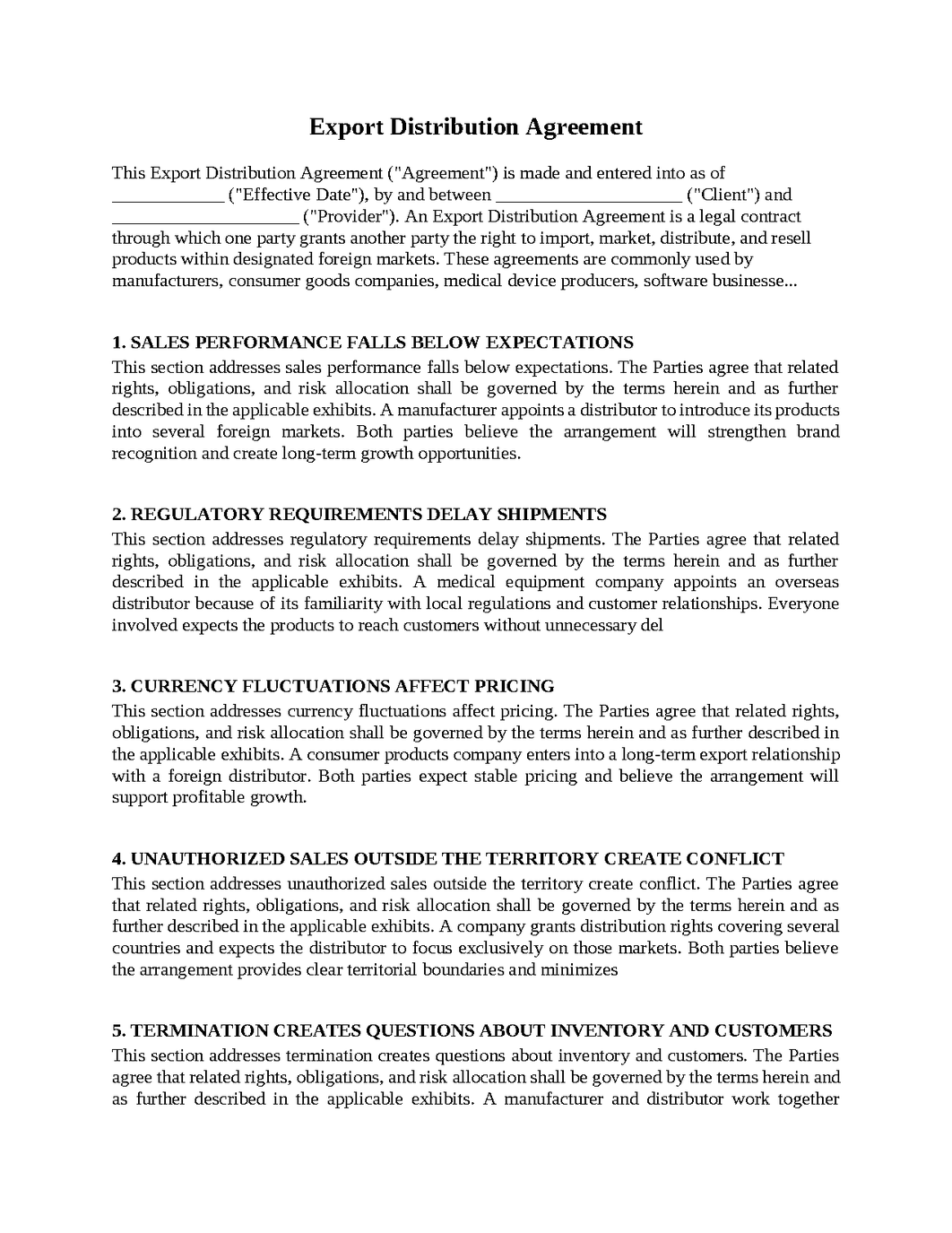
Export Distribution Agreement
An Export Distribution Agreement is a legal contract through which one party grants another party the right to import, market, distribute, and resell products within designated foreign markets. These agreements are commonly used by manufacturers, consumer goods companies, medical device producers, software businesses, and industrial suppliers seeking to expand internationally through local distribution partners. An Export Distribution Agreement typically addresses territories, pricing, inventory requirements, regulatory compliance, intellectual property protections, and procedures governing renewal and termination. Because international distribution relationships involve different laws, currencies, and business customs, disputes can arise when expectations regarding responsibilities and rights are not documented clearly. A carefully drafted Export Distribution Agreement helps establish certainty and protect the interests of both exporters and distributors.
Sales Performance Falls Below Expectations
A manufacturer appoints a distributor to introduce its products into several foreign markets. Both parties believe the arrangement will strengthen brand recognition and create long-term growth opportunities.
During the early years, customer relationships develop steadily and revenues increase. Over time, however, economic conditions and increased competition begin affecting demand. Sales decline and inventory turnover slows considerably.
The manufacturer believes the distributor should devote additional resources to marketing and customer support because the opportunity was granted in reliance upon strong performance. The distributor believes changing market conditions have reduced demand and argues that sales targets should be adjusted. As revenues continue to disappoint, frustrations increase and both parties begin questioning the future of the relationship.
To help avoid this problem, an Export Distribution Agreement should clearly establish performance expectations and define the circumstances under which distribution rights may be modified or terminated.
Regulatory Requirements Delay Shipments
A medical equipment company appoints an overseas distributor because of its familiarity with local regulations and customer relationships. Everyone involved expects the products to reach customers without unnecessary delays.
As demand increases, questions arise regarding product registrations, customs procedures, and licensing requirements. Shipments become delayed and certain products cannot be sold until additional approvals are obtained.
The manufacturer believes the distributor should have anticipated these requirements because of its local expertise. The distributor believes the manufacturer should have provided more technical documentation and support. As customers become frustrated and sales opportunities are lost, tensions emerge regarding responsibility for compliance.
To help prevent these issues, an Export Distribution Agreement should clearly establish regulatory responsibilities and define which party is responsible for obtaining approvals and satisfying legal requirements.
Currency Fluctuations Affect Pricing
A consumer products company enters into a long-term export relationship with a foreign distributor. Both parties expect stable pricing and believe the arrangement will support profitable growth.
Unexpected currency fluctuations and rising transportation costs significantly affect profit margins. The distributor struggles to maintain competitive pricing, while the manufacturer experiences increasing production expenses.
The distributor believes pricing adjustments are necessary to remain competitive in the local market. The manufacturer believes the distributor assumed the risks associated with operating internationally and expects the original pricing structure to remain intact. As financial pressures increase, disagreements arise regarding how those risks should be shared.
To help avoid these problems, an Export Distribution Agreement should clearly establish pricing mechanisms and define procedures for addressing currency fluctuations and cost increases.
Unauthorized Sales Outside the Territory Create Conflict
A company grants distribution rights covering several countries and expects the distributor to focus exclusively on those markets. Both parties believe the arrangement provides clear territorial boundaries and minimizes competition.
As opportunities expand, the distributor begins selling products to customers located outside the authorized territory. Existing distributors in neighboring regions complain that customer relationships are being disrupted.
The manufacturer believes territorial restrictions are essential to preserving relationships with other partners and expects them to be honored. The distributor believes customer demand should not be limited by arbitrary boundaries and argues that the additional sales benefit everyone involved. As tensions spread throughout the distribution network, disagreements emerge regarding the scope of the rights granted.
To help prevent these issues, an Export Distribution Agreement should clearly define territorial rights and establish procedures governing sales outside authorized markets.
Termination Creates Questions About Inventory and Customers
A manufacturer and distributor work together successfully for many years and gradually build strong relationships with customers throughout several countries. Both parties assume the arrangement will continue indefinitely and invest heavily in future growth.
Eventually, changing strategies lead one side to terminate the relationship. Questions arise regarding remaining inventory, outstanding warranties, unpaid invoices, and customer accounts developed over many years.
The distributor believes years of effort justify compensation and transition assistance. The manufacturer believes future customer relationships belong to the brand and expects operations to transfer efficiently. As customers continue placing orders and seeking support, disagreements emerge regarding the obligations that survive termination.
To help avoid this problem, an Export Distribution Agreement should clearly establish termination procedures and identify the rights and responsibilities that continue after the relationship ends.
Export Distribution Agreements are valuable tools that allow businesses to enter foreign markets while leveraging the expertise and relationships of local distributors. However, issues involving sales performance, regulatory compliance, pricing disputes, territorial conflicts, and post-termination obligations can become significant sources of conflict when expectations are not documented clearly. A carefully drafted Export Distribution Agreement provides a structured framework for allocating responsibilities and protecting the interests of both exporters and distributors. When prepared thoughtfully, it can reduce uncertainty, strengthen commercial relationships, encourage international growth, and provide the foundation necessary for successful cross-border distribution arrangements.

Get started with Upsign today!
Easily send, sign and track your documents