

Export Agency Agreement
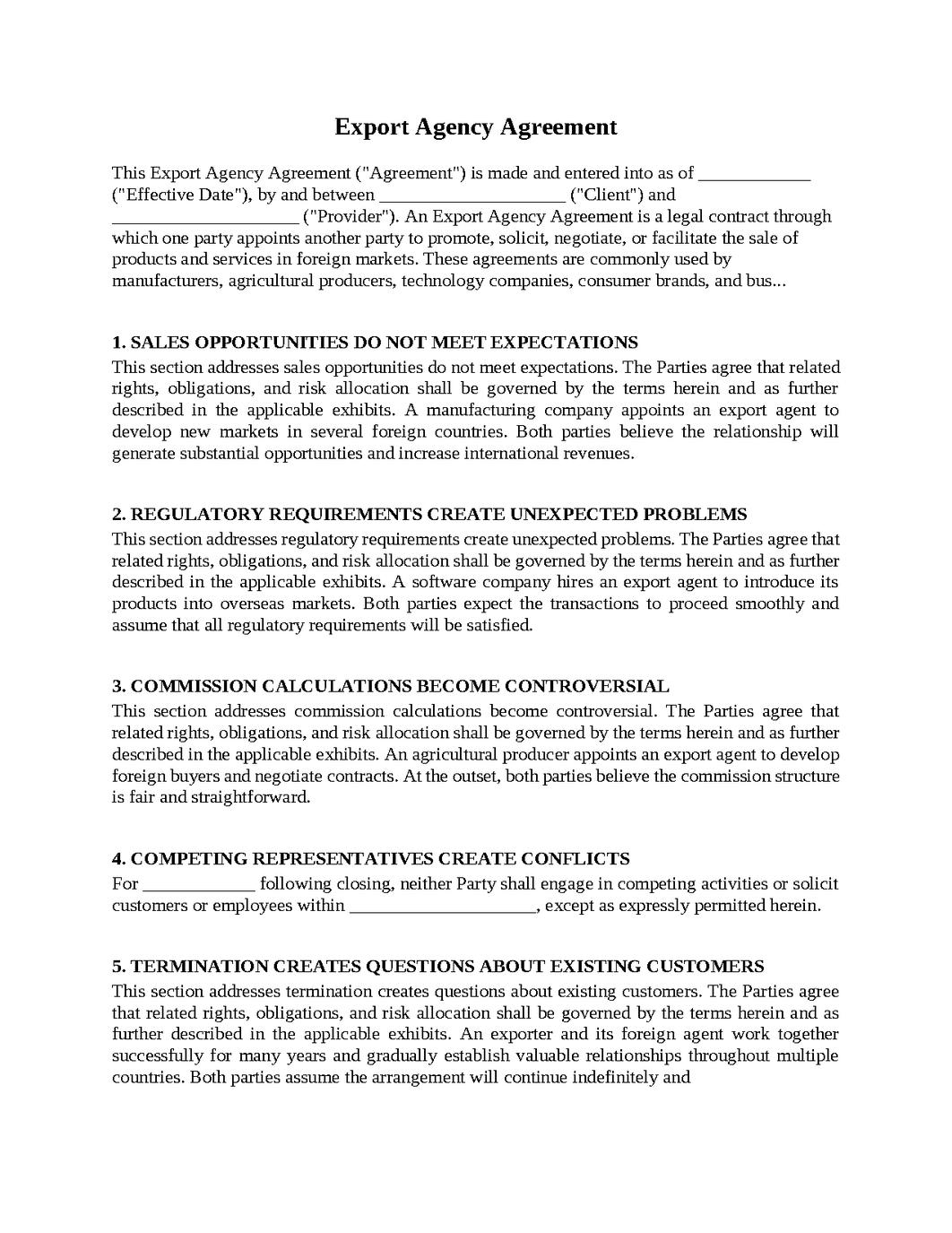
An Export Agency Agreement is a legal contract through which one party appoints another party to promote, solicit, negotiate, or facilitate the sale of products and services in foreign markets. These agreements are commonly used by manufacturers, agricultural producers, technology companies, consumer brands, and businesses seeking to expand internationally without establishing a direct presence in every country. An Export Agency Agreement typically addresses territories, commissions, marketing responsibilities, regulatory compliance, exclusivity rights, and procedures governing termination and renewal. Because international transactions involve different laws, customs, and business practices, disputes can arise when expectations regarding authority and obligations are not documented clearly. A carefully drafted Export Agency Agreement helps establish certainty and protect the interests of both exporters and agents.
Sales Opportunities Do Not Meet Expectations
A manufacturing company appoints an export agent to develop new markets in several foreign countries. Both parties believe the relationship will generate substantial opportunities and increase international revenues.
During the first few years, customer relationships begin to develop and early sales show promise. Over time, however, economic conditions and increased competition slow growth and revenues fall below expectations.
The manufacturer believes the agent should devote additional effort and resources because the international opportunities justified the appointment. The agent believes changing market conditions and local challenges have affected demand and argues that the original projections were unrealistic. As sales continue to disappoint, frustrations increase regarding the value of the relationship.
To help avoid this problem, an Export Agency Agreement should clearly establish performance expectations and define the circumstances under which the arrangement may be modified or terminated.
Regulatory Requirements Create Unexpected Problems
A software company hires an export agent to introduce its products into overseas markets. Both parties expect the transactions to proceed smoothly and assume that all regulatory requirements will be satisfied.
As sales increase, questions arise regarding customs rules, licensing requirements, and local laws affecting the products. Delays and compliance issues begin interfering with deliveries and customer relationships.
The manufacturer believes the agent should understand and manage local regulatory requirements because of its experience in the market. The agent believes certain compliance obligations belong to the exporter and argues that the products themselves created the difficulties. As costs and delays increase, disagreements emerge regarding responsibility for satisfying legal requirements.
To help prevent these issues, an Export Agency Agreement should clearly establish compliance obligations and define the responsibilities associated with international regulations.
Commission Calculations Become Controversial
An agricultural producer appoints an export agent to develop foreign buyers and negotiate contracts. At the outset, both parties believe the commission structure is fair and straightforward.
As international sales increase, questions arise regarding exchange rates, discounts, shipping costs, and customer rebates. Different interpretations of the agreement produce conflicting calculations regarding the commissions earned.
The agent believes years of relationship-building justify compensation on all transactions involving customers it introduced. The producer believes certain adjustments and costs should reduce the amount payable. As revenues grow, tensions develop regarding how commissions should be measured and paid.
To help avoid these problems, an Export Agency Agreement should clearly establish commission formulas and define the procedures governing accounting and payments.
Competing Representatives Create Conflicts
A consumer products company appoints an export agent to represent its products in a specific region. Both parties expect the relationship to encourage long-term cooperation and strengthen customer relationships.
Several years later, the company begins working with additional representatives and distributors who pursue many of the same customers. The original agent becomes concerned that the value of the relationship is being diminished.
The agent believes years of effort and market development justify protection from internal competition. The exporter believes changing market conditions require additional channels and argues that flexibility is necessary for growth. As customer relationships become increasingly valuable, disagreements emerge regarding territorial rights and exclusivity.
To help prevent these issues, an Export Agency Agreement should clearly establish territorial rights and define whether the relationship is exclusive or nonexclusive.
Termination Creates Questions About Existing Customers
An exporter and its foreign agent work together successfully for many years and gradually establish valuable relationships throughout multiple countries. Both parties assume the arrangement will continue indefinitely and invest heavily in future growth.
Eventually, changing priorities lead one side to terminate the relationship. Questions arise regarding pending orders, unpaid commissions, customer ownership, and obligations involving warranties and after-sale support.
The agent believes years of effort justify continued compensation and protection for customers it developed. The exporter believes future business belongs exclusively to the company and expects a prompt transition. As existing customers continue placing orders, tensions increase regarding the obligations that survive termination.
To help avoid this problem, an Export Agency Agreement should clearly establish termination procedures and identify the rights and responsibilities that continue after the relationship ends.
Export Agency Agreements are valuable tools that allow businesses to expand internationally while leveraging the experience and relationships of local representatives. However, issues involving performance expectations, regulatory compliance, commission disputes, competing representatives, and post-termination customer rights can become significant sources of conflict when expectations are not documented clearly. A carefully drafted Export Agency Agreement provides a structured framework for allocating responsibilities and protecting the interests of both exporters and agents. When prepared thoughtfully, it can reduce uncertainty, strengthen commercial relationships, encourage global growth, and provide the foundation necessary for successful international trade.

Get started with Upsign today!
Easily send, sign and track your documents