

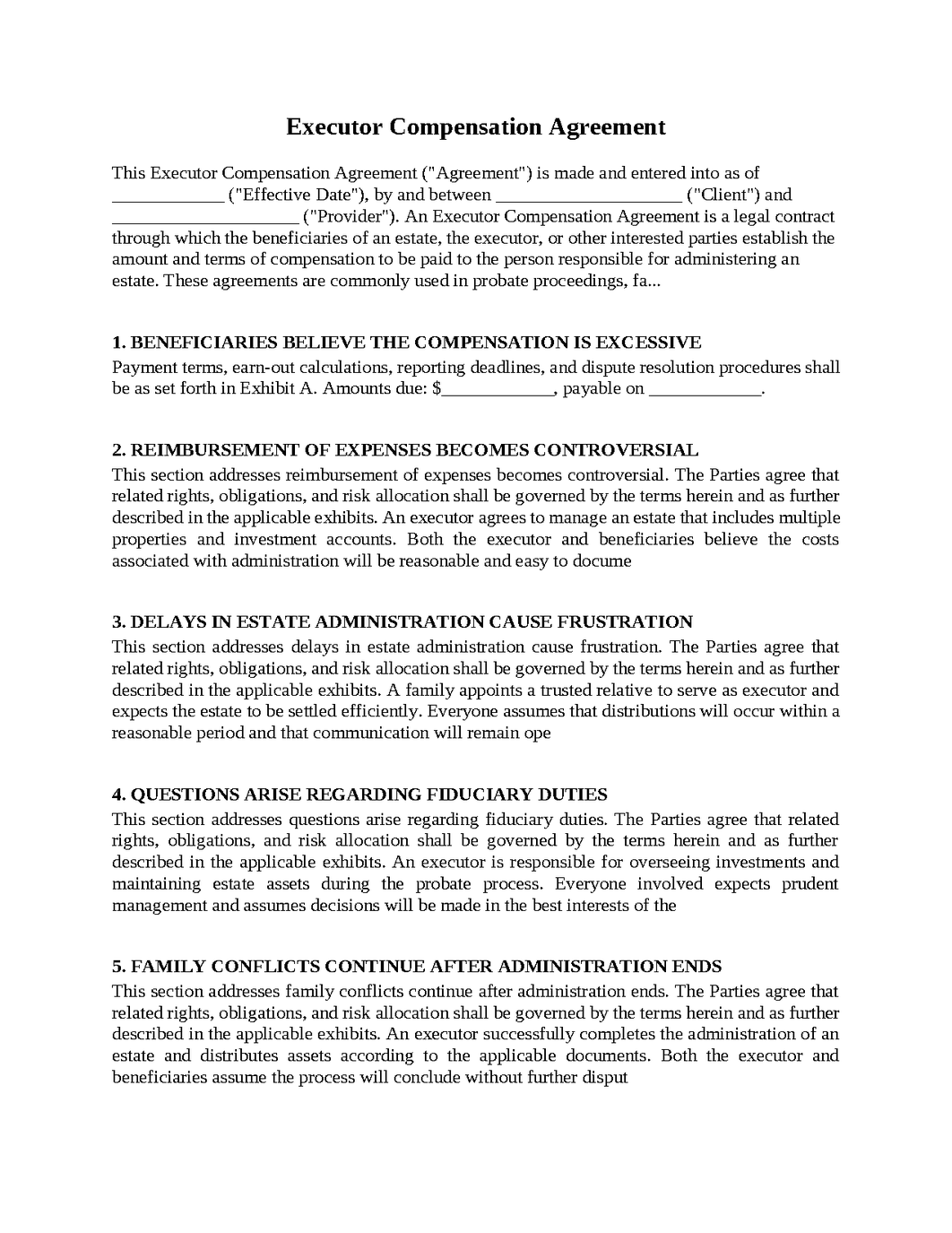
Executor Compensation Agreement
An Executor Compensation Agreement is a legal contract through which the beneficiaries of an estate, the executor, or other interested parties establish the amount and terms of compensation to be paid to the person responsible for administering an estate. These agreements are commonly used in probate proceedings, family estates, trusts, and situations involving complex assets that require substantial management and oversight. An Executor Compensation Agreement typically addresses compensation formulas, reimbursement of expenses, duties and responsibilities, reporting obligations, dispute procedures, and the circumstances under which compensation may be modified. Because estate administration often involves family relationships and emotional considerations, disputes can arise when expectations regarding compensation and performance are not documented clearly. A carefully drafted Executor Compensation Agreement helps establish certainty and protect the interests of executors and beneficiaries alike.
Beneficiaries Believe the Compensation Is Excessive
An individual is appointed as executor of a parent's estate and agrees to devote significant time to managing assets, paying creditors, and distributing property. Everyone initially assumes the work will be straightforward and that compensation will be fair.
As the administration progresses, unexpected tax issues and property matters require much more effort than originally anticipated. The executor spends countless hours resolving problems and maintaining communication with professionals and family members.
Some beneficiaries believe the executor is receiving more compensation than necessary and argue that many tasks are ordinary family responsibilities. The executor believes the amount reflects the complexity of the estate and the time invested in protecting its value. As emotions become intertwined with financial concerns, disagreements begin affecting family relationships.
To help avoid this problem, an Executor Compensation Agreement should clearly establish how compensation will be calculated and identify the services that justify payment.
Reimbursement of Expenses Becomes Controversial
An executor agrees to manage an estate that includes multiple properties and investment accounts. Both the executor and beneficiaries believe the costs associated with administration will be reasonable and easy to document.
Over time, travel expenses, legal consultations, and property maintenance costs begin accumulating. Questions emerge regarding which expenses are appropriate and whether certain costs primarily benefited the executor rather than the estate.
The beneficiaries believe only necessary expenses should be reimbursed and expect careful documentation. The executor believes the expenditures were essential to preserving estate assets and carrying out fiduciary duties. As reimbursement requests increase, tensions develop regarding what costs should be approved.
To help prevent these issues, an Executor Compensation Agreement should clearly establish reimbursement standards and define the procedures for documenting expenses.
Delays in Estate Administration Cause Frustration
A family appoints a trusted relative to serve as executor and expects the estate to be settled efficiently. Everyone assumes that distributions will occur within a reasonable period and that communication will remain open.
Unexpected legal issues and disputes among heirs significantly delay the process. Months turn into years, and beneficiaries begin questioning whether the executor is managing the estate effectively.
The beneficiaries believe delays should reduce compensation because distributions have been postponed. The executor believes the complications were beyond personal control and argues that additional work actually increased the value of the services provided. As frustrations increase, both sides begin disputing whether the compensation remains appropriate.
To help avoid these problems, an Executor Compensation Agreement should clearly establish reporting requirements and define how delays affect compensation and responsibilities.
Questions Arise Regarding Fiduciary Duties
An executor is responsible for overseeing investments and maintaining estate assets during the probate process. Everyone involved expects prudent management and assumes decisions will be made in the best interests of the beneficiaries.
Market fluctuations and changing economic conditions eventually affect the value of certain investments. Some beneficiaries become concerned that better decisions could have preserved more wealth for the estate.
The beneficiaries believe the executor should be held accountable for investment losses and poor decisions. The executor believes reasonable judgment was exercised and argues that market conditions created risks that could not have been avoided. As financial losses become more significant, disagreements emerge regarding the standard of care expected from the executor.
To help prevent these issues, an Executor Compensation Agreement should clearly establish fiduciary obligations and define the standards governing the executor's conduct.
Family Conflicts Continue After Administration Ends
An executor successfully completes the administration of an estate and distributes assets according to the applicable documents. Both the executor and beneficiaries assume the process will conclude without further disputes.
After distributions are completed, family members begin revisiting questions regarding fees, expenses, and decisions made during the administration. Old disagreements resurface and relationships become strained.
Some beneficiaries believe additional explanations are necessary and question whether all compensation was justified. The executor believes the responsibilities were fulfilled properly and expects finality after years of work. As tensions continue, the parties realize that unresolved questions can linger long after the estate itself has been settled.
To help avoid this problem, an Executor Compensation Agreement should clearly establish accounting procedures and identify the obligations that survive after estate administration is complete.
Executor Compensation Agreements are valuable tools that help define expectations and promote fairness during the administration of estates. However, issues involving compensation levels, expense reimbursements, delays, fiduciary responsibilities, and post-administration disputes can become significant sources of conflict when expectations are not documented clearly. A carefully drafted Executor Compensation Agreement provides a structured framework for allocating responsibilities and protecting the interests of executors and beneficiaries. When prepared thoughtfully, it can reduce uncertainty, preserve family relationships, encourage transparency, and provide the foundation necessary for effective estate administration.

Get started with Upsign today!
Easily send, sign and track your documents