

Event Liability Release
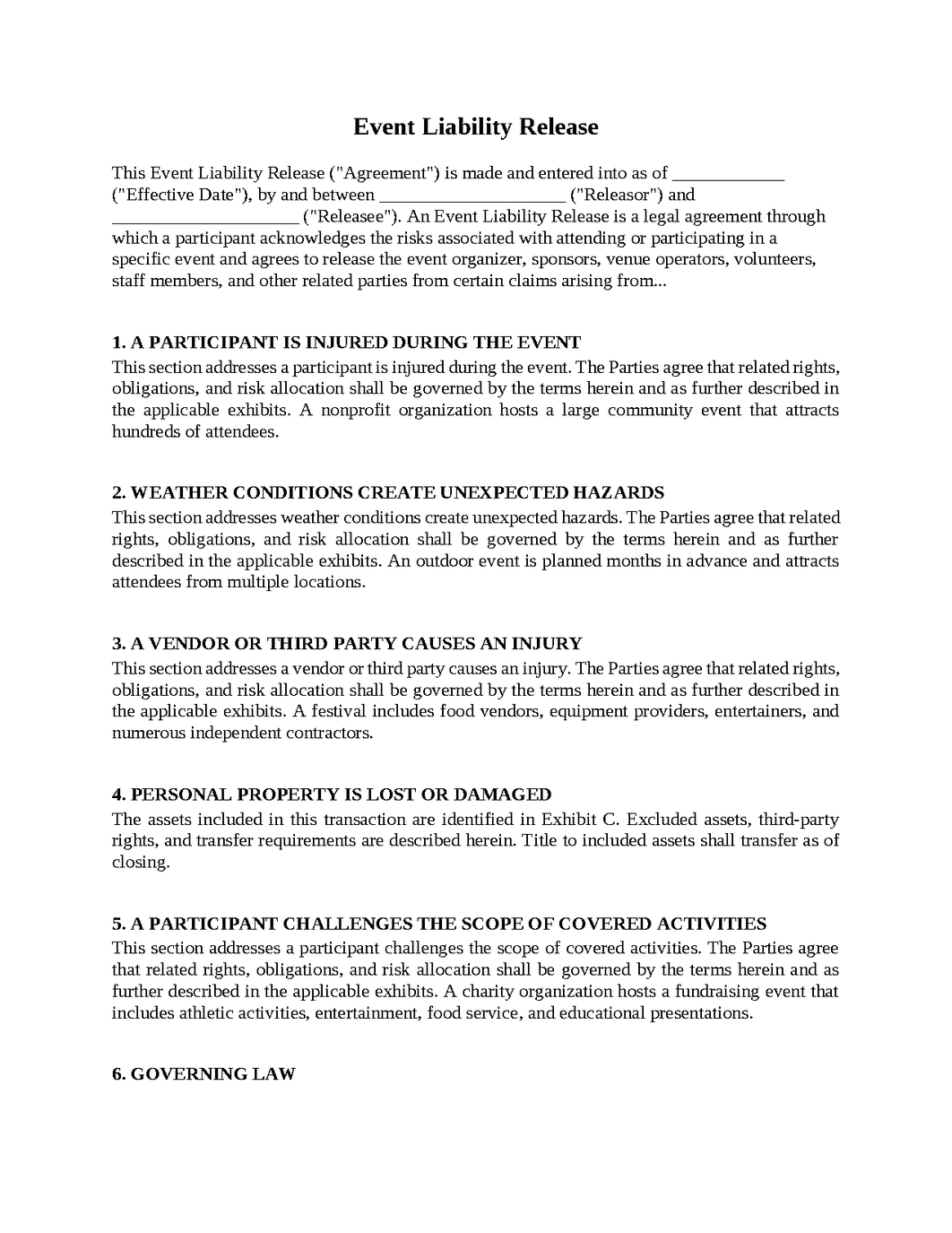
An Event Liability Release is a legal agreement through which a participant acknowledges the risks associated with attending or participating in a specific event and agrees to release the event organizer, sponsors, venue operators, volunteers, staff members, and other related parties from certain claims arising from the event. These agreements are commonly used for festivals, races, charity events, concerts, conferences, trade shows, community gatherings, competitions, fundraisers, corporate events, and recreational activities. Because events often involve large crowds, changing conditions, physical activities, and numerous third parties, disputes can arise when participants and organizers have different expectations regarding responsibility for injuries, losses, or damages. A carefully drafted Event Liability Release helps communicate risks, establish responsibilities, and reduce uncertainty regarding potential claims.
A Participant Is Injured During the Event
A nonprofit organization hosts a large community event that attracts hundreds of attendees.
Participants register in advance and sign Event Liability Releases acknowledging that attendance may involve certain risks. The event includes entertainment, activities, food vendors, and interactive attractions designed to engage visitors throughout the day.
During one of the activities, a participant suffers an injury that requires medical treatment. The participant believes unsafe conditions, inadequate supervision, or poor event planning contributed to the incident.
The organizers believe the activity involved risks that were disclosed beforehand and voluntarily accepted by those who chose to participate. The participant argues that certain hazards should have been prevented regardless of the release.
What began as a community celebration becomes a dispute regarding responsibility for the injury.
To help avoid this problem, an Event Liability Release should clearly identify the risks associated with attendance and participation and explain the claims participants are agreeing to release.
Weather Conditions Create Unexpected Hazards
An outdoor event is planned months in advance and attracts attendees from multiple locations.
As the event approaches, weather forecasts become increasingly uncertain. Organizers monitor conditions closely and implement reasonable safety measures while continuing preparations.
During the event, unexpected weather creates slippery surfaces, visibility challenges, and other conditions that increase the risk of accidents. Several attendees suffer minor injuries and property damage as a result.
Some participants believe the event should have been postponed or canceled. Organizers believe conditions remained manageable and that attendees voluntarily assumed the risks associated with an outdoor event.
The disagreement focuses on whether the event should have continued under the circumstances.
To help prevent these issues, an Event Liability Release should clearly address environmental conditions and explain that weather-related risks may be associated with participation.
A Vendor or Third Party Causes an Injury
A festival includes food vendors, equipment providers, entertainers, and numerous independent contractors.
Attendees sign Event Liability Releases before entering certain areas of the event. Organizers coordinate activities but rely heavily on third-party vendors to provide services throughout the day.
During the event, an attendee is injured in connection with equipment operated by an independent vendor. The attendee believes the event organizer should be responsible because the vendor was allowed to participate in the event.
The organizer argues that the vendor operated independently and that the release was intended to address risks arising from event participation. The attendee believes responsibility should extend to those who selected and supervised the vendor.
The dispute becomes complicated because multiple parties may have contributed to the incident.
To help avoid these problems, an Event Liability Release should clearly identify the parties being protected and explain how claims involving vendors, contractors, sponsors, and other third parties will be treated.
Personal Property Is Lost or Damaged
A large conference invites attendees to bring laptops, equipment, displays, and other valuable personal property.
Participants sign Event Liability Releases during registration and attend the event without concern. Throughout the conference, personal belongings are carried between sessions, exhibits, and networking events.
At the conclusion of the event, several attendees discover that personal property has been lost, stolen, or damaged. The affected participants seek compensation and argue that security measures were inadequate.
The event organizers believe attendees remained responsible for safeguarding their own property throughout the event. The participants believe additional protections should have been provided.
The disagreement centers on whether property-related losses fall within the scope of the release.
To help prevent these issues, an Event Liability Release should clearly address personal property risks and explain whether claims involving lost, stolen, or damaged belongings are included.
A Participant Challenges the Scope of Covered Activities
A charity organization hosts a fundraising event that includes athletic activities, entertainment, food service, and educational presentations.
Participants sign Event Liability Releases before attending and assume the agreement applies generally to the event. Most activities proceed successfully and without incident.
During a special activity added late in the event schedule, an injury occurs. The participant argues that the release covered only the activities originally described during registration and not the additional event components.
The organizers believe the release was intended to apply broadly to all authorized event activities regardless of when they occurred. The participant believes the scope of the agreement was much narrower.
The disagreement focuses on whether the specific activity falls within the protections provided by the release.
To help avoid these problems, an Event Liability Release should clearly identify the activities covered by the agreement and explain whether additional or related event activities are included.
Event Liability Releases are important tools for managing risk and communicating expectations before participants attend organized events. However, issues involving participant injuries, weather-related conditions, third-party vendors, property losses, and the scope of covered activities can become significant sources of conflict when expectations are not documented clearly. A carefully drafted Event Liability Release provides a structured framework for allocating risk and establishing responsibilities before an event takes place. When prepared thoughtfully, it can reduce misunderstandings, support informed participation, and provide greater certainty for organizers, sponsors, vendors, and attendees alike.

Get started with Upsign today!
Easily send, sign and track your documents