

Escrow Agreement
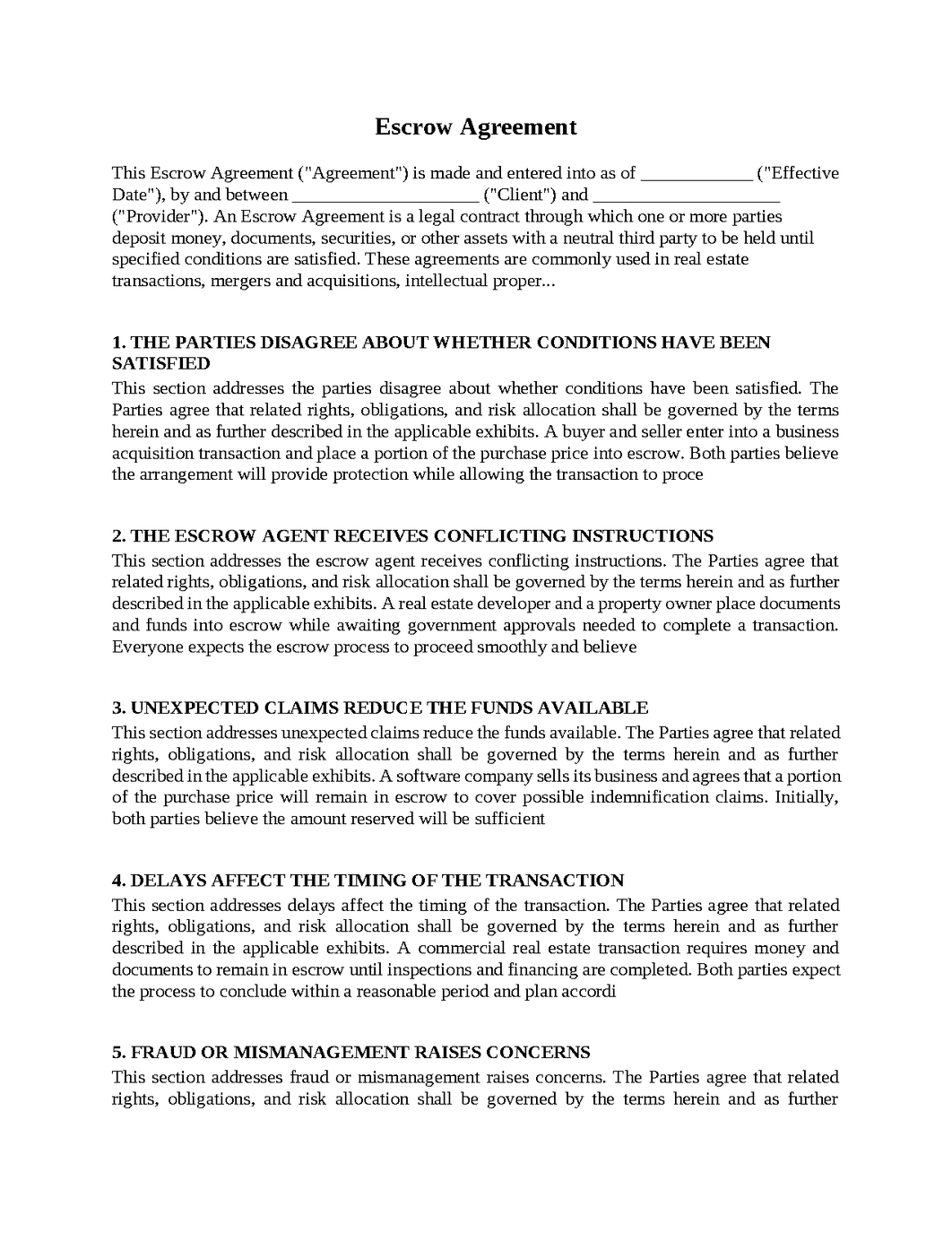
An Escrow Agreement is a legal contract through which one or more parties deposit money, documents, securities, or other assets with a neutral third party to be held until specified conditions are satisfied. These agreements are commonly used in real estate transactions, mergers and acquisitions, intellectual property transfers, litigation settlements, business sales, and financing arrangements. An Escrow Agreement typically addresses the assets being held, the conditions for release, the duties of the escrow agent, dispute procedures, and the circumstances under which the escrow arrangement may be terminated. Because escrow arrangements are designed to protect multiple parties and often involve significant sums of money, disputes can arise when expectations regarding release conditions and responsibilities are not documented clearly. A carefully drafted Escrow Agreement helps establish certainty and protect the interests of everyone involved.
The Parties Disagree About Whether Conditions Have Been Satisfied
A buyer and seller enter into a business acquisition transaction and place a portion of the purchase price into escrow. Both parties believe the arrangement will provide protection while allowing the transaction to proceed efficiently.
Following the closing, questions emerge regarding whether certain financial targets and contractual obligations have been satisfied. The buyer believes unresolved issues justify keeping the funds in escrow, while the seller believes the requirements have been fulfilled and expects immediate payment.
The seller argues that delaying the release of the money is unfair and inconsistent with the purpose of the transaction. The buyer believes retaining the funds is necessary to protect against potential losses and unresolved claims. As more time passes, frustrations increase and both parties begin interpreting the agreement differently.
To help avoid this problem, an Escrow Agreement should clearly establish the conditions required for the release of funds and define procedures for resolving disagreements.
The Escrow Agent Receives Conflicting Instructions
A real estate developer and a property owner place documents and funds into escrow while awaiting government approvals needed to complete a transaction. Everyone expects the escrow process to proceed smoothly and believes the closing requirements are clearly understood.
Unexpected delays and changing circumstances eventually lead to disagreements between the parties. Each side sends instructions to the escrow agent demanding that the assets be released in different ways.
The escrow agent believes its responsibility is to remain neutral and avoid favoring either side. Both parties insist that their interpretation of the agreement is correct and expect the escrow agent to act accordingly. As pressure increases, uncertainty develops regarding the proper course of action.
To help prevent these issues, an Escrow Agreement should clearly define the authority and obligations of the escrow agent and establish procedures for handling conflicting instructions.
Unexpected Claims Reduce the Funds Available
A software company sells its business and agrees that a portion of the purchase price will remain in escrow to cover possible indemnification claims. Initially, both parties believe the amount reserved will be sufficient and that claims will be minimal.
Several months later, customer disputes and regulatory issues begin generating expenses that exceed expectations. The buyer seeks reimbursement from the escrow account, while the seller argues that the claims are unrelated to the transaction and should not affect the funds.
The buyer believes the escrow arrangement was designed specifically to provide protection against unforeseen liabilities. The seller believes the claims fall outside the scope of the agreement and expects the money to be released. As the amount in dispute grows, tensions increase and the relationship becomes increasingly strained.
To help avoid these problems, an Escrow Agreement should clearly establish the types of claims that may be satisfied from escrowed assets and define the procedures used to evaluate those claims.
Delays Affect the Timing of the Transaction
A commercial real estate transaction requires money and documents to remain in escrow until inspections and financing are completed. Both parties expect the process to conclude within a reasonable period and plan accordingly.
Unexpected complications involving lenders and regulatory approvals delay the closing. Weeks turn into months, and questions arise regarding interest earned on the escrow funds and whether either party has the right to terminate the arrangement.
One side believes additional time should be granted because the delays are temporary and unavoidable. The other side believes prolonged uncertainty is unreasonable and wishes to recover its assets immediately. As deadlines continue passing, frustrations grow regarding the future of the transaction.
To help prevent these issues, an Escrow Agreement should clearly establish deadlines and define the rights of the parties if conditions are not satisfied within the expected timeframe.
Fraud or Mismanagement Raises Concerns
A group of investors places substantial funds into escrow while waiting for the completion of a development project. Everyone involved assumes the escrow agent will safeguard the assets and administer the account responsibly.
Over time, discrepancies appear in account records and questions arise concerning whether the assets have been properly maintained. Investors become concerned that errors or misconduct may have affected the funds.
The investors believe the escrow agent should be held accountable for protecting the assets entrusted to its care. The escrow agent believes it acted reasonably and argues that certain losses resulted from circumstances beyond its control. As concerns intensify, disputes emerge regarding liability and the standard of care expected under the arrangement.
To help avoid this problem, an Escrow Agreement should clearly establish the duties of the escrow agent and define the standards governing the handling and protection of escrowed assets.
Escrow Agreements are valuable tools that provide security and confidence in transactions involving money, property, and contractual obligations. However, issues involving release conditions, conflicting instructions, indemnification claims, delays, and the conduct of escrow agents can become significant sources of conflict when expectations are not documented clearly. A carefully drafted Escrow Agreement provides a structured framework for allocating responsibilities and protecting the interests of all parties involved. When prepared thoughtfully, it can reduce uncertainty, preserve trust, facilitate complex transactions, and provide the assurance necessary for successful business and financial arrangements.

Get started with Upsign today!
Easily send, sign and track your documents