

Equipment Rental Agreement
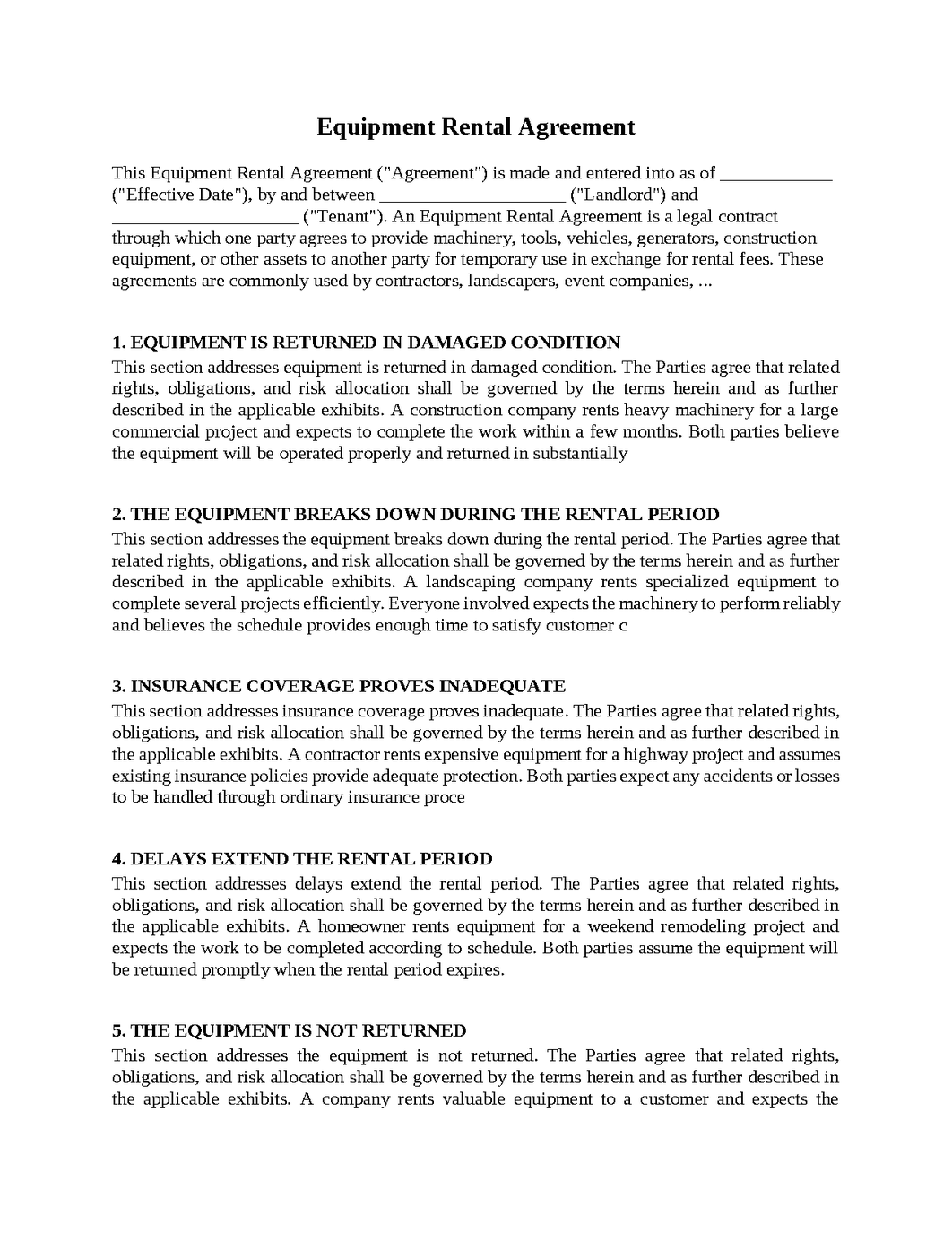
An Equipment Rental Agreement is a legal contract through which one party agrees to provide machinery, tools, vehicles, generators, construction equipment, or other assets to another party for temporary use in exchange for rental fees. These agreements are commonly used by contractors, landscapers, event companies, manufacturers, homeowners, and businesses that require specialized equipment for limited periods of time. An Equipment Rental Agreement typically addresses rental terms, payment obligations, maintenance responsibilities, insurance requirements, damage provisions, and procedures governing the return of the equipment. Because rented equipment often represents a significant investment and may be used under demanding conditions, disputes can arise when expectations regarding use and responsibility are not documented clearly. A carefully drafted Equipment Rental Agreement helps establish certainty and protect the interests of both equipment owners and renters.
Equipment Is Returned in Damaged Condition
A construction company rents heavy machinery for a large commercial project and expects to complete the work within a few months. Both parties believe the equipment will be operated properly and returned in substantially the same condition in which it was delivered.
During the project, difficult terrain and unexpected weather conditions place additional stress on the machinery. By the time the rental period ends, several components require extensive repairs and replacement.
The rental company believes the damage resulted from improper operation and excessive wear caused by the customer's activities. The customer believes the equipment experienced ordinary deterioration and argues that demanding work conditions were anticipated when the rental began. As repair estimates increase, disagreements emerge regarding who should bear the costs associated with restoring the equipment.
To help avoid this problem, an Equipment Rental Agreement should clearly distinguish ordinary wear from damage and establish procedures for evaluating repair expenses and allocating responsibility.
The Equipment Breaks Down During the Rental Period
A landscaping company rents specialized equipment to complete several projects efficiently. Everyone involved expects the machinery to perform reliably and believes the schedule provides enough time to satisfy customer commitments.
Shortly after work begins, the equipment experiences mechanical failures that interrupt operations and delay project completion. Customers become frustrated and the landscaping company incurs additional expenses while searching for replacement equipment.
The renter believes the equipment owner should provide repairs or substitute equipment because reliable performance was essential to the purpose of the rental. The owner believes maintenance obligations were limited and argues that unexpected breakdowns are an unavoidable part of operating machinery. As delays continue affecting revenues, tensions increase regarding responsibility for lost productivity.
To help prevent these issues, an Equipment Rental Agreement should clearly establish maintenance obligations and define the remedies available when equipment becomes unavailable.
Insurance Coverage Proves Inadequate
A contractor rents expensive equipment for a highway project and assumes existing insurance policies provide adequate protection. Both parties expect any accidents or losses to be handled through ordinary insurance procedures.
Following a serious accident, it becomes clear that the available coverage does not fully compensate for the damage sustained by the equipment. Additional expenses remain unpaid, creating uncertainty regarding who is responsible for the deficiency.
The equipment owner believes the renter was obligated to maintain sufficient insurance and expects reimbursement for the remaining losses. The renter believes the insurance requirements were unclear and argues that the owner should share some of the financial burden. As claims and invoices accumulate, both sides begin disputing the extent of their obligations.
To help avoid these problems, an Equipment Rental Agreement should clearly establish insurance requirements and explain the consequences associated with insufficient coverage.
Delays Extend the Rental Period
A homeowner rents equipment for a weekend remodeling project and expects the work to be completed according to schedule. Both parties assume the equipment will be returned promptly when the rental period expires.
Unexpected complications cause the project to take much longer than anticipated. The homeowner continues using the equipment for several additional weeks while attempting to finish the work.
The equipment owner believes additional rental charges are appropriate because the equipment could have been rented to other customers. The renter believes the delay was unavoidable and argues that the extra charges are excessive. As fees continue accumulating, disagreements emerge regarding the financial consequences of the extended rental.
To help prevent these issues, an Equipment Rental Agreement should clearly establish rental periods and explain the charges and procedures that apply when additional time is required.
The Equipment Is Not Returned
A company rents valuable equipment to a customer and expects the relationship to conclude once the project is complete. Both parties assume the return process will be straightforward and uneventful.
After the scheduled return date passes, repeated attempts to recover the equipment prove unsuccessful. Communication becomes increasingly difficult and concerns arise regarding the location and condition of the property.
The equipment owner believes immediate recovery is necessary to prevent further losses and protect future rental opportunities. The renter believes temporary delays should not justify aggressive collection efforts and argues that circumstances beyond its control caused the problems. As tensions increase, legal action becomes a possibility.
To help avoid this problem, an Equipment Rental Agreement should clearly establish return procedures and define the remedies available when equipment is not returned on time.
Equipment Rental Agreements are valuable tools that provide temporary access to important machinery and specialized assets without requiring permanent ownership. However, issues involving damage, breakdowns, insurance disputes, extended rental periods, and failures to return equipment can become significant sources of conflict when expectations are not documented clearly. A carefully drafted Equipment Rental Agreement provides a structured framework for allocating responsibilities and protecting the interests of both owners and renters. When prepared thoughtfully, it can reduce uncertainty, preserve business relationships, support efficient operations, and provide the flexibility necessary for completing projects successfully.

Get started with Upsign today!
Easily send, sign and track your documents