

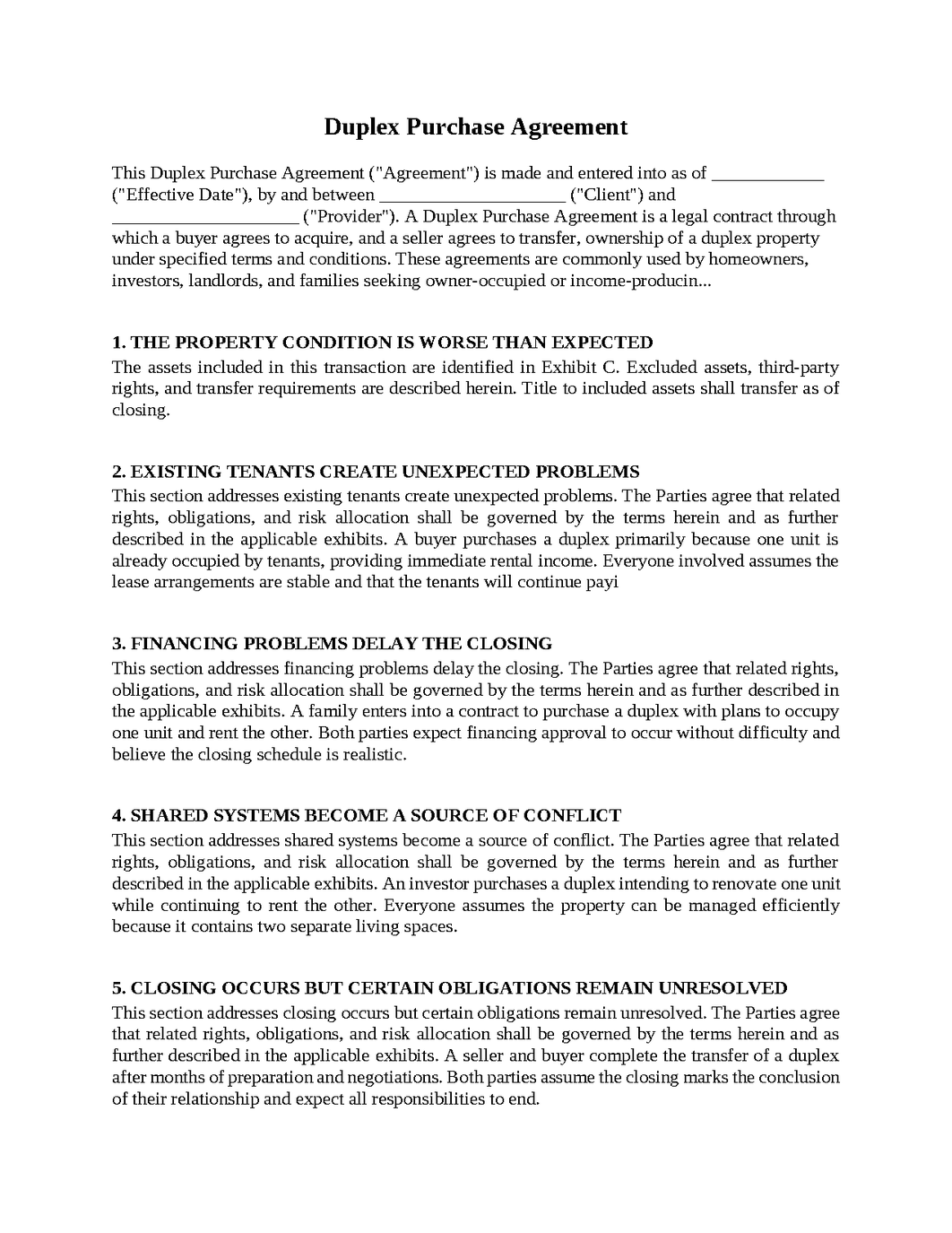
Duplex Purchase Agreement
A Duplex Purchase Agreement is a legal contract through which a buyer agrees to acquire, and a seller agrees to transfer, ownership of a duplex property under specified terms and conditions. These agreements are commonly used by homeowners, investors, landlords, and families seeking owner-occupied or income-producing residential real estate. A Duplex Purchase Agreement typically addresses the purchase price, financing contingencies, inspections, tenant matters, closing procedures, and the rights and obligations of the parties before and after closing. Because duplex properties often involve rental income and existing occupants, disputes can arise when expectations regarding the property and its operations are not documented clearly. A carefully drafted Duplex Purchase Agreement helps establish certainty and protect the interests of both buyers and sellers.
The Property Condition Is Worse Than Expected
A first-time investor enters into an agreement to purchase a duplex with the expectation that rental income from one unit will help offset mortgage expenses. Both parties believe the property is in good condition and expect the transaction to proceed smoothly.
During the inspection process, several significant issues are discovered involving plumbing, electrical systems, and deferred maintenance. Repair estimates reveal costs that are much higher than the buyer anticipated when the offer was made.
The buyer believes the seller should address the defects or reduce the purchase price because the problems materially affect the property's value. The seller believes the property was fairly priced and argues that older buildings naturally require maintenance. As negotiations become more difficult, both parties begin questioning whether the transaction should continue.
To help avoid this problem, a Duplex Purchase Agreement should clearly establish inspection rights and define how repair requests and discovered defects will be handled.
Existing Tenants Create Unexpected Problems
A buyer purchases a duplex primarily because one unit is already occupied by tenants, providing immediate rental income. Everyone involved assumes the lease arrangements are stable and that the tenants will continue paying rent.
After the agreement is signed, the buyer discovers that the tenants are behind on payments and that several disputes exist between the occupants and the seller. Questions arise regarding security deposits, lease terms, and whether the tenants intend to remain after closing.
The buyer believes important information regarding the rental situation should have been disclosed before the agreement was signed. The seller argues that tenant relationships are unpredictable and that the buyer accepted the risks associated with purchasing income-producing property. As closing approaches, tensions increase regarding responsibility for the existing problems.
To help prevent these issues, a Duplex Purchase Agreement should clearly address tenant matters and establish disclosure requirements relating to leases, deposits, and payment histories.
Financing Problems Delay the Closing
A family enters into a contract to purchase a duplex with plans to occupy one unit and rent the other. Both parties expect financing approval to occur without difficulty and believe the closing schedule is realistic.
As the lender reviews the property, questions arise concerning appraisals and income projections. Delays in underwriting prevent the loan from being approved as quickly as expected.
The buyers believe they should receive additional time because they have acted diligently throughout the process. The seller believes the closing deadline should be enforced because other opportunities were declined while waiting for the transaction to close. As uncertainty increases, both sides begin disagreeing over whether the agreement should be extended.
To help avoid these problems, a Duplex Purchase Agreement should clearly establish financing contingencies and define the procedures available when delays occur.
Shared Systems Become a Source of Conflict
An investor purchases a duplex intending to renovate one unit while continuing to rent the other. Everyone assumes the property can be managed efficiently because it contains two separate living spaces.
Following the closing, the new owner discovers that utilities, heating systems, and other infrastructure are interconnected in ways that make operations more complicated than expected. Additional expenses are required to separate services and improve functionality.
The buyer believes the seller should have disclosed these issues because they affect the property's usefulness and profitability. The seller believes the systems functioned adequately and argues that no misrepresentations were made. As renovation costs increase, disagreements emerge regarding whether the buyer received what was expected.
To help prevent these issues, a Duplex Purchase Agreement should clearly address disclosures concerning shared systems and the physical condition of the property.
Closing Occurs but Certain Obligations Remain Unresolved
A seller and buyer complete the transfer of a duplex after months of preparation and negotiations. Both parties assume the closing marks the conclusion of their relationship and expect all responsibilities to end.
Shortly after closing, disputes arise concerning prorated rents, unpaid utility bills, and security deposits held for existing tenants. Questions also emerge regarding repairs that were promised before the transfer but never completed.
The buyer believes these obligations should have been resolved before closing and expects the seller to satisfy the remaining commitments. The seller believes ownership transferred successfully and that certain matters are now the responsibility of the new owner. As frustrations increase, both parties realize that the transaction left more unresolved issues than originally anticipated.
To help avoid this problem, a Duplex Purchase Agreement should clearly establish closing procedures and identify the obligations that survive after title transfers.
Duplex Purchase Agreements are valuable tools that allow buyers and sellers to transfer income-producing residential properties while creating clear expectations for everyone involved. However, issues involving property conditions, tenant relationships, financing delays, shared systems, and post-closing obligations can become significant sources of conflict when expectations are not documented clearly. A carefully drafted Duplex Purchase Agreement provides a structured framework for allocating responsibilities and protecting the interests of both parties. When prepared thoughtfully, it can reduce uncertainty, support successful transactions, preserve working relationships, and provide the confidence necessary for investing in duplex properties.

Get started with Upsign today!
Easily send, sign and track your documents