

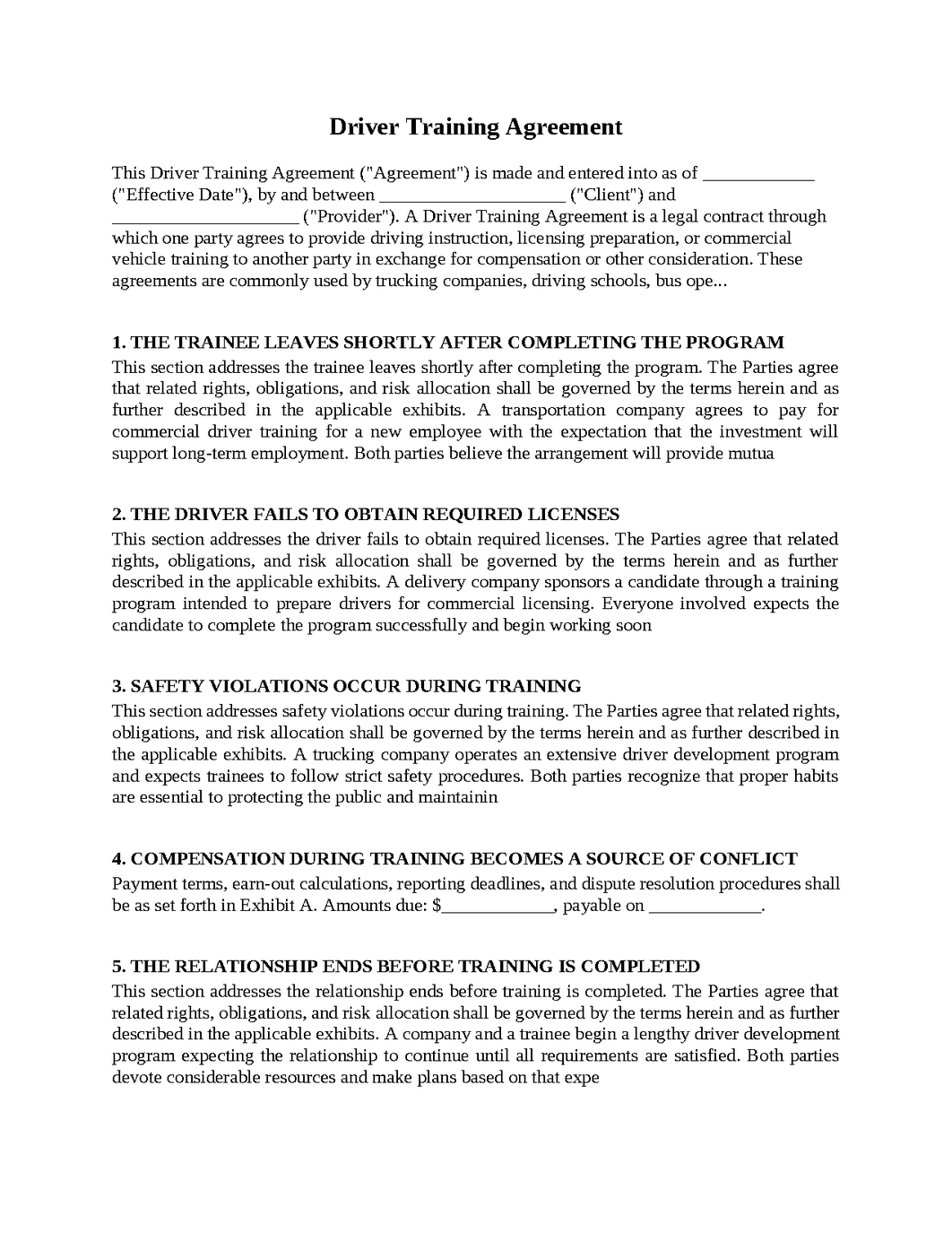
Driver Training Agreement
A Driver Training Agreement is a legal contract through which one party agrees to provide driving instruction, licensing preparation, or commercial vehicle training to another party in exchange for compensation or other consideration. These agreements are commonly used by trucking companies, driving schools, bus operators, delivery services, and employers that invest in the education and certification of professional drivers. A Driver Training Agreement typically addresses the scope of training, tuition obligations, licensing requirements, reimbursement provisions, safety standards, and the consequences that apply if the trainee fails to complete the program. Because training programs often require significant investments of time and money, disputes can arise when expectations regarding performance and repayment are not documented clearly. A carefully drafted Driver Training Agreement helps establish certainty and protect the interests of both trainers and trainees.
The Trainee Leaves Shortly After Completing the Program
A transportation company agrees to pay for commercial driver training for a new employee with the expectation that the investment will support long-term employment. Both parties believe the arrangement will provide mutual benefits and create opportunities for growth.
The employee successfully completes the training and obtains all necessary licenses. Shortly afterward, however, another company offers higher compensation and the driver decides to resign before working for the original employer for very long.
The employer believes the cost of training was incurred with the expectation that the employee would remain with the company and contribute to operations. The driver believes career opportunities should not be restricted and argues that changing jobs is a normal part of professional development. As the employer seeks reimbursement for training expenses, tensions develop regarding whether repayment is required.
To help avoid this problem, a Driver Training Agreement should clearly establish reimbursement obligations and define the circumstances under which training costs must be repaid.
The Driver Fails to Obtain Required Licenses
A delivery company sponsors a candidate through a training program intended to prepare drivers for commercial licensing. Everyone involved expects the candidate to complete the program successfully and begin working soon afterward.
Although the trainee attends classes and receives instruction, difficulties arise during examinations and licensing requirements are not satisfied. Multiple attempts to obtain the necessary credentials prove unsuccessful.
The employer believes the training resources and support provided should have been sufficient to prepare the candidate. The trainee believes unexpected challenges and testing difficulties justify additional opportunities without financial penalties. As expenses continue increasing, both parties begin questioning their respective obligations.
To help prevent these issues, a Driver Training Agreement should clearly establish performance expectations and explain the consequences that apply if required licenses are not obtained.
Safety Violations Occur During Training
A trucking company operates an extensive driver development program and expects trainees to follow strict safety procedures. Both parties recognize that proper habits are essential to protecting the public and maintaining regulatory compliance.
During practical instruction, repeated violations involving inspections, operating procedures, and defensive driving techniques raise concerns about the trainee's readiness. Supervisors become increasingly worried that unsafe practices could create future liabilities.
The company believes strict standards are necessary because safety violations affect everyone involved. The trainee believes mistakes are a natural part of the learning process and argues that additional coaching should be provided before disciplinary action is considered. As concerns increase, disagreements emerge regarding whether continued participation in the program is appropriate.
To help avoid these problems, a Driver Training Agreement should clearly establish safety standards and define the consequences associated with repeated violations.
Compensation During Training Becomes a Source of Conflict
A bus company hires individuals who must complete several weeks of training before becoming fully qualified drivers. At the beginning of the relationship, both parties assume compensation arrangements are straightforward.
As the training progresses, questions arise regarding wages for classroom instruction, travel time, testing periods, and time spent waiting between assignments. Different assumptions regarding compensation create confusion and frustration.
The trainees believe all time devoted to the program should be compensated because training directly benefits the employer. The company believes certain activities fall outside ordinary work duties and argues that compensation policies were properly explained. As more trainees raise concerns, tensions develop regarding wage expectations.
To help prevent these issues, a Driver Training Agreement should clearly establish compensation policies and explain how wages and reimbursements will be calculated during the training period.
The Relationship Ends Before Training Is Completed
A company and a trainee begin a lengthy driver development program expecting the relationship to continue until all requirements are satisfied. Both parties devote considerable resources and make plans based on that expectation.
Unexpected personal circumstances eventually force the trainee to withdraw before completing the program. Questions quickly arise regarding tuition costs, equipment, and whether any obligations survive the early departure.
The company believes resources invested in the trainee justify reimbursement and expects certain commitments to remain enforceable. The trainee believes unforeseen circumstances should excuse additional obligations and argues that no meaningful benefit was ultimately received. As financial consequences become more significant, disagreements emerge regarding how the separation should be handled.
To help avoid this problem, a Driver Training Agreement should clearly establish termination procedures and define the rights and obligations that survive if the training relationship ends prematurely.
Driver Training Agreements are valuable tools that allow employers and educational providers to develop qualified drivers while creating clear expectations for everyone involved. However, issues involving early departures, licensing failures, safety concerns, compensation disputes, and premature termination can become significant sources of conflict when expectations are not documented clearly. A carefully drafted Driver Training Agreement provides a structured framework for allocating responsibilities and protecting the interests of both trainers and trainees. When prepared thoughtfully, it can reduce uncertainty, promote safety, preserve working relationships, and provide the foundation necessary for successful driver development programs.

Get started with Upsign today!
Easily send, sign and track your documents