

Dissolution Agreement
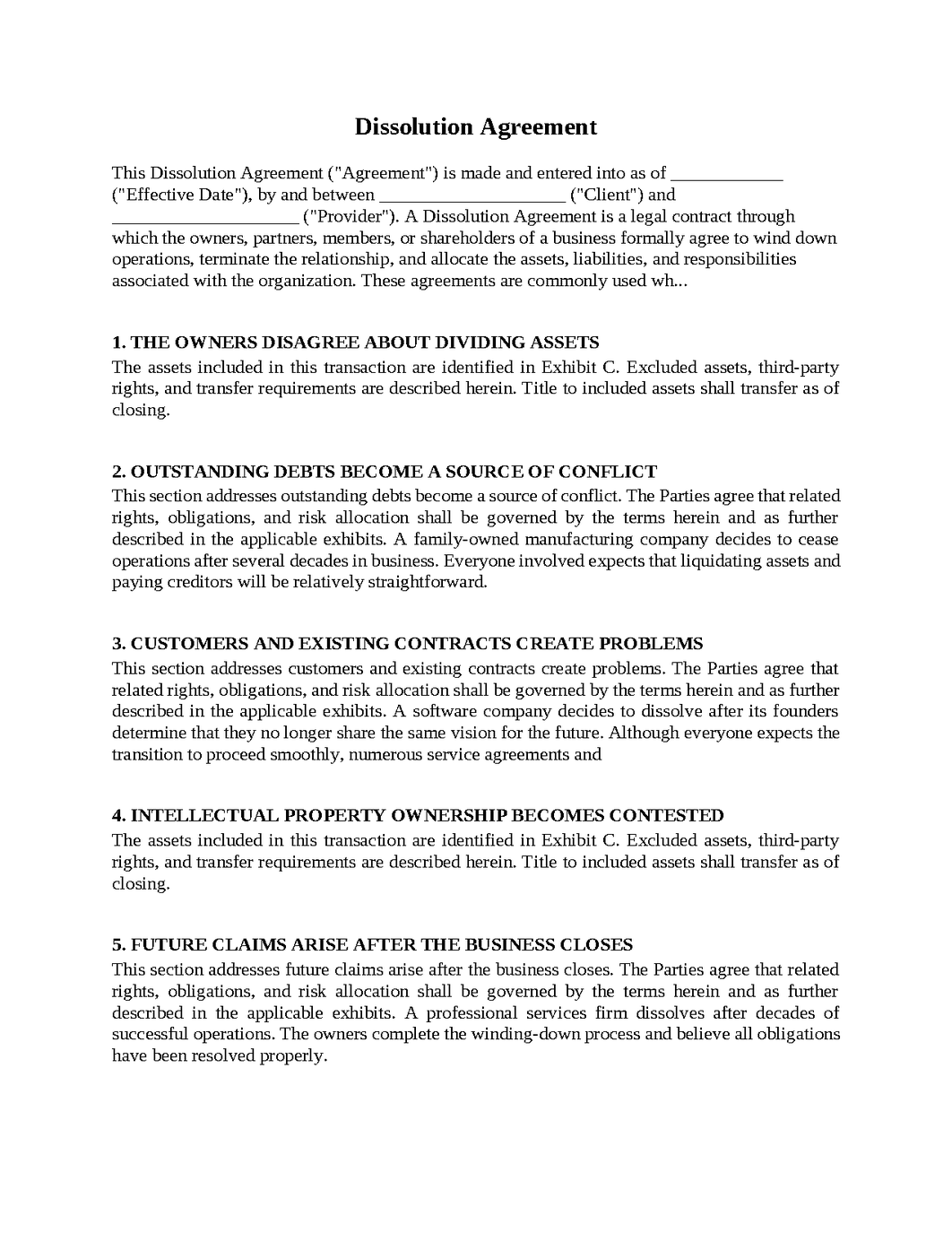
A Dissolution Agreement is a legal contract through which the owners, partners, members, or shareholders of a business formally agree to wind down operations, terminate the relationship, and allocate the assets, liabilities, and responsibilities associated with the organization. These agreements are commonly used when partnerships dissolve, limited liability companies are terminated, corporations cease operations, or business owners decide to separate after years of working together. A Dissolution Agreement typically addresses the distribution of assets, payment of debts, treatment of ongoing obligations, ownership of intellectual property, confidentiality requirements, and procedures for resolving future disputes. Because business dissolutions often involve financial and emotional issues, disputes can arise when expectations regarding the separation are not documented clearly. A carefully drafted Dissolution Agreement helps establish certainty and provide a structured framework for ending a business relationship.
The Owners Disagree About Dividing Assets
Three partners decide to dissolve a successful consulting firm after pursuing different career opportunities. Although the business has been profitable, everyone believes ending the relationship amicably will allow them to move forward without unnecessary conflict.
As operations wind down, questions emerge regarding the ownership and value of cash accounts, equipment, customer lists, and intellectual property developed during the life of the company. Each partner believes their contributions justify a larger share of certain assets.
One owner argues that years of managing operations and generating revenue should entitle that person to additional compensation. Another believes ownership percentages alone should determine how assets are distributed. As valuations and expectations begin diverging, disagreements increase and trust among the partners starts deteriorating.
To help avoid this problem, a Dissolution Agreement should clearly establish how assets will be valued and distributed among the owners following the termination of the business.
Outstanding Debts Become a Source of Conflict
A family-owned manufacturing company decides to cease operations after several decades in business. Everyone involved expects that liquidating assets and paying creditors will be relatively straightforward.
As the process unfolds, previously overlooked obligations begin surfacing. Vendors, lenders, and tax authorities submit claims that exceed what management originally anticipated, creating uncertainty regarding how the remaining liabilities should be handled.
Some owners believe all debts should be satisfied before any distributions are made. Others believe certain liabilities are the responsibility of specific individuals who incurred them during the course of operations. As creditors continue demanding payment, disagreements emerge regarding who should ultimately bear the financial burden.
To help prevent these issues, a Dissolution Agreement should clearly establish procedures for identifying and satisfying outstanding liabilities before distributing assets to owners.
Customers and Existing Contracts Create Problems
A software company decides to dissolve after its founders determine that they no longer share the same vision for the future. Although everyone expects the transition to proceed smoothly, numerous service agreements and customer relationships remain active.
Clients continue expecting support, and several contracts contain obligations that extend beyond the anticipated closure date. Employees and vendors also require guidance regarding the status of ongoing projects.
One founder believes the company should continue providing support until all obligations are fulfilled. Another believes winding down quickly will minimize expenses and prevent additional losses. As customers become concerned and contractual deadlines approach, tensions increase regarding how existing commitments should be handled.
To help avoid these problems, a Dissolution Agreement should clearly address ongoing contracts and establish procedures for satisfying or transferring obligations before operations cease.
Intellectual Property Ownership Becomes Contested
A technology startup decides to dissolve after years of developing proprietary software and valuable branding assets. Initially, everyone assumes ownership issues will be resolved easily because the business itself is ending.
As discussions progress, however, the founders realize that the software, trademarks, and customer databases possess significant future value. Several owners intend to pursue new ventures and hope to continue using assets developed during the life of the company.
One founder believes ownership should belong to the person who originally conceived the technology. Another argues that the assets belong to the company and should be divided according to ownership interests. As the commercial value of the intellectual property becomes more apparent, disagreements begin threatening what had previously been an amicable separation.
To help prevent these issues, a Dissolution Agreement should clearly establish ownership rights and define how intellectual property and other intangible assets will be treated following dissolution.
Future Claims Arise After the Business Closes
A professional services firm dissolves after decades of successful operations. The owners complete the winding-down process and believe all obligations have been resolved properly.
Months later, former clients and vendors begin asserting claims involving services performed before the company ceased operations. Questions emerge regarding who should respond to the claims and whether former owners remain responsible for liabilities that were not known when the business closed.
Some owners believe all obligations ended when the dissolution was completed. Others recognize that certain responsibilities may survive and worry that unresolved claims could create personal exposure. As attorneys and creditors become involved, the former partners realize that ending the business did not necessarily eliminate every potential liability.
To help avoid this problem, a Dissolution Agreement should clearly address surviving obligations and establish procedures for handling claims that arise after the business has been terminated.
Dissolution Agreements are valuable tools for bringing business relationships to an orderly conclusion and providing a framework for distributing assets and resolving obligations. However, issues involving asset division, outstanding debts, existing contracts, intellectual property ownership, and future claims can become significant sources of conflict when expectations are not documented clearly. A carefully drafted Dissolution Agreement provides a structured framework for allocating responsibilities and protecting the interests of everyone involved. When prepared thoughtfully, it can reduce uncertainty, preserve professional relationships, minimize disputes, and provide the finality necessary for former owners to move forward with confidence.

Get started with Upsign today!
Easily send, sign and track your documents