

Directorship Agreement
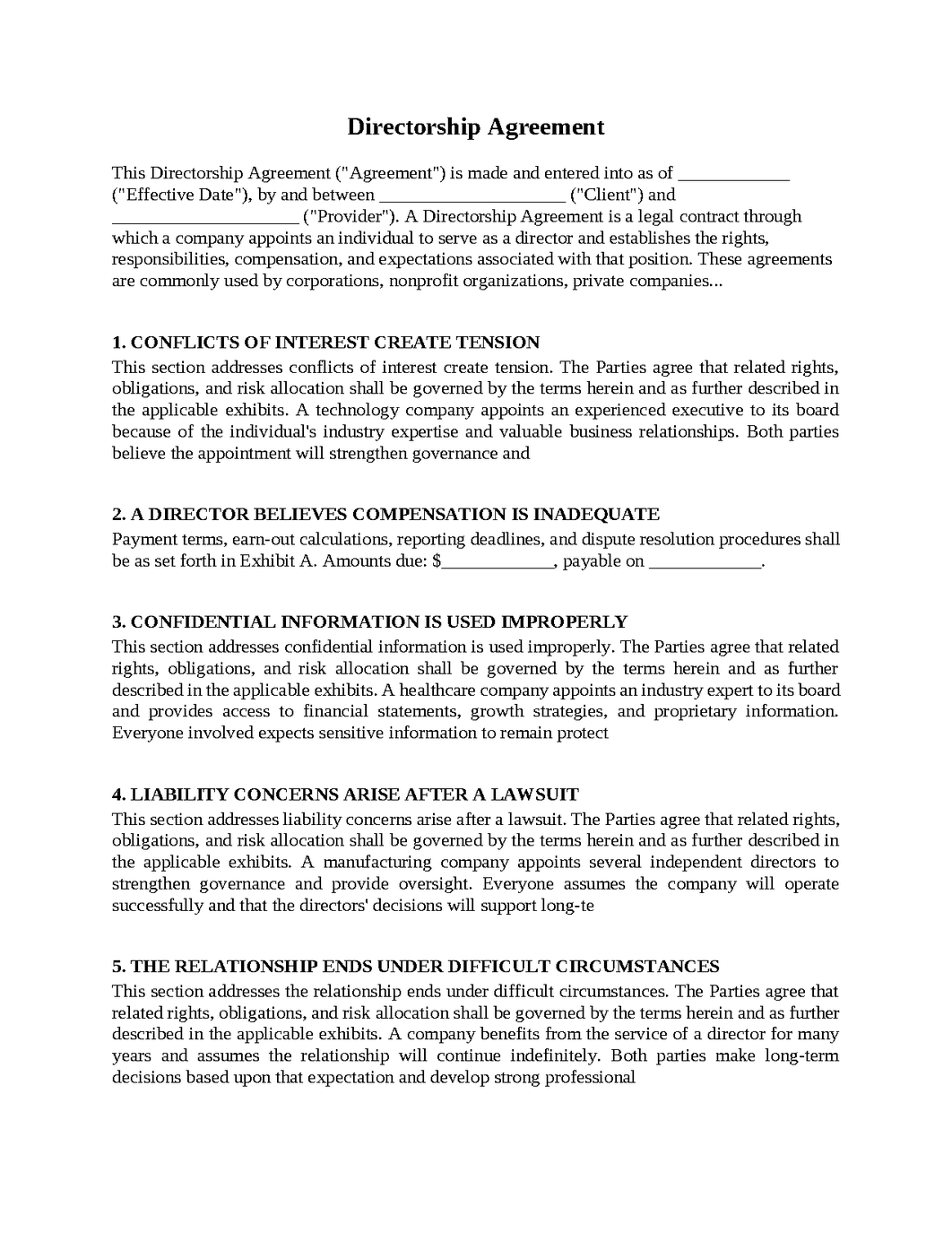
A Directorship Agreement is a legal contract through which a company appoints an individual to serve as a director and establishes the rights, responsibilities, compensation, and expectations associated with that position. These agreements are commonly used by corporations, nonprofit organizations, private companies, public companies, and subsidiaries seeking to formalize governance relationships with board members. A Directorship Agreement typically addresses fiduciary duties, compensation, confidentiality obligations, indemnification rights, conflicts of interest, and the circumstances under which a director may resign or be removed. Because directors exercise significant influence over corporate decisions and are entrusted with important responsibilities, disputes can arise when expectations regarding authority and obligations are not documented clearly. A carefully drafted Directorship Agreement helps establish certainty and protect the interests of both the company and the director.
Conflicts of Interest Create Tension
A technology company appoints an experienced executive to its board because of the individual's industry expertise and valuable business relationships. Both parties believe the appointment will strengthen governance and contribute to the company's long-term success.
For several years, the director provides meaningful guidance and participates actively in strategic decisions. Over time, however, the director becomes involved with another business operating within the same industry. Questions begin arising regarding whether certain opportunities and confidential information could create competing loyalties.
The company believes directors should disclose potential conflicts and avoid participating in decisions that could affect competing interests. The director believes industry involvement is one of the reasons the appointment was valuable and argues that overlap between businesses is common. As concerns increase, trust begins deteriorating and board discussions become more complicated.
To help avoid this problem, a Directorship Agreement should clearly address conflicts of interest and establish disclosure requirements for outside relationships and competing activities.
A Director Believes Compensation Is Inadequate
A growing company recruits an accomplished professional to serve on its board and offers compensation designed to reward participation and long-term commitment. Both parties expect the arrangement to remain fair and mutually beneficial.
As the company expands, board responsibilities become increasingly demanding. Additional meetings, acquisitions, and strategic initiatives require far more time and attention than anyone originally anticipated.
The director believes the expanded workload justifies increased compensation and additional benefits. The company believes the existing arrangement adequately reflects the role and argues that many directors accept similar obligations without requesting changes. As responsibilities continue increasing, disagreements emerge regarding whether compensation remains appropriate.
To help prevent these issues, a Directorship Agreement should clearly establish compensation arrangements and define the circumstances under which they may be modified.
Confidential Information Is Used Improperly
A healthcare company appoints an industry expert to its board and provides access to financial statements, growth strategies, and proprietary information. Everyone involved expects sensitive information to remain protected and used solely for the benefit of the company.
Initially, the relationship functions effectively and board discussions contribute to the company's success. Over time, however, management becomes concerned when strategic ideas and confidential information appear to influence activities involving other organizations connected to the director.
The company believes directors have a duty to safeguard information obtained through their positions. The director argues that years of experience naturally influence decisions and denies intentionally sharing confidential material. As concerns increase, confidence in the relationship begins deteriorating and questions arise regarding the director's continuing role.
To help avoid these problems, a Directorship Agreement should clearly define confidential information and establish obligations governing its protection and use.
Liability Concerns Arise After a Lawsuit
A manufacturing company appoints several independent directors to strengthen governance and provide oversight. Everyone assumes the company will operate successfully and that the directors' decisions will support long-term growth.
Unexpected litigation eventually arises involving regulatory issues and allegations of improper corporate conduct. The directors become concerned about personal liability and begin reviewing the protections available under company policies and governing documents.
The directors believe they should be indemnified because their actions were performed in good faith and in the best interests of the company. The company believes certain conduct may fall outside the protections originally contemplated and questions the extent of its obligations. As legal expenses increase, both sides become increasingly concerned about the financial consequences.
To help prevent these issues, a Directorship Agreement should clearly establish indemnification rights and explain the protections available to directors facing claims arising from their service.
The Relationship Ends Under Difficult Circumstances
A company benefits from the service of a director for many years and assumes the relationship will continue indefinitely. Both parties make long-term decisions based upon that expectation and develop strong professional relationships.
Eventually, strategic disagreements and changing priorities lead the company and the director to consider separation. Although both sides initially expect the transition to proceed smoothly, disagreements emerge regarding ongoing obligations, access to information, and public communications concerning the departure.
The company believes confidentiality and certain restrictions should continue after the director leaves the board. The director believes the conclusion of the relationship should provide freedom to pursue other opportunities without unnecessary limitations. As discussions become more difficult, both parties realize that ending the relationship is more complicated than either originally expected.
To help avoid this problem, a Directorship Agreement should clearly establish resignation and removal procedures and identify the obligations that survive the end of the relationship.
Directorship Agreements are valuable tools that help companies attract experienced leaders while defining the rights and responsibilities associated with board service. However, issues involving conflicts of interest, compensation disputes, confidentiality concerns, liability protections, and termination responsibilities can become significant sources of conflict when expectations are not documented clearly. A carefully drafted Directorship Agreement provides a structured framework for allocating responsibilities and protecting the interests of both the company and its directors. When prepared thoughtfully, it can reduce uncertainty, strengthen governance, preserve trust, and provide the foundation necessary for effective corporate leadership.

Get started with Upsign today!
Easily send, sign and track your documents