

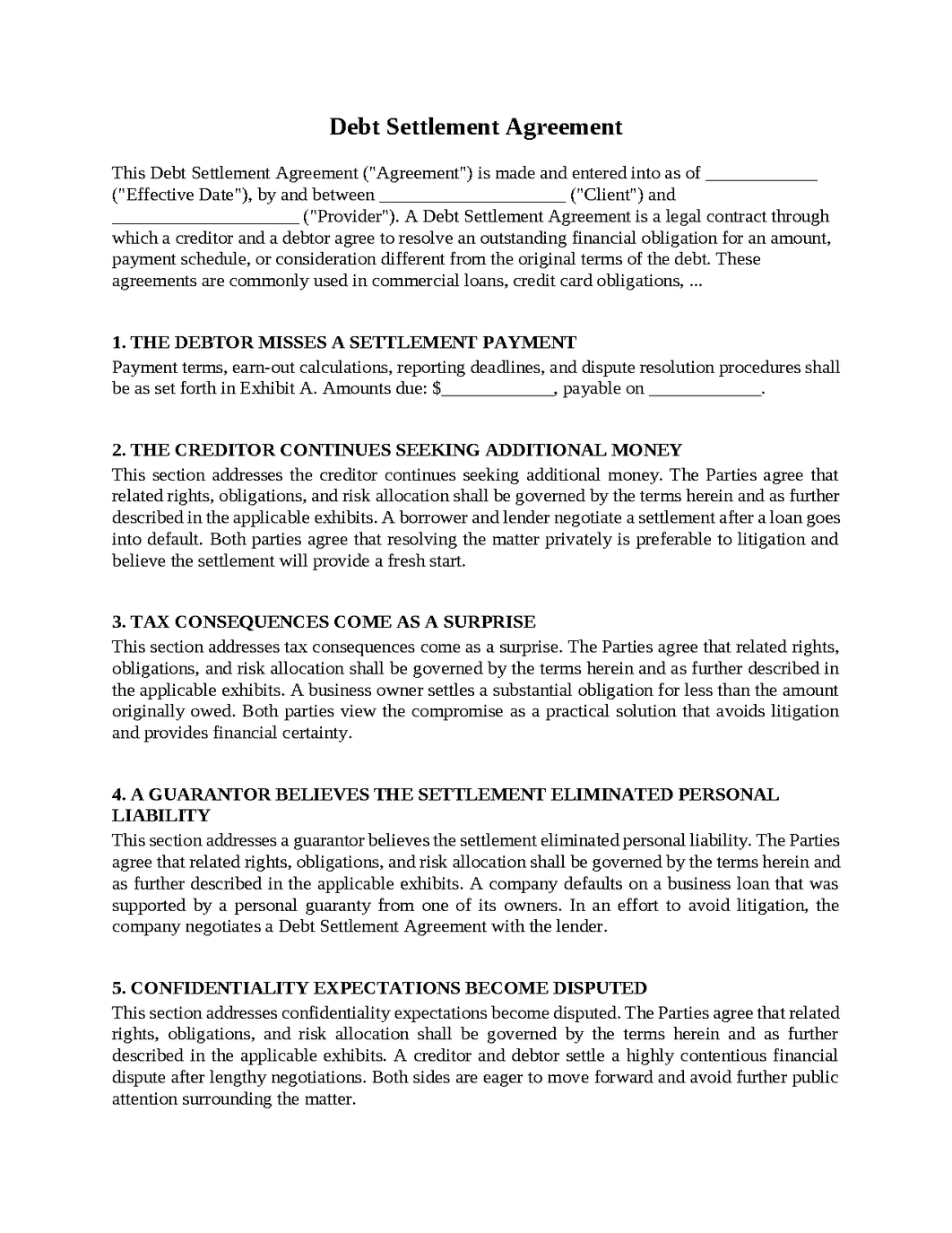
Debt Settlement Agreement
A Debt Settlement Agreement is a legal contract through which a creditor and a debtor agree to resolve an outstanding financial obligation for an amount, payment schedule, or consideration different from the original terms of the debt. These agreements are commonly used in commercial loans, credit card obligations, vendor disputes, business financing arrangements, collection matters, personal guarantees, and delinquent accounts. A Debt Settlement Agreement typically addresses the amount to be paid, the timing of payments, releases of liability, reporting obligations, confidentiality provisions, and the consequences of default. Because financial distress often creates competing interests and heightened emotions, disputes can arise when expectations regarding payment obligations and releases are not documented clearly. A carefully drafted Debt Settlement Agreement helps establish certainty and provide a path toward resolving financial disputes without prolonged litigation.
The Debtor Misses a Settlement Payment
A small business experiences financial difficulties and falls behind on several obligations owed to a supplier. After months of negotiations, both parties agree to resolve the matter through a Debt Settlement Agreement that allows the business to make reduced payments over time.
Initially, the arrangement provides relief and both parties hope the relationship can be preserved. The debtor makes several payments successfully and begins rebuilding operations while the creditor delays more aggressive collection efforts.
Unexpected market conditions eventually reduce cash flow again, causing the debtor to miss a scheduled settlement payment. The creditor believes the failure to comply should revive the original debt, while the debtor argues that temporary setbacks should not eliminate the benefits of the settlement. As frustrations increase, both sides begin disputing whether the agreement remains enforceable and what remedies are available.
To help avoid this problem, a Debt Settlement Agreement should clearly establish payment schedules, default provisions, and the consequences that apply when settlement obligations are not satisfied.
The Creditor Continues Seeking Additional Money
A borrower and lender negotiate a settlement after a loan goes into default. Both parties agree that resolving the matter privately is preferable to litigation and believe the settlement will provide a fresh start.
The borrower makes the agreed payments and expects the matter to be permanently resolved. Several months later, however, collection notices begin appearing and questions arise regarding accrued interest, fees, and obligations that existed before the settlement was signed.
The borrower believes the payments fully satisfied the debt and expects to receive a complete release. The creditor believes certain obligations survived the settlement and argues that the agreement never eliminated every outstanding claim. As confusion grows, both parties begin interpreting the settlement terms differently and dispute whether the original debt has actually been extinguished.
To help prevent these issues, a Debt Settlement Agreement should clearly define the obligations being released and identify any rights or claims that survive the settlement.
Tax Consequences Come as a Surprise
A business owner settles a substantial obligation for less than the amount originally owed. Both parties view the compromise as a practical solution that avoids litigation and provides financial certainty.
Following the settlement, the debtor focuses on rebuilding operations and assumes the matter has been completely resolved. Months later, questions arise regarding potential tax consequences associated with the forgiveness of a portion of the debt.
The debtor believes the financial relief should not create additional burdens beyond the settlement itself. The creditor maintains that reporting requirements and tax consequences are separate matters that each party must address independently. As advisors become involved, the parties realize they had very different assumptions regarding the implications of debt forgiveness.
To help avoid these problems, a Debt Settlement Agreement should clearly address reporting obligations and encourage the parties to consider the potential tax consequences associated with forgiven debt.
A Guarantor Believes the Settlement Eliminated Personal Liability
A company defaults on a business loan that was supported by a personal guaranty from one of its owners. In an effort to avoid litigation, the company negotiates a Debt Settlement Agreement with the lender.
The company fulfills its obligations under the settlement and believes the matter has been resolved for everyone involved. The guarantor assumes that the settlement released personal liability because the business debt itself was compromised.
The lender believes the guaranty remains enforceable and argues that the settlement affected only the company's obligations. The guarantor believes no one would have agreed to the settlement had separate liability remained in place. As collection efforts continue, disagreements emerge regarding the effect of the settlement on the guarantor's obligations.
To help prevent these issues, a Debt Settlement Agreement should clearly identify the parties being released and explain how guarantees and related obligations are affected.
Confidentiality Expectations Become Disputed
A creditor and debtor settle a highly contentious financial dispute after lengthy negotiations. Both sides are eager to move forward and avoid further public attention surrounding the matter.
Initially, the relationship improves and everyone believes the dispute has finally ended. Over time, however, details regarding the settlement begin circulating among customers, vendors, and business associates, creating concerns about reputation and future business opportunities.
One party believes confidentiality was an essential part of the compromise and expects the settlement terms to remain private. The other believes certain disclosures were necessary for legal, financial, or operational reasons and denies violating any obligations. As accusations increase, the dispute shifts away from the original debt and toward the handling of confidential information.
To help avoid these problems, a Debt Settlement Agreement should clearly define confidentiality obligations and establish the circumstances under which information may be disclosed.
Debt Settlement Agreements are valuable tools for resolving financial disputes and providing parties with an opportunity to move forward without prolonged collection efforts or litigation. However, issues involving missed payments, continuing claims, tax consequences, guarantor liability, and confidentiality concerns can become significant sources of conflict when expectations are not documented clearly. A carefully drafted Debt Settlement Agreement provides a structured framework for defining obligations and allocating responsibilities throughout the resolution process. When prepared thoughtfully, it can reduce uncertainty, preserve relationships, minimize legal expenses, and provide the finality necessary for both creditors and debtors to move forward with confidence.

Get started with Upsign today!
Easily send, sign and track your documents