

Debt Assumption Agreement
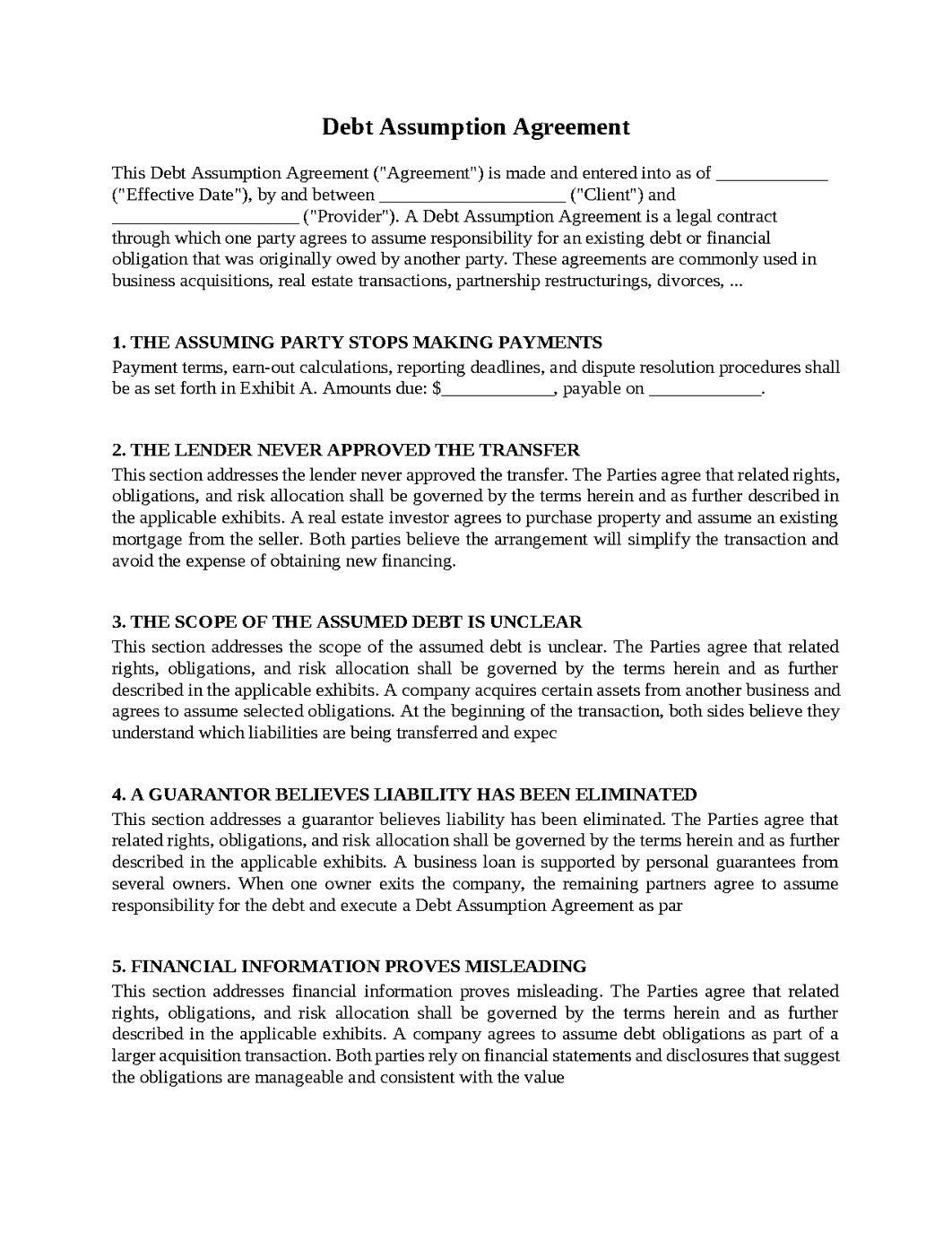
A Debt Assumption Agreement is a legal contract through which one party agrees to assume responsibility for an existing debt or financial obligation that was originally owed by another party. These agreements are commonly used in business acquisitions, real estate transactions, partnership restructurings, divorces, corporate reorganizations, and asset purchases. A Debt Assumption Agreement typically addresses the obligations being transferred, payment responsibilities, lender approvals, indemnification provisions, and the consequences that apply if the assuming party fails to perform. Because debt obligations often involve multiple parties with competing interests, disputes can arise when expectations regarding liability and repayment are not documented clearly. A carefully drafted Debt Assumption Agreement helps establish certainty and protect the interests of everyone involved while facilitating the transfer of financial responsibilities.
The Assuming Party Stops Making Payments
A business owner sells a division of the company to another entrepreneur and transfers several equipment loans as part of the transaction. Both parties believe the arrangement will allow the buyer to operate independently while relieving the seller of ongoing financial obligations.
For several months, payments are made on time and the transition proceeds smoothly. The original borrower assumes that the debts have effectively become someone else's responsibility and focuses on new opportunities.
Unexpected financial difficulties eventually affect the buyer, causing several payments to be missed. The lender turns to the original borrower for payment, explaining that the debt assumption did not eliminate the lender's rights against the original obligor. The seller becomes frustrated because the transaction was intended to shift responsibility, while the buyer argues that temporary setbacks should not undermine the entire arrangement. Tensions increase as both parties dispute who should ultimately bear the losses.
To help avoid this problem, a Debt Assumption Agreement should clearly establish repayment responsibilities and include indemnification provisions addressing the consequences of nonpayment.
The Lender Never Approved the Transfer
A real estate investor agrees to purchase property and assume an existing mortgage from the seller. Both parties believe the arrangement will simplify the transaction and avoid the expense of obtaining new financing.
After closing, the buyer begins making payments and assumes everything has been transferred properly. Months later, the lender discovers the ownership change and questions whether the debt could legally be assumed without prior approval.
The buyer believes making the payments demonstrates good faith and that the lender should accept the arrangement. The lender argues that its consent was required before any transfer occurred and warns that the loan documents permit acceleration of the balance. The seller becomes concerned that liability was never truly shifted and worries that the transaction may expose everyone involved to unnecessary risks.
To help prevent these issues, a Debt Assumption Agreement should clearly address lender approval requirements and establish procedures for obtaining all necessary consents before the transfer becomes effective.
The Scope of the Assumed Debt Is Unclear
A company acquires certain assets from another business and agrees to assume selected obligations. At the beginning of the transaction, both sides believe they understand which liabilities are being transferred and expect the transition to proceed without difficulty.
Several months after closing, additional invoices, tax obligations, and vendor claims begin surfacing. Questions emerge regarding whether those liabilities were included in the original understanding or should remain with the seller.
The buyer believes only specific debts identified during negotiations were assumed. The seller believes the transfer was intended to include all liabilities associated with the assets being sold. As additional claims continue appearing, both parties begin reviewing documents and communications in an effort to determine what obligations actually changed hands.
To help avoid this problem, a Debt Assumption Agreement should clearly identify the obligations being transferred and distinguish them from liabilities that remain with the original obligor.
A Guarantor Believes Liability Has Been Eliminated
A business loan is supported by personal guarantees from several owners. When one owner exits the company, the remaining partners agree to assume responsibility for the debt and execute a Debt Assumption Agreement as part of the ownership transition.
Everyone expects the departing owner to be released from future obligations and believes the assumption agreement resolves any concerns. The departing owner moves on to other ventures with the understanding that personal liability has ended.
Years later, the business defaults and the lender seeks payment from the former owner under the original guaranty. The guarantor believes the assumption agreement eliminated any continuing exposure, while the lender argues that no formal release was ever granted. The remaining owners insist they intended to protect the departing partner, creating frustration and uncertainty among everyone involved.
To help prevent these problems, a Debt Assumption Agreement should clearly address guarantees and specify whether lenders or other parties must provide formal releases before liability is extinguished.
Financial Information Proves Misleading
A company agrees to assume debt obligations as part of a larger acquisition transaction. Both parties rely on financial statements and disclosures that suggest the obligations are manageable and consistent with the value of the assets being transferred.
After closing, the acquiring company discovers that revenues are lower than expected and that additional expenses make the debt far more burdensome than originally anticipated. The financial assumptions that supported the transaction no longer appear accurate.
The acquiring company believes important information should have been disclosed before the transaction closed. The seller argues that all information believed to be accurate was provided and that ordinary business risks accompany any acquisition. As losses increase, disagreements emerge regarding whether misrepresentations occurred and who should bear responsibility for the unexpected financial burdens.
To help avoid these problems, a Debt Assumption Agreement should clearly address representations, disclosures, and the allocation of risks associated with inaccurate or incomplete financial information.
Debt Assumption Agreements are valuable tools for facilitating business transactions and transferring financial responsibilities between parties. However, issues involving missed payments, lender approvals, unclear liabilities, continuing guarantees, and inaccurate financial information can become significant sources of conflict when expectations are not documented clearly. A carefully drafted Debt Assumption Agreement provides a structured framework for allocating responsibilities and protecting the interests of everyone involved. When prepared thoughtfully, it can reduce uncertainty, support successful transactions, preserve important relationships, and provide the clarity necessary for complex financial obligations to be transferred with confidence.

Get started with Upsign today!
Easily send, sign and track your documents