

Virtual Assistant Services Agreement
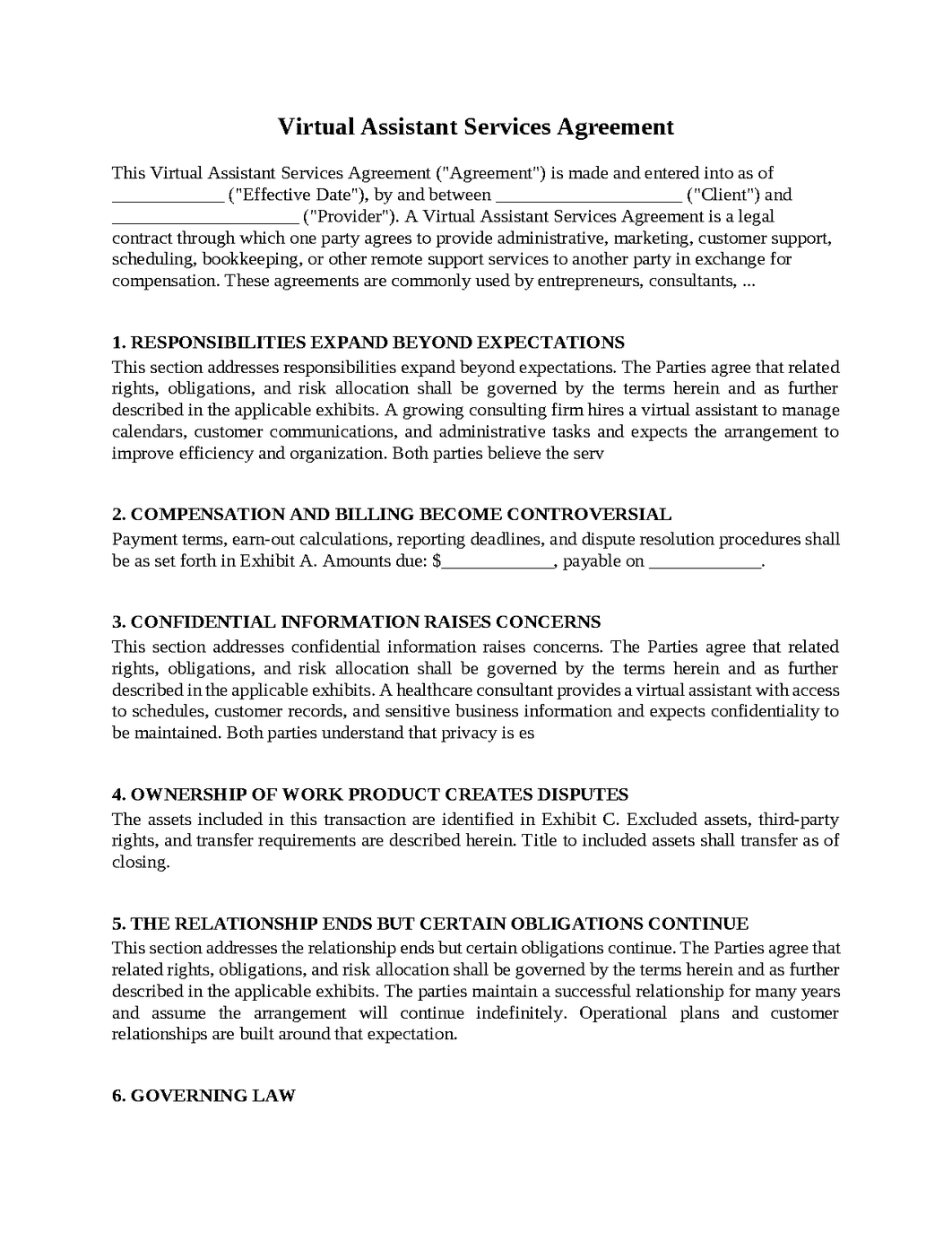
A Virtual Assistant Services Agreement is a legal contract through which one party agrees to provide administrative, marketing, customer support, scheduling, bookkeeping, or other remote support services to another party in exchange for compensation. These agreements are commonly used by entrepreneurs, consultants, healthcare professionals, real estate agents, software companies, and small businesses seeking flexible support without hiring full-time employees. A Virtual Assistant Services Agreement typically addresses the scope of services, compensation arrangements, confidentiality obligations, communication procedures, intellectual property rights, and procedures governing disputes and termination. Because virtual assistants often have access to sensitive information and perform tasks essential to daily operations, disputes can arise when expectations regarding responsibilities and performance are not documented clearly. A carefully drafted Virtual Assistant Services Agreement helps establish certainty and protect the interests of both clients and service providers.
Responsibilities Expand Beyond Expectations
A growing consulting firm hires a virtual assistant to manage calendars, customer communications, and administrative tasks and expects the arrangement to improve efficiency and organization. Both parties believe the services to be provided are clearly understood.
Initially, communication remains strong and tasks are completed successfully. Over time, however, additional requests begin involving marketing activities, bookkeeping, and project management responsibilities that were never specifically discussed.
The consulting firm believes flexibility is necessary because changing business demands require additional support and collaboration. The virtual assistant believes the expanding workload exceeds the original arrangement and argues that additional responsibilities should result in revised compensation. As expectations continue growing, tensions emerge regarding the scope of services.
To help avoid this problem, a Virtual Assistant Services Agreement should clearly establish the services being provided and define the limitations applicable to additional tasks and responsibilities.
Compensation and Billing Become Controversial
A real estate broker retains a virtual assistant and expects monthly fees to remain predictable and easy to administer. Everyone assumes the compensation structure is straightforward and fair.
As the business grows, additional hours and special projects increase the amount of work being performed. Questions arise regarding overtime, project fees, and reimbursement for expenses.
The broker believes costs should remain manageable because budgets and business planning depend upon predictable expenses. The virtual assistant believes additional responsibilities justify increased compensation and argues that extra efforts should be rewarded appropriately. As workloads increase, disagreements emerge regarding billing practices.
To help prevent these issues, a Virtual Assistant Services Agreement should clearly establish compensation provisions and define how additional services and expenses will be handled.
Confidential Information Raises Concerns
A healthcare consultant provides a virtual assistant with access to schedules, customer records, and sensitive business information and expects confidentiality to be maintained. Both parties understand that privacy is essential to preserving trust and protecting valuable information.
As additional systems and software platforms are introduced, concerns arise regarding password management, unauthorized access, and the sharing of confidential information. Questions emerge regarding the adequacy of existing safeguards.
The client believes strict protections are necessary because customer relationships and proprietary information represent valuable assets. The virtual assistant believes reasonable security procedures are already in place and argues that efficient collaboration requires access to important systems. As concerns increase, tensions develop regarding confidentiality obligations.
To help avoid these problems, a Virtual Assistant Services Agreement should clearly establish confidentiality requirements and define the procedures governing access to and protection of sensitive information.
Ownership of Work Product Creates Disputes
A software entrepreneur hires a virtual assistant to create marketing materials, reports, and customer communications and expects the work to become part of the business. Everyone assumes ownership rights are understood.
As the relationship develops, questions arise regarding templates, social media content, and proprietary systems created during the engagement. Different expectations create uncertainty regarding intellectual property rights.
The entrepreneur believes ownership should belong to the business because the work was commissioned and paid for by the company. The virtual assistant believes certain methods and creative materials represent personal expertise and argues that ownership rights should remain protected. As the value of the work increases, disagreements emerge regarding ownership.
To help prevent these issues, a Virtual Assistant Services Agreement should clearly establish ownership rights and define the treatment of work product and intellectual property.
The Relationship Ends but Certain Obligations Continue
The parties maintain a successful relationship for many years and assume the arrangement will continue indefinitely. Operational plans and customer relationships are built around that expectation.
Eventually, changing priorities lead one side to terminate the engagement. Questions arise regarding access to systems, unfinished projects, confidential information, and responsibilities associated with customer communications and records.
The client believes continued cooperation is necessary because an orderly transition is essential to maintaining business operations. The virtual assistant believes obligations should conclude once contractual requirements have been fulfilled and expects finality. As the relationship ends, disagreements emerge regarding the rights and responsibilities that survive termination.
To help avoid this problem, a Virtual Assistant Services Agreement should clearly establish termination procedures and identify the obligations and protections that continue after the relationship ends.
Virtual Assistant Services Agreements are valuable tools that allow businesses to obtain flexible support while improving efficiency and productivity. However, issues involving service scope, compensation disputes, confidentiality concerns, ownership rights, and post-termination obligations can become significant sources of conflict when expectations are not documented clearly. A carefully drafted Virtual Assistant Services Agreement provides a structured framework for allocating responsibilities and protecting the interests of both clients and service providers. When prepared thoughtfully, it can reduce uncertainty, strengthen professional relationships, improve operational efficiency, and provide the foundation necessary for successful long-term collaboration.

Get started with Upsign today!
Easily send, sign and track your documents