

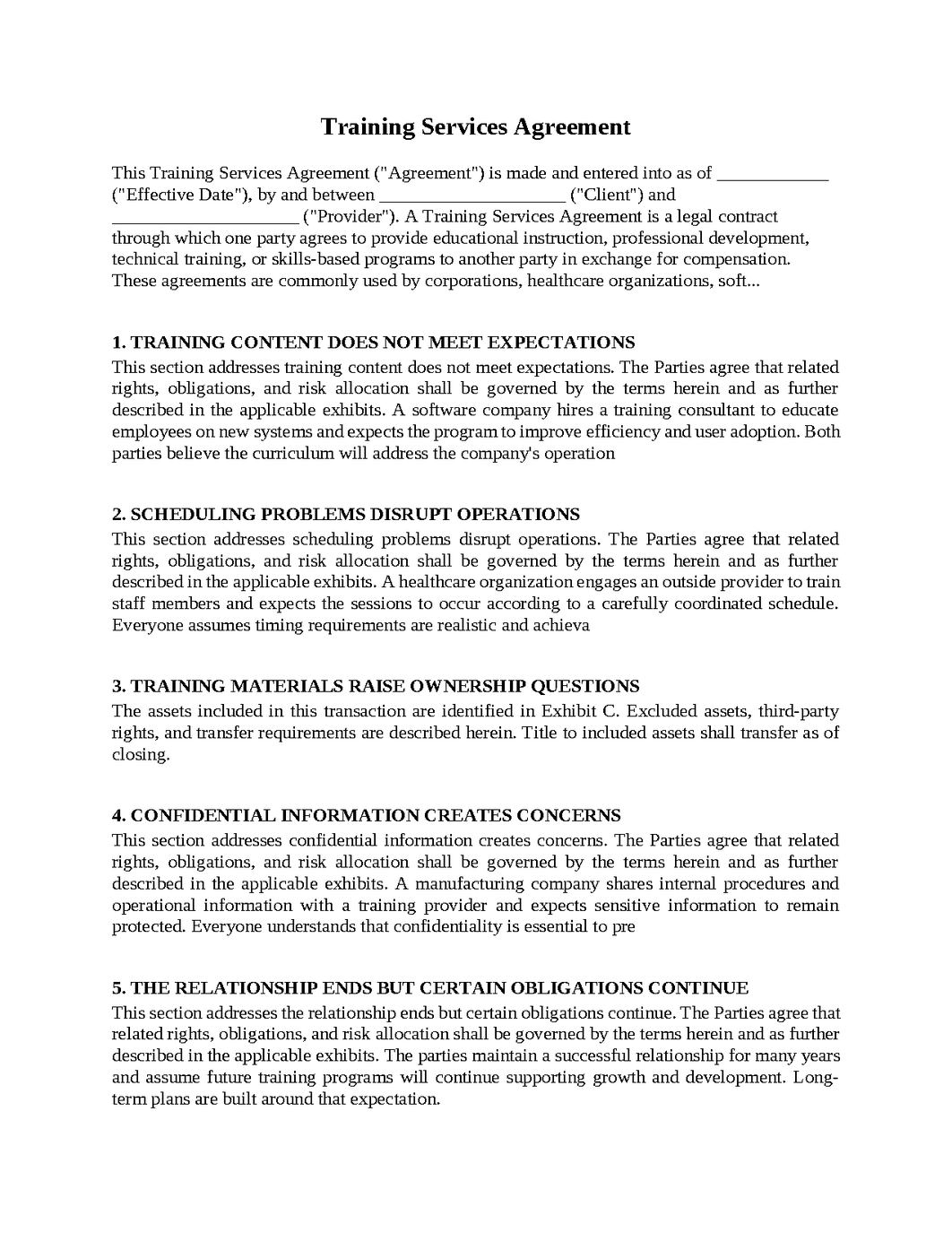
Training Services Agreement
A Training Services Agreement is a legal contract through which one party agrees to provide educational instruction, professional development, technical training, or skills-based programs to another party in exchange for compensation. These agreements are commonly used by corporations, healthcare organizations, software companies, manufacturers, educational institutions, and consulting firms seeking to improve employee knowledge and operational performance. A Training Services Agreement typically addresses the scope of training, scheduling requirements, compensation arrangements, intellectual property rights, confidentiality obligations, and procedures governing disputes and termination. Because effective training often affects productivity, compliance, and long-term business relationships, disputes can arise when expectations regarding responsibilities and results are not documented clearly. A carefully drafted Training Services Agreement helps establish certainty and protect the interests of both clients and training providers.
Training Content Does Not Meet Expectations
A software company hires a training consultant to educate employees on new systems and expects the program to improve efficiency and user adoption. Both parties believe the curriculum will address the company's operational needs.
Initially, the sessions proceed smoothly and participants respond positively. Over time, however, managers conclude that important topics were omitted and employees continue struggling with the new systems.
The software company believes the training should have addressed practical challenges because successful implementation depends upon employee understanding. The consultant believes the agreed curriculum was delivered properly and argues that additional instruction was never included in the original arrangement. As performance concerns increase, tensions emerge regarding the scope of the services.
To help avoid this problem, a Training Services Agreement should clearly establish the content and objectives of the training program and define any limitations applicable to the services.
Scheduling Problems Disrupt Operations
A healthcare organization engages an outside provider to train staff members and expects the sessions to occur according to a carefully coordinated schedule. Everyone assumes timing requirements are realistic and achievable.
As workloads increase and scheduling conflicts arise, delays begin affecting employee availability and compliance deadlines. Questions emerge regarding who is responsible for rescheduling and additional costs.
The healthcare organization believes timely training is essential because regulatory requirements and patient care depend upon qualified personnel. The training provider believes unforeseen conflicts affected attendance and argues that flexibility is necessary to complete the program effectively. As delays continue, disagreements emerge regarding scheduling obligations.
To help prevent these issues, a Training Services Agreement should clearly establish scheduling procedures and define the consequences applicable to delays and cancellations.
Training Materials Raise Ownership Questions
An engineering company retains a consultant to develop customized educational materials and expects the content to remain available for future use. Both parties assume ownership rights are understood.
As the engagement progresses, questions arise regarding manuals, presentations, recordings, and other educational resources created during the relationship. Different expectations create uncertainty regarding intellectual property rights.
The engineering company believes ownership should belong to the business because it financed the development and intends to continue using the materials internally. The consultant believes proprietary methods and instructional resources represent valuable assets and argues that ownership rights should remain protected. As the value of the materials increases, tensions develop regarding intellectual property.
To help avoid these problems, a Training Services Agreement should clearly establish ownership rights and define the treatment of training materials and proprietary content.
Confidential Information Creates Concerns
A manufacturing company shares internal procedures and operational information with a training provider and expects sensitive information to remain protected. Everyone understands that confidentiality is essential to preserving competitive advantages.
As additional instructors participate in the engagement, concerns arise regarding unauthorized disclosures and the use of company information. Questions emerge regarding whether adequate safeguards are being maintained.
The company believes strict protections are necessary because internal processes and business information represent valuable assets. The training provider believes reasonable precautions are already in place and argues that collaboration requires limited information sharing. As concerns increase, disagreements emerge regarding confidentiality obligations.
To help prevent these issues, a Training Services Agreement should clearly establish confidentiality requirements and define the procedures governing access to and protection of sensitive information.
The Relationship Ends but Certain Obligations Continue
The parties maintain a successful relationship for many years and assume future training programs will continue supporting growth and development. Long-term plans are built around that expectation.
Eventually, changing priorities lead one side to terminate the arrangement. Questions arise regarding unpaid fees, ownership of training materials, confidentiality obligations, and access to previously created resources.
The client believes continued access to training materials is necessary because employees rely upon those resources for ongoing education. The training provider believes future obligations should be limited according to the agreement and expects finality. As the relationship concludes, disagreements emerge regarding the rights and responsibilities that survive termination.
To help avoid this problem, a Training Services Agreement should clearly establish termination procedures and identify the rights and responsibilities that continue after the relationship ends.
Training Services Agreements are valuable tools that allow organizations to improve employee skills and operational performance through specialized instruction and professional development. However, issues involving curriculum expectations, scheduling conflicts, intellectual property rights, confidentiality concerns, and post-termination obligations can become significant sources of conflict when expectations are not documented clearly. A carefully drafted Training Services Agreement provides a structured framework for allocating responsibilities and protecting the interests of both clients and training providers. When prepared thoughtfully, it can reduce uncertainty, strengthen professional relationships, improve workforce capabilities, and provide the foundation necessary for successful training programs.

Get started with Upsign today!
Easily send, sign and track your documents