

Service Agreement
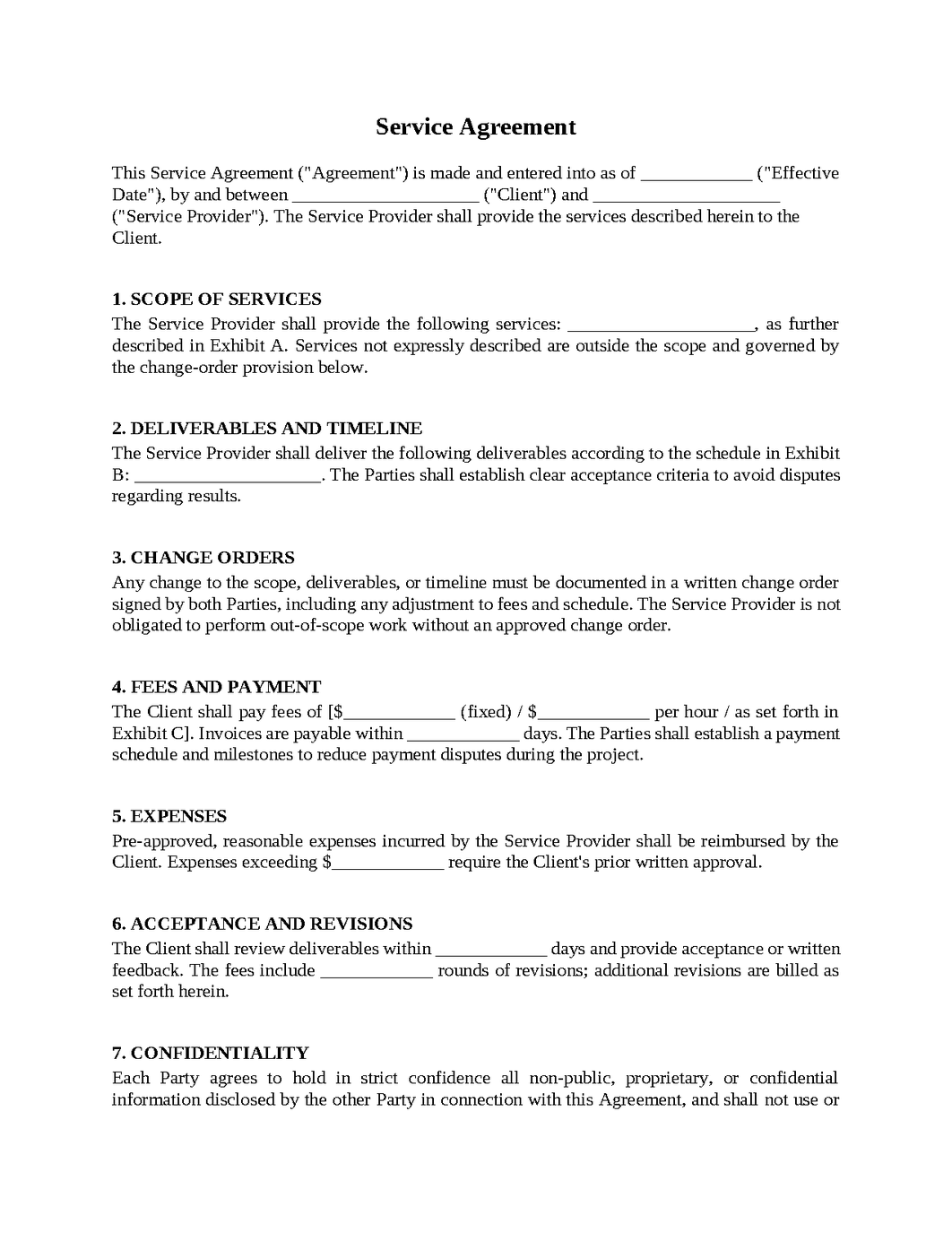
A Service Agreement is a legal contract that establishes the terms under which one party agrees to provide services to another party in exchange for compensation or other consideration. Service Agreements are among the most commonly used business contracts and are utilized by consultants, agencies, contractors, freelancers, technology providers, maintenance companies, professional service firms, and countless other service providers. These agreements typically address the scope of services, payment terms, performance expectations, timelines, intellectual property rights, confidentiality obligations, and termination procedures. Because services often involve ongoing collaboration and subjective expectations regarding performance, disputes can arise when responsibilities are not documented clearly. A well-drafted Service Agreement helps protect both parties and create a framework for a successful working relationship.
The Client Expects More Services Than Were Agreed Upon
A company hires a consultant to assist with operational improvements and process optimization.
Initially, both parties are enthusiastic about the engagement and communicate frequently regarding project goals. As the consultant begins delivering recommendations, the client requests additional analyses, meetings, reports, and implementation support that were never discussed during negotiations.
The client believes the additional work is naturally connected to the original project. The consultant believes the requests significantly expand the scope of services beyond what was originally agreed.
As demands continue increasing, the consultant spends substantially more time on the project than anticipated.
What began as a straightforward engagement becomes a disagreement regarding what services are actually included.
To help avoid this problem, a Service Agreement should clearly define the scope of work, identify deliverables, establish procedures for approving additional services, and explain how changes will affect compensation and timelines.
The Client Is Dissatisfied With the Results
A business hires a marketing agency to help increase customer acquisition and strengthen brand awareness.
The agency develops strategies, creates content, launches campaigns, and provides ongoing support. Although the agency performs the agreed services, the client's sales do not increase as quickly as expected.
The client becomes disappointed and questions whether the agency fulfilled its obligations. The agency believes it delivered all promised services and points out that business results depend on many factors outside its control.
The disagreement centers on the difference between services provided and outcomes achieved.
Neither party necessarily acted improperly, but they had different expectations regarding success.
To reduce these risks, a Service Agreement should clearly distinguish services from guaranteed results, identify performance expectations, and explain the limitations of any projections or estimates.
Payment Disputes Develop During the Project
A service provider begins work on a project under an agreement requiring periodic payments as milestones are completed.
Initially, payments are made without issue. As the project progresses, however, the client begins questioning certain invoices and requests additional justification for time spent and expenses incurred.
The service provider believes the charges are consistent with the agreement and reflect work performed properly. The client believes some charges exceed expectations.
The disagreement delays payments and creates tension that affects the overall relationship.
What started as a financial question becomes a broader dispute regarding trust and accountability.
To help prevent these issues, a Service Agreement should clearly establish payment schedules, invoicing procedures, expense reimbursement rules, and mechanisms for resolving billing disputes.
Confidential Information Is Shared During the Engagement
A client hires a service provider and shares sensitive information necessary to perform the work effectively.
The information may include customer data, financial records, business plans, trade secrets, proprietary processes, or strategic initiatives. Both parties understand that confidentiality is important, but expectations regarding information handling are not discussed in detail.
Later, concerns arise that confidential information may have been disclosed improperly or used in ways the client did not anticipate.
The client becomes worried about competitive harm and reputational damage. The service provider believes reasonable precautions were taken.
Trust begins to erode because confidentiality was fundamental to the relationship.
To help avoid these problems, a Service Agreement should clearly define confidential information, establish security obligations, restrict unauthorized disclosures, and identify remedies for confidentiality breaches.
The Relationship Ends Before the Work Is Complete
A company hires a service provider for a long-term project expected to continue for several months.
Partway through the engagement, priorities change and the client decides to terminate the project. Alternatively, the service provider may determine that continuing the relationship is no longer practical.
Questions immediately arise regarding unfinished work, ownership of partially completed deliverables, final payments, transfer of information, and ongoing obligations.
The client wants access to materials already created. The service provider wants compensation for work performed and protection of proprietary methods.
What should be a manageable transition becomes a source of conflict.
To reduce these risks, a Service Agreement should establish termination procedures, define ownership rights, address compensation for partially completed work, and identify obligations that survive termination.
Service Agreements are essential tools for defining expectations and responsibilities in professional relationships. However, issues involving scope changes, performance expectations, payment disputes, confidentiality obligations, and early termination can become significant sources of conflict when responsibilities are not documented clearly. A carefully drafted Service Agreement provides a structured framework for managing these relationships and protecting both parties involved. When prepared thoughtfully, it can help reduce misunderstandings, improve communication, strengthen accountability, and support successful project outcomes.

Get started with Upsign today!
Easily send, sign and track your documents