

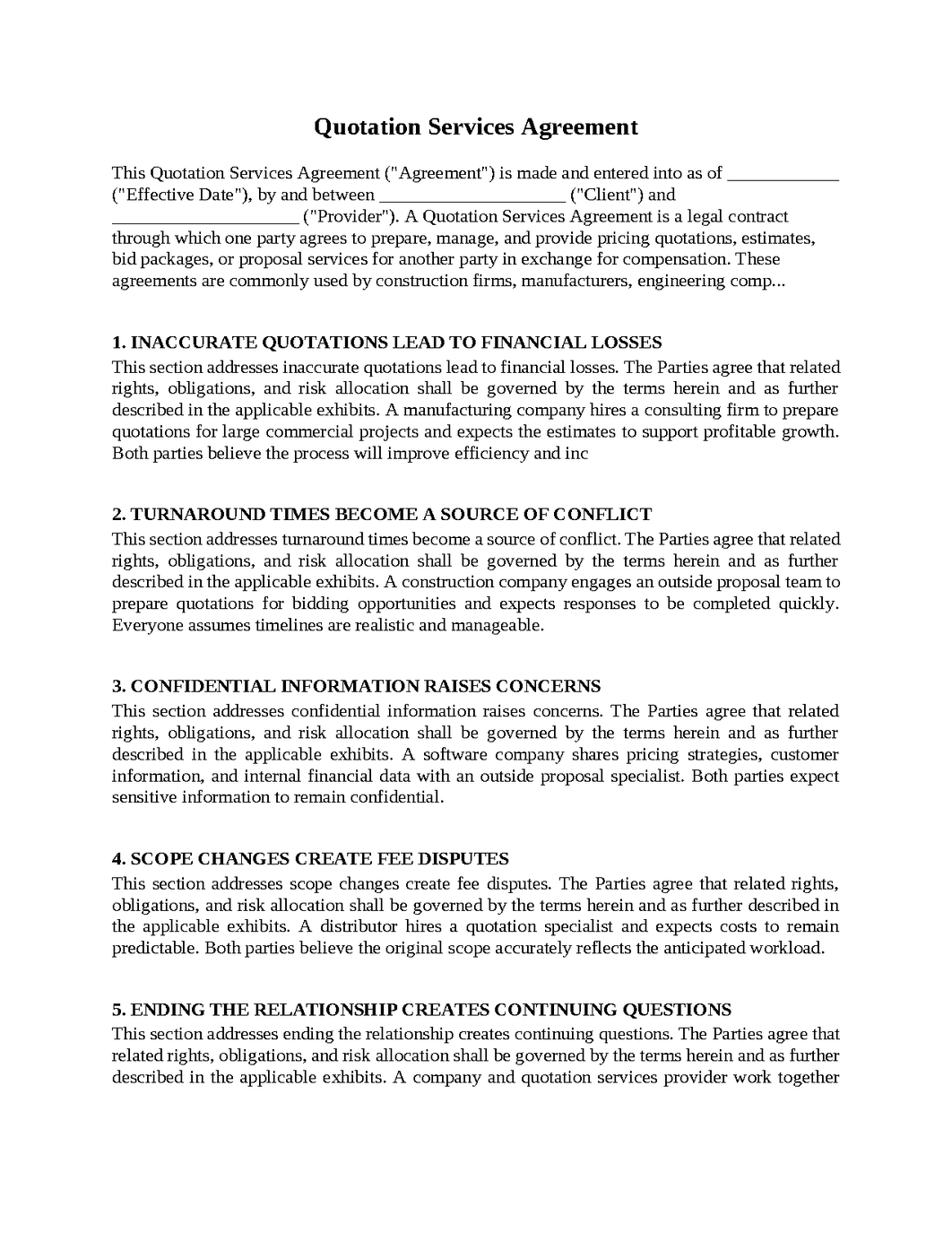
Quotation Services Agreement
A Quotation Services Agreement is a legal contract through which one party agrees to prepare, manage, and provide pricing quotations, estimates, bid packages, or proposal services for another party in exchange for compensation. These agreements are commonly used by construction firms, manufacturers, engineering companies, software providers, procurement specialists, and consulting firms seeking to streamline pricing and proposal processes. A Quotation Services Agreement typically addresses the scope of services, pricing methodologies, turnaround times, confidentiality obligations, compensation arrangements, and procedures governing disputes and termination. Because quotations often influence major purchasing decisions and customer relationships, disputes can arise when expectations regarding responsibilities and performance are not documented clearly. A carefully drafted Quotation Services Agreement helps establish certainty and protect the interests of both clients and service providers.
Inaccurate Quotations Lead to Financial Losses
A manufacturing company hires a consulting firm to prepare quotations for large commercial projects and expects the estimates to support profitable growth. Both parties believe the process will improve efficiency and increase customer responsiveness.
Initially, quotations are completed accurately and customer relationships remain strong. Over time, however, pricing errors begin appearing and projects are awarded at margins far below expectations.
The manufacturer believes accurate estimates are essential because pricing decisions directly affect profitability and customer commitments. The service provider believes incomplete information and changing specifications contributed to the inaccuracies and argues that reasonable efforts were made to prepare reliable quotations. As financial losses increase, tensions emerge regarding responsibility for the errors.
To help avoid this problem, a Quotation Services Agreement should clearly establish pricing methodologies and define the responsibilities applicable to preparing estimates and proposals.
Turnaround Times Become a Source of Conflict
A construction company engages an outside proposal team to prepare quotations for bidding opportunities and expects responses to be completed quickly. Everyone assumes timelines are realistic and manageable.
As project opportunities increase, delays begin affecting submission deadlines and customer relationships. Questions arise regarding whether the service provider is meeting expectations.
The construction company believes prompt responses are essential because missed deadlines can result in lost business opportunities. The service provider believes growing workloads and incomplete information delayed the process and argues that quality requires adequate preparation time. As opportunities are lost, disagreements emerge regarding performance standards.
To help prevent these issues, a Quotation Services Agreement should clearly establish response times and define expectations relating to proposal preparation and delivery.
Confidential Information Raises Concerns
A software company shares pricing strategies, customer information, and internal financial data with an outside proposal specialist. Both parties expect sensitive information to remain confidential.
As additional personnel become involved in the quotation process, concerns arise regarding unauthorized disclosures and competitive risks. Questions emerge regarding whether adequate safeguards are in place.
The software company believes protecting confidential information is essential because pricing strategies and customer relationships represent valuable assets. The service provider believes reasonable procedures are already being followed and argues that no system can eliminate every risk. As concerns increase, tensions develop regarding confidentiality obligations.
To help avoid these problems, a Quotation Services Agreement should clearly establish confidentiality requirements and define the procedures governing the protection and use of sensitive information.
Scope Changes Create Fee Disputes
A distributor hires a quotation specialist and expects costs to remain predictable. Both parties believe the original scope accurately reflects the anticipated workload.
As business expands, requests involving additional product lines, technical specifications, and custom proposals increase significantly. Questions arise regarding whether those services are included within the original arrangement.
The distributor believes the additional requests are natural extensions of the relationship and expects fees to remain reasonable. The service provider believes expanded responsibilities require additional resources and argues that separate compensation is appropriate. As invoices increase, disagreements emerge regarding fees and scope of services.
To help prevent these issues, a Quotation Services Agreement should clearly establish compensation provisions and define how additional work and expenses will be approved.
Ending the Relationship Creates Continuing Questions
A company and quotation services provider work together successfully for many years and gradually integrate systems, pricing databases, and customer information. Both parties assume the relationship will continue indefinitely and organize operations around that expectation.
Eventually, changing priorities lead the company to bring quotation functions in-house. Questions arise regarding unfinished proposals, outstanding fees, customer records, and ownership of pricing data.
The company believes a smooth transition is necessary to preserve customer relationships and avoid disruptions. The service provider believes compensation obligations should be satisfied before providing additional assistance and expects contractual rights to be respected. As the relationship concludes, disagreements emerge regarding the obligations that survive termination.
To help avoid this problem, a Quotation Services Agreement should clearly establish termination procedures and identify the rights and responsibilities that continue after the relationship ends.
Quotation Services Agreements are valuable tools that allow businesses to improve efficiency and customer responsiveness while leveraging specialized expertise. However, issues involving inaccurate estimates, delayed responses, confidentiality concerns, fee disputes, and post-termination obligations can become significant sources of conflict when expectations are not documented clearly. A carefully drafted Quotation Services Agreement provides a structured framework for allocating responsibilities and protecting the interests of both clients and service providers. When prepared thoughtfully, it can reduce uncertainty, strengthen commercial relationships, improve profitability, and provide the foundation necessary for successful proposal and quotation management.

Get started with Upsign today!
Easily send, sign and track your documents