

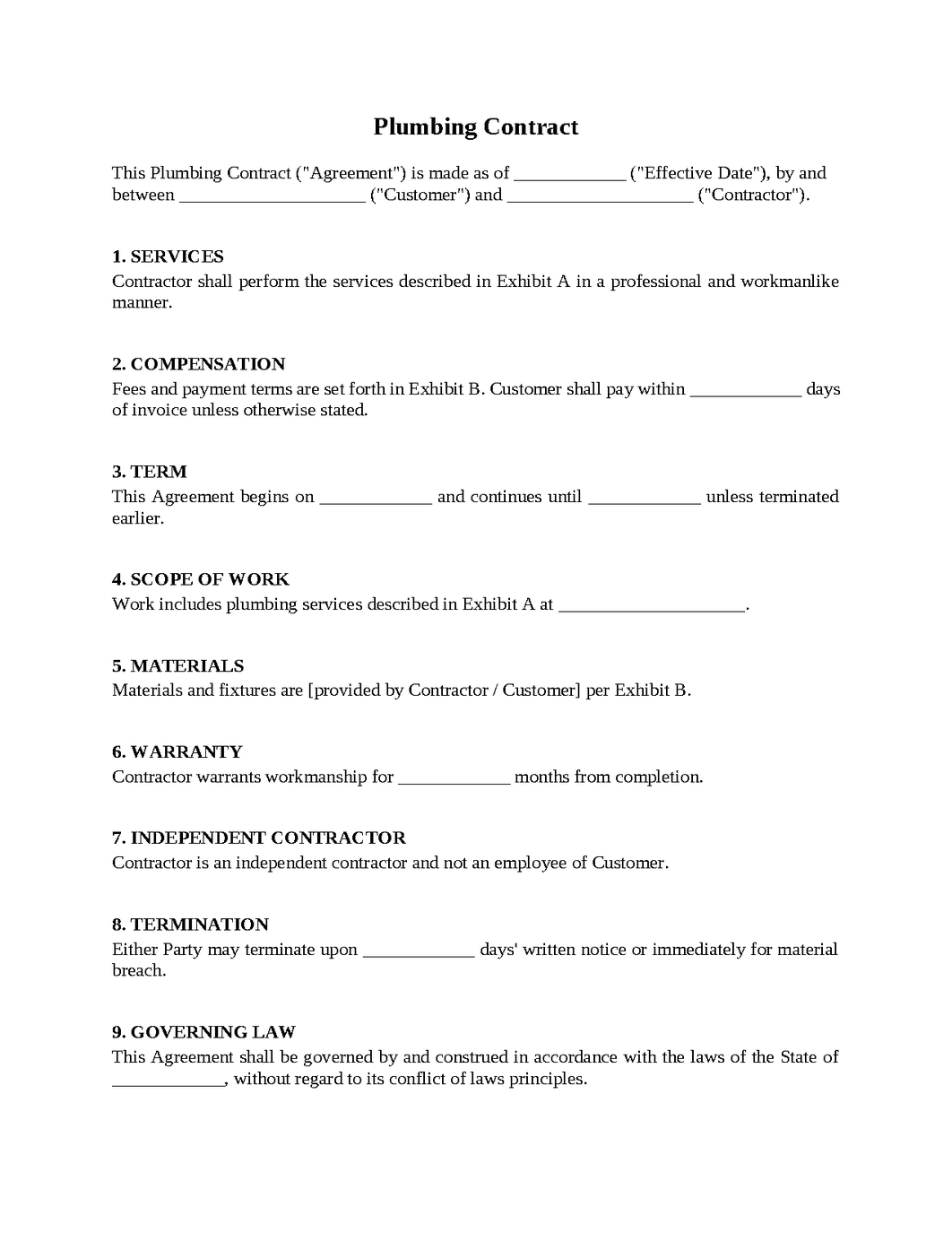
Plumbing Contract
A Plumbing Contract is a legal agreement that establishes the terms under which a plumber or plumbing company provides plumbing services for a homeowner, business, contractor, developer, or property owner. These contracts are commonly used for repairs, new construction projects, remodels, maintenance work, emergency services, commercial installations, and large-scale development projects. A Plumbing Contract typically addresses the scope of work, pricing, materials, permits, timelines, warranties, payment terms, and dispute resolution procedures. Because plumbing work often affects critical building systems and can lead to significant property damage if performed improperly, disputes can arise when expectations are not clearly documented. A well-drafted Plumbing Contract helps protect both the service provider and the customer while promoting successful project completion.
The Scope of Work Is Not Clearly Defined
A homeowner hires a plumbing contractor to replace aging pipes in a residential property. During initial discussions, both parties review the home's plumbing issues and agree that repairs are necessary.
The homeowner believes the project includes replacement of all problematic piping throughout the house. The contractor believes only certain sections discussed during the estimate are included in the agreed price.
As work progresses, additional plumbing issues are discovered behind walls and beneath flooring. The homeowner assumes these repairs are part of the original agreement. The contractor views the newly discovered issues as additional work requiring separate approval and compensation.
The disagreement quickly escalates because both parties had different expectations regarding the scope of services being provided.
What began as a routine repair project becomes a dispute over what was actually included in the contract.
To help avoid this problem, a Plumbing Contract should clearly define the scope of work, identify included services, describe excluded work, and establish procedures for approving change orders when unexpected conditions are discovered.
Unexpected Conditions Lead to Cost Overruns
A commercial property owner hires a plumbing company to complete plumbing upgrades during a building renovation.
The contractor prepares an estimate based on available plans and a limited site inspection. Once demolition begins, however, the plumbing crew discovers deteriorated piping, undocumented modifications, and code compliance issues hidden behind existing structures.
Correcting the problems requires additional labor, materials, and permitting efforts. The contractor believes the additional work was impossible to anticipate. The property owner argues that the quoted price should cover the entire project.
As costs increase, tensions develop regarding responsibility for the overruns. Both parties feel surprised by the situation, yet neither wants to absorb the additional expense.
The dispute centers on who should bear the financial consequences of unforeseen site conditions.
To reduce these risks, a Plumbing Contract should address unforeseen conditions, establish change-order procedures, define pricing adjustments, and clarify how additional work will be authorized and compensated.
Project Delays Affect Multiple Contractors
A developer hires a plumbing contractor as part of a larger construction project involving numerous trades.
The plumbing work must be completed according to a carefully coordinated construction schedule. Early in the project, material shortages and scheduling conflicts begin creating delays.
The plumbing contractor argues that other trades have not completed prerequisite work on time. The general contractor believes the plumbing crew is understaffed and failing to meet project milestones.
As delays accumulate, other contractors are affected and project costs begin increasing. Finger-pointing replaces collaboration, and relationships among project participants deteriorate.
The disagreement becomes increasingly costly because no one clearly understands responsibility for the delays.
To help prevent these issues, a Plumbing Contract should establish project schedules, identify milestone requirements, define delay notification procedures, and allocate responsibility for delays caused by various parties. Clear scheduling provisions help manage expectations and reduce disputes.
Warranty Expectations Differ Significantly
A homeowner hires a plumbing contractor to install new plumbing fixtures and water supply lines during a remodeling project.
The installation is completed successfully, and the homeowner is satisfied with the work. Several months later, a leak develops in an area associated with the project.
The homeowner expects the contractor to repair the issue immediately under warranty. The contractor believes the leak resulted from unrelated factors outside the scope of the warranty coverage.
Neither party disputes that a problem exists, but they disagree about who should bear the repair costs.
The disagreement grows because warranty expectations were never discussed in detail during the contracting process.
To help avoid these disputes, a Plumbing Contract should clearly define warranty coverage, establish warranty periods, identify exclusions, and explain procedures for requesting warranty service. Detailed warranty provisions help eliminate uncertainty when issues arise after project completion.
Final Payment Is Withheld After the Work Is Complete
A plumbing contractor completes a large residential project and submits a final invoice according to the contract terms.
The property owner believes certain minor items remain unfinished and withholds payment until those issues are addressed. The contractor argues that the project is substantially complete and that the remaining items are insignificant.
As discussions continue, payment remains outstanding. The contractor becomes concerned about cash flow and considers pursuing legal remedies. The property owner believes withholding payment is appropriate until every concern is resolved.
What should have been a routine project closeout becomes a dispute over payment and completion standards.
To help avoid these problems, a Plumbing Contract should establish payment schedules, define substantial completion, identify punch-list procedures, and specify how final payments will be handled when minor issues remain outstanding.
Plumbing projects are essential to the safety, functionality, and value of residential and commercial properties. However, issues involving scope of work, unforeseen conditions, project delays, warranty obligations, and final payments can become significant sources of conflict when expectations are not documented clearly. A carefully drafted Plumbing Contract provides a structured framework for managing these relationships and protecting all parties involved. When prepared thoughtfully, it can help reduce misunderstandings, improve project outcomes, support timely payment, and promote successful completion of plumbing work.

Get started with Upsign today!
Easily send, sign and track your documents