

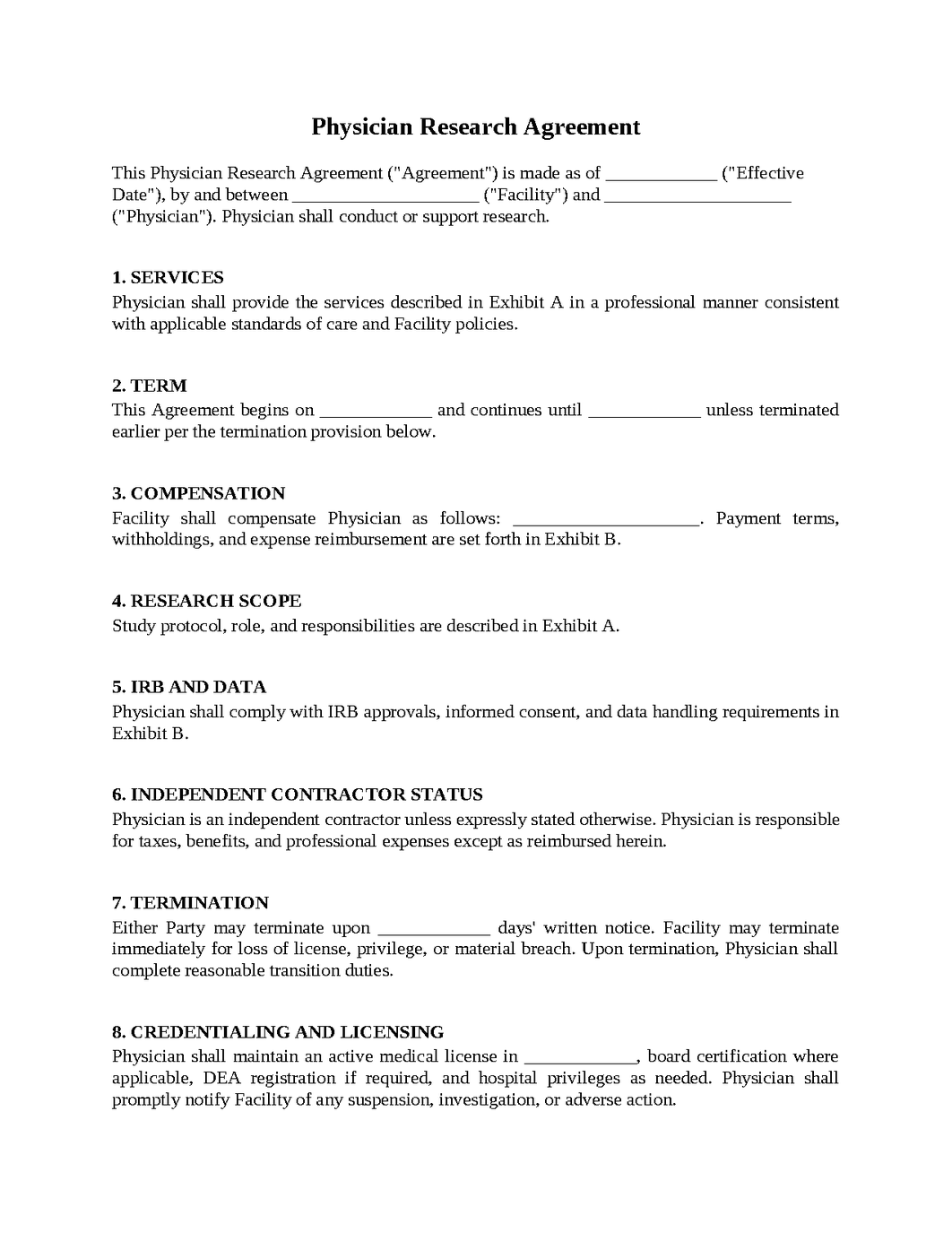
Physician Research Agreement
A Physician Research Agreement is a legal contract that establishes the terms under which a physician participates in, supervises, conducts, or supports medical research activities for a pharmaceutical company, biotechnology firm, medical device manufacturer, hospital, academic institution, contract research organization, or healthcare system. These agreements commonly govern clinical trials, observational studies, outcomes research, investigator-initiated studies, post-market surveillance programs, and other research initiatives. Because physician research activities involve patient safety, regulatory compliance, intellectual property, publication rights, and financial compensation, disputes can arise when expectations are not clearly documented. A well-drafted Physician Research Agreement helps protect research participants, support scientific integrity, and reduce legal and operational risks for all parties involved.
Enrollment Expectations Become Unrealistic
A pharmaceutical company hires a physician to serve as a principal investigator for a clinical trial involving a new treatment. During recruitment discussions, both parties are optimistic about patient enrollment because the physician serves a large patient population that appears to fit the study criteria.
The physician agrees to participate based on projections suggesting enrollment targets can be achieved comfortably within the study timeline. After the trial begins, however, recruitment proves far more difficult than anticipated. Many patients fail to meet eligibility requirements, while others decline participation after learning about study obligations.
As enrollment numbers fall behind schedule, pressure begins mounting. The sponsor expects the physician to increase recruitment efforts, while the physician argues that patient participation cannot be forced and that enrollment estimates were overly optimistic from the beginning.
The relationship becomes strained because financial expectations, study timelines, and performance evaluations were tied to enrollment goals that may not have been realistic.
To help avoid this problem, a Physician Research Agreement should clearly define enrollment expectations, establish performance metrics, identify recruitment responsibilities, and address what happens if enrollment targets are not achieved. Clear expectations help reduce disputes when recruitment challenges arise.
Protocol Deviations Lead to Conflict
A physician participates in a multi-site clinical trial involving complex treatment protocols and extensive documentation requirements.
Initially, the physician and research staff follow study procedures carefully. As patient volume increases and administrative demands grow, however, minor deviations begin occurring. Certain follow-up visits are completed outside required timeframes, documentation is occasionally delayed, and protocol exceptions are made to accommodate individual patient circumstances.
The physician believes the deviations are minor and clinically appropriate. The study sponsor takes a more rigid view and becomes concerned that deviations could affect data integrity and regulatory compliance.
As audits identify additional inconsistencies, tensions increase between the sponsor and investigator. Both parties are committed to the success of the study, but they have different views regarding the significance of the issues.
What began as a scientific collaboration evolves into a disagreement regarding compliance expectations.
To help prevent these problems, a Physician Research Agreement should clearly define protocol compliance obligations, reporting requirements, deviation procedures, and corrective action expectations. Detailed compliance provisions help ensure that everyone understands their responsibilities.
Ownership of Research Data Becomes Disputed
A physician conducts a successful research study that generates valuable clinical data and significant scientific interest.
Throughout the study, the physician contributes substantial expertise, oversees patient enrollment, supervises data collection, and participates actively in the analysis process. As the study nears completion, questions begin arising regarding ownership of the data and the ability to use the information for future research.
The sponsor believes all study data belongs exclusively to the organization because it funded the project. The physician believes meaningful rights should exist because of the substantial intellectual and operational contributions made throughout the research process.
The disagreement becomes more significant as additional research opportunities emerge and third parties express interest in the findings.
Neither party anticipated the issue during initial negotiations because the focus remained on conducting the study successfully.
To reduce these risks, a Physician Research Agreement should clearly address data ownership, access rights, future research use, data-sharing procedures, and post-study rights relating to research findings. Clear ownership provisions can prevent major disputes later.
Publication Rights Create Tension
A physician serves as an investigator in a clinical study that produces important findings relevant to patient care.
After reviewing the results, the physician wishes to publish the findings promptly in a respected medical journal. The sponsor agrees that publication is important but wants additional time to review the manuscript, protect proprietary information, and coordinate broader publication strategies.
The physician becomes concerned that delays may limit scientific discussion and professional opportunities. The sponsor worries that premature publication could affect intellectual property rights, regulatory filings, or competitive advantages.
Both parties support scientific advancement, yet their priorities differ significantly.
As publication deadlines approach, frustration grows because neither side clearly understands the other's expectations regarding timing and editorial control.
To help avoid these disputes, a Physician Research Agreement should clearly establish publication rights, manuscript review procedures, review timelines, authorship expectations, and protections for confidential information. Clear publication provisions help balance scientific transparency with legitimate business interests.
The Study Ends Before All Responsibilities Are Completed
A physician participates in a multi-year clinical research project involving extensive patient follow-up and regulatory reporting obligations.
Near the end of the study, the sponsor decides to discontinue the project due to business considerations unrelated to patient safety or study performance. Although active enrollment ends immediately, numerous responsibilities remain unresolved.
Patient monitoring continues, regulatory reports remain outstanding, data must be preserved, and study records require long-term maintenance. The physician assumes the sponsor will provide resources necessary to complete these activities. The sponsor believes certain obligations belong to the investigator regardless of the study's status.
The sudden termination creates uncertainty regarding funding, staffing, record retention, and patient communication.
What should have been an orderly study conclusion becomes significantly more complicated than expected.
To help prevent these issues, a Physician Research Agreement should establish study termination procedures, define post-study responsibilities, address funding obligations, and allocate responsibility for patient follow-up, data retention, and regulatory compliance after the research concludes.
Physician research plays a critical role in advancing medical knowledge, improving patient care, and supporting healthcare innovation. However, issues involving enrollment expectations, protocol compliance, data ownership, publication rights, and study termination can become significant sources of conflict when expectations are not documented clearly. A carefully drafted Physician Research Agreement provides a structured framework for managing these complex relationships and protecting all parties involved. When prepared thoughtfully, it can help support scientific integrity, regulatory compliance, patient safety, and successful research outcomes.

Get started with Upsign today!
Easily send, sign and track your documents