

Physician Locum Tenens Agreement
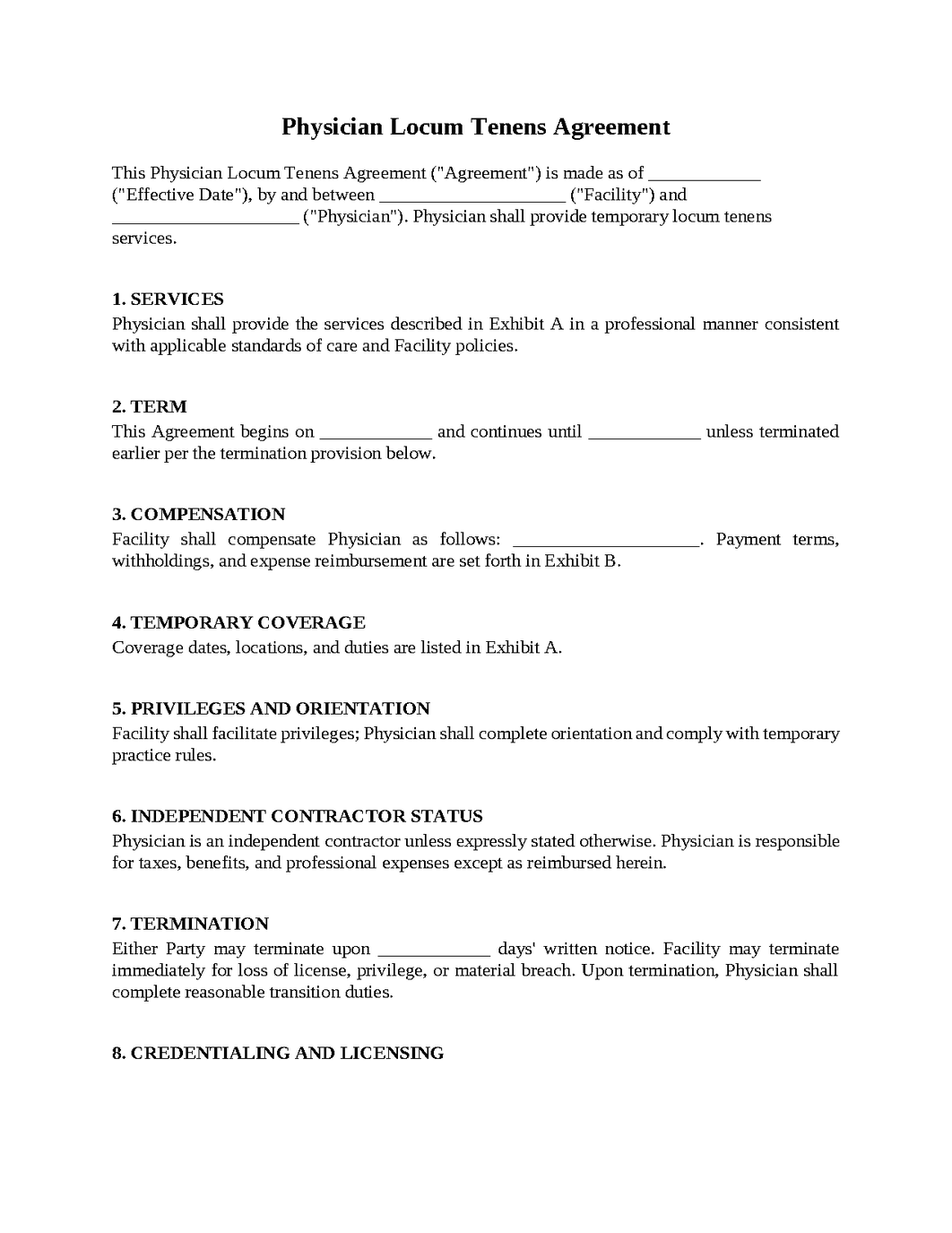
A Physician Locum Tenens Agreement is a legal contract that establishes the terms under which a physician temporarily provides medical services for a hospital, clinic, physician group, healthcare system, or other medical organization. Locum tenens arrangements are commonly used to cover physician vacations, medical leave, staffing shortages, recruitment gaps, seasonal demand increases, and unexpected departures. These agreements typically address compensation, scheduling, licensing requirements, malpractice coverage, travel expenses, credentialing, patient care responsibilities, and termination rights. Because locum tenens physicians often enter unfamiliar clinical environments on short notice, disputes can arise when expectations are not clearly documented. A well-drafted Physician Locum Tenens Agreement helps ensure continuity of care while protecting both the physician and the healthcare organization.
The Actual Workload Is Far Greater Than Advertised
A rural hospital hires a locum tenens physician to provide temporary internal medicine coverage while recruiting a permanent replacement. During negotiations, hospital administrators describe a manageable patient census, limited call responsibilities, and a predictable daily schedule.
Based on those representations, the physician accepts the assignment and travels to the facility. Shortly after arriving, however, the physician discovers that patient volume is significantly higher than anticipated. Staffing shortages have increased workloads, several providers recently left the organization, and the remaining medical staff are struggling to keep up with demand.
The physician finds that clinic schedules routinely run behind, inpatient responsibilities are heavier than expected, and call coverage requires far more time than originally discussed. Hospital leadership acknowledges the challenges but argues that patient needs require flexibility.
What began as a straightforward temporary assignment quickly becomes a dispute regarding expectations and compensation. The physician feels important details were not disclosed, while the hospital believes conditions changed after recruitment discussions occurred.
To help avoid this problem, a Physician Locum Tenens Agreement should clearly define expected patient volume, call responsibilities, service locations, staffing support, and workload assumptions. The agreement should also address what happens if actual conditions differ materially from those described during recruitment.
Credentialing Delays Prevent the Physician From Working
A healthcare system recruits a locum tenens physician to fill a critical staffing shortage. The assignment is scheduled to begin immediately because patient demand is high and existing physicians are already overextended.
The physician completes onboarding paperwork promptly and assumes credentialing will proceed smoothly. As the start date approaches, however, delays begin emerging. Certain records remain outstanding, payer enrollment approvals take longer than expected, and committee reviews are postponed due to scheduling conflicts.
The physician has already arranged travel and housing based on the agreed start date. The healthcare organization expected coverage to begin immediately and now faces continued staffing challenges.
As delays continue, both parties incur financial costs. The physician loses income opportunities while the organization remains short-staffed.
Neither party intended for problems to occur, but the lack of clear credentialing procedures creates frustration and uncertainty.
To reduce these risks, a Physician Locum Tenens Agreement should establish credentialing responsibilities, identify required documentation, provide realistic timelines, and address compensation or cancellation rights if delays prevent services from beginning as scheduled.
Housing and Travel Arrangements Become Problematic
A locum tenens physician accepts a multi-month assignment in another state. The healthcare organization agrees to provide housing accommodations and reimburse travel expenses associated with the assignment.
Initially, both parties assume the arrangements will be straightforward. After arriving, however, the physician discovers that the housing provided is significantly different from what was expected. Commute times are longer than anticipated, accommodations are inadequate, and certain promised amenities are unavailable.
At the same time, questions arise regarding reimbursement for transportation, rental vehicles, parking costs, and additional travel expenses incurred during the assignment.
The physician believes the organization should honor the expectations established during recruitment. The organization argues that it has satisfied its obligations under the agreement.
What should have been a routine logistical matter becomes a source of ongoing frustration.
To help prevent these disputes, a Physician Locum Tenens Agreement should clearly define housing standards, identify covered travel expenses, establish reimbursement procedures, and specify any limitations on benefits being provided.
Malpractice Coverage Creates Unexpected Exposure
A physician accepts several locum tenens assignments through a staffing agency and assumes that professional liability insurance has been arranged appropriately.
During onboarding, the physician receives general assurances that malpractice coverage exists. Because the assignments are temporary, little attention is paid to the details of coverage terms and reporting obligations.
Several years later, a patient files a claim relating to care provided during one of the assignments. Questions immediately arise regarding which insurance policy applies, whether tail coverage exists, and which organization bears responsibility for defense costs.
The physician assumes the staffing agency or healthcare facility provided adequate protection. The organizations involved point to various contractual provisions allocating responsibility differently.
The resulting confusion creates significant legal and financial concerns.
To help avoid these problems, a Physician Locum Tenens Agreement should clearly identify insurance coverage requirements, policy limits, reporting obligations, and responsibility for tail coverage. Detailed insurance provisions help ensure all parties understand their obligations before services begin.
The Assignment Ends Before Patient Care Is Transitioned
A locum tenens physician successfully provides coverage for several months while a medical group searches for a permanent provider.
During the assignment, the physician develops treatment plans, orders diagnostic testing, coordinates specialist referrals, and manages numerous patients with ongoing medical needs. Eventually, the healthcare organization hires a permanent physician and informs the locum provider that the assignment will end.
Although the transition seems straightforward initially, several patient care issues remain unresolved. Test results are still pending, follow-up appointments have not occurred, and certain treatment plans require ongoing monitoring.
The locum physician believes responsibility ends when the assignment concludes. The permanent provider assumes important matters will be addressed before the departure occurs.
Patients become confused regarding who is managing their care, and staff members struggle to coordinate the transition.
To reduce these risks, a Physician Locum Tenens Agreement should establish transition procedures, define handoff responsibilities, address pending patient matters, and require communication regarding unresolved clinical issues. Clear transition planning helps protect patients and support continuity of care.
Locum tenens physicians provide an essential service by helping healthcare organizations maintain patient access during staffing shortages, physician absences, and recruitment challenges. However, issues involving workload expectations, credentialing, travel arrangements, malpractice coverage, and patient transitions can become significant sources of conflict when responsibilities are not documented clearly. A carefully drafted Physician Locum Tenens Agreement provides a structured framework for managing these temporary relationships and protecting all parties involved. When prepared thoughtfully, it can help reduce misunderstandings, improve operational efficiency, support continuity of care, and promote successful healthcare staffing arrangements.

Get started with Upsign today!
Easily send, sign and track your documents