

Physician Employment Agreement
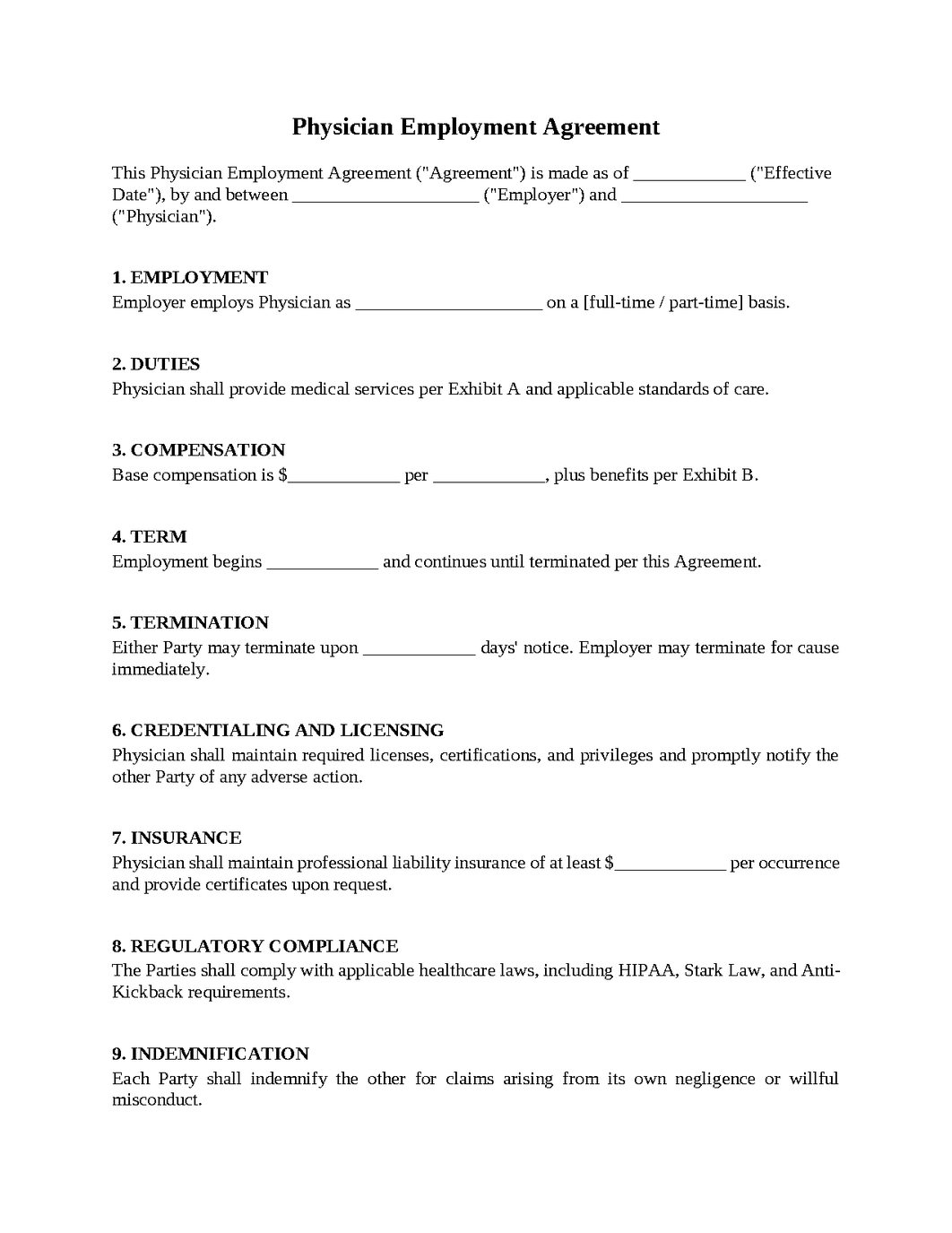
A Physician Employment Agreement is a legal contract that establishes the terms under which a physician provides medical services for a hospital, clinic, physician group, healthcare system, or other healthcare organization. These agreements typically address compensation, productivity incentives, duties and responsibilities, call coverage requirements, benefits, malpractice insurance, restrictive covenants, termination rights, and compliance obligations. Because physicians often invest years building patient relationships and professional reputations, disputes involving employment agreements can have significant financial and career consequences. A well-drafted Physician Employment Agreement helps align expectations between the physician and employer while reducing the risk of future disagreements.
Productivity Compensation Creates Unexpected Disputes
A growing specialty practice recruits an experienced physician to help meet increasing patient demand. During negotiations, both parties focus heavily on the compensation package, which includes a base salary and a productivity bonus tied to the physician's collections.
Initially, the arrangement appears straightforward. The physician assumes all revenue generated from patient services will be included when productivity bonuses are calculated. The practice assumes that certain adjustments, write-offs, and operational costs will affect the final calculation. Because both sides are eager to finalize the employment relationship, the details of the formula receive relatively little attention.
After the physician's first year, patient volumes exceed expectations and revenue generation is strong. When bonus calculations are provided, however, the physician is surprised to learn that the payment is significantly lower than anticipated. The practice points to accounting adjustments and collection policies that reduced the eligible revenue base.
What began as a successful employment relationship quickly becomes strained. The physician feels that compensation expectations were not honored, while the practice believes it followed the agreement exactly as written.
To help avoid this problem, a Physician Employment Agreement should clearly define compensation formulas, productivity metrics, collection methodologies, adjustment procedures, and reporting obligations. The agreement should include detailed examples whenever possible so that both parties understand how compensation will be calculated before employment begins.
Call Coverage Expectations Become a Source of Burnout
A hospital hires a physician to join an established medical group serving a large geographic area. During recruitment discussions, the physician is told that call responsibilities will be shared fairly among the medical staff.
For the first several months, the arrangement appears manageable. As staffing shortages develop, however, additional call responsibilities begin falling on the physician. Weekends become increasingly occupied by on-call duties, vacation schedules become difficult to maintain, and work-life balance begins to suffer.
The physician believes the workload exceeds what was discussed during recruitment. The employer argues that changing patient volumes and staffing needs require additional flexibility. Neither side can point to clear language defining call frequency, backup coverage requirements, or limits on scheduling obligations.
As frustration grows, morale declines and the physician begins considering opportunities elsewhere. A dispute that could have been avoided through clear drafting now threatens a valuable employment relationship.
To reduce these risks, a Physician Employment Agreement should specifically address call coverage expectations, scheduling procedures, compensation for additional call responsibilities, and circumstances under which coverage obligations may change. Clearly documenting these expectations helps prevent misunderstandings and physician burnout.
Restrictive Covenants Limit Future Career Opportunities
A physician joins a successful private practice and signs an employment agreement containing a non-compete provision. At the time, the physician is focused on beginning practice and pays little attention to restrictions that may apply years later.
After several years, professional goals change. The physician decides to leave the practice and pursue a new opportunity with another healthcare organization located nearby.
Only then does the physician discover the practical impact of the restrictive covenant. The agreement prohibits practicing within a broad geographic area for an extended period following termination. Relocating would disrupt family life, while complying with the restriction could significantly affect income and patient relationships.
The physician argues that the restriction is broader than necessary. The practice responds that it invested substantial resources in recruiting, training, marketing, and supporting the physician's growth.
The disagreement becomes highly contentious because both parties have legitimate interests they are trying to protect.
To help avoid these disputes, a Physician Employment Agreement should clearly define the scope, duration, and geographic reach of any restrictive covenants. The agreement should also address patient notification procedures, referral relationships, and any buyout options that may be available if the physician departs.
Malpractice Coverage Creates Unexpected Financial Exposure
A physician accepts employment with a healthcare organization that provides professional liability insurance as part of the benefits package. During onboarding, the physician assumes malpractice coverage will continue protecting against claims arising from services performed during employment.
Several years later, the physician leaves the organization and joins another practice. During the transition, the physician learns that the malpractice policy is written on a claims-made basis and that tail coverage may be required to protect against future claims involving prior patient care.
The cost of tail coverage is substantial. The physician believes the employer should bear the expense because the claims relate to services provided while employed. The employer argues that responsibility depends on the circumstances of the departure and the specific language of the agreement.
What initially appeared to be a routine employment benefit becomes a major financial dispute involving tens of thousands of dollars.
To help prevent these issues, a Physician Employment Agreement should clearly identify the type of malpractice coverage being provided, explain whether tail coverage will be required, and allocate responsibility for premiums under various termination scenarios. Clear drafting can eliminate significant uncertainty when employment ends.
Termination Leads to a Dispute Over Patient Relationships
A physician spends nearly a decade building a successful practice within a large healthcare organization. During that time, strong relationships develop with patients, referral sources, and members of the local medical community.
When the employment relationship ends, questions immediately arise regarding future patient care. Patients begin contacting the physician seeking information about where care will continue. The employer wants to retain those patients within the organization, while the physician wants patients to have accurate information regarding future treatment options.
Tension develops over patient notifications, medical record access, referral communications, and ongoing treatment responsibilities. Both parties claim they are acting in the best interests of patients, yet they have different views regarding how the transition should occur.
The disagreement creates uncertainty for patients and increases the risk of regulatory, ethical, and legal complications.
To help avoid these problems, a Physician Employment Agreement should establish detailed procedures for handling patient notifications, medical records, continuity of care obligations, referral relationships, and post-employment communications. These provisions can help ensure that patient interests remain protected while reducing conflict between the parties.
Physician employment relationships involve far more than compensation and work schedules. Issues involving productivity incentives, call coverage, restrictive covenants, malpractice insurance, and patient relationships can significantly affect both physicians and healthcare organizations. A carefully drafted Physician Employment Agreement provides a structured framework for addressing these concerns before disputes arise. When prepared thoughtfully, it can help protect professional relationships, support regulatory compliance, promote continuity of patient care, and create a more stable and successful employment arrangement for everyone involved.

Get started with Upsign today!
Easily send, sign and track your documents