

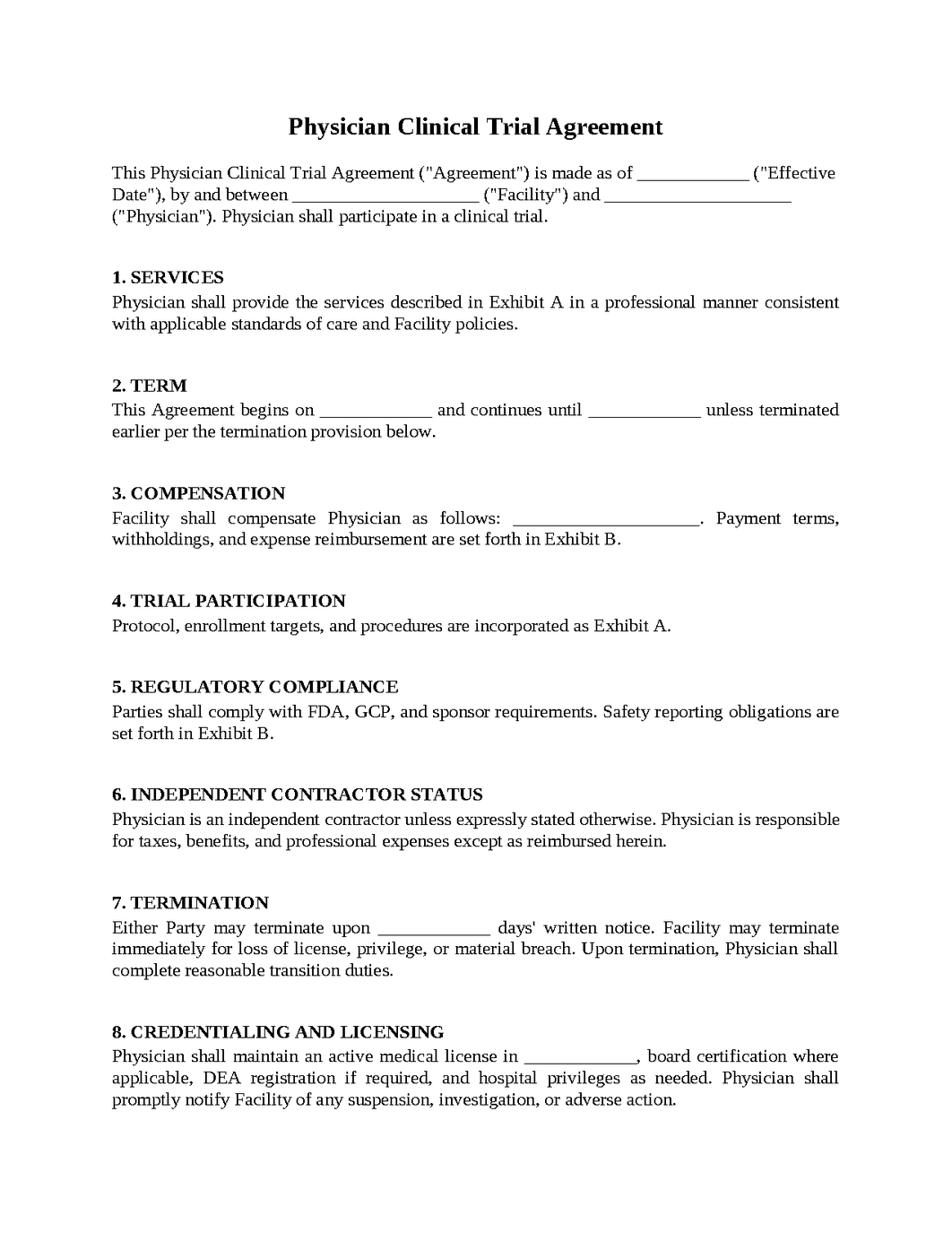
Physician Clinical Trial Agreement
A Physician Clinical Trial Agreement is a legal contract that establishes the terms under which a physician participates in a clinical trial sponsored by a pharmaceutical company, biotechnology firm, medical device manufacturer, contract research organization, academic institution, or healthcare system. These agreements govern the physician's responsibilities for conducting the trial, enrolling participants, complying with study protocols, collecting data, maintaining regulatory compliance, and protecting patient safety. Because clinical trials involve significant legal, scientific, ethical, and financial obligations, disputes can arise when expectations are not clearly documented. A well-drafted Physician Clinical Trial Agreement helps ensure study integrity while protecting sponsors, investigators, and research participants.
Patient Recruitment Falls Far Below Expectations
A biotechnology company selects an experienced physician to serve as the principal investigator for a clinical trial involving a promising new treatment. During study planning, enrollment projections are developed based on patient demographics, disease prevalence, and the physician's existing patient population.
Both parties believe recruitment goals are realistic. The sponsor allocates funding based on expected enrollment numbers, while the physician commits staff resources and dedicates clinic time to the study.
Once recruitment begins, however, enrollment proves much more difficult than anticipated. Many potential participants fail screening requirements, while others decline participation because of study commitments, travel requirements, or concerns about experimental treatments.
As enrollment lags, the sponsor pressures the physician to increase recruitment efforts and accelerate participant screening. The physician argues that enrollment challenges are common in clinical research and that patient participation cannot be guaranteed.
What began as a collaborative research effort becomes strained because expectations regarding enrollment success were never fully aligned.
To help avoid this problem, a Physician Clinical Trial Agreement should clearly define enrollment goals, identify recruitment responsibilities, establish realistic performance expectations, and address how enrollment shortfalls will be managed. Clear provisions help reduce conflict when recruitment challenges arise.
Adverse Events Trigger Disagreements About Reporting Responsibilities
A physician conducts a clinical trial involving patients with a serious medical condition. During the study, a participant experiences an unexpected health complication that may or may not be related to the investigational treatment.
The physician promptly evaluates the patient and initiates appropriate medical care. Questions quickly arise regarding whether the event must be reported immediately, what information must be provided to the sponsor, and which regulatory authorities require notification.
The sponsor believes reporting obligations were triggered immediately and expects comprehensive documentation. The physician believes additional investigation is necessary before determining whether the event is related to the study.
As reporting deadlines approach, tensions develop because both parties have different interpretations of their obligations.
The disagreement creates unnecessary stress during a situation where patient safety should remain the primary focus.
To help prevent these issues, a Physician Clinical Trial Agreement should clearly define adverse event reporting requirements, establish reporting timelines, identify documentation standards, and allocate responsibility for communications with sponsors, regulators, and ethics committees.
Sponsor Audits Reveal Documentation Deficiencies
A physician participates in a multi-year clinical trial involving hundreds of patient visits, laboratory results, consent forms, and regulatory records.
The study appears successful, and patient care proceeds appropriately. During a routine sponsor audit, however, reviewers identify inconsistencies in documentation. Some records contain missing signatures, certain study notes were completed after visits occurred, and several files lack supporting documentation required by the protocol.
The physician believes the underlying patient care and data remain accurate. The sponsor becomes concerned because regulatory agencies often focus heavily on documentation quality when evaluating study compliance.
As the audit expands, additional resources must be devoted to correcting records and responding to findings. The relationship becomes strained even though no one questions the physician's commitment to patient care.
What should have been a routine audit becomes a significant operational challenge.
To reduce these risks, a Physician Clinical Trial Agreement should establish documentation standards, audit procedures, record retention requirements, and corrective action processes. Strong documentation expectations help protect both the sponsor and the investigator.
Publication Rights Become a Major Source of Conflict
A physician participates in a groundbreaking clinical trial that generates significant scientific interest and promising results.
After data analysis is completed, the physician wishes to present findings at a major medical conference and prepare a manuscript for publication. The sponsor agrees that publication is important but wants additional time to review the materials, protect confidential information, and coordinate broader publication plans.
The physician worries that delays may affect professional opportunities and limit the timely dissemination of important scientific findings. The sponsor is concerned about intellectual property rights, competitive considerations, and regulatory strategies.
Both parties support the advancement of medical knowledge, yet they disagree regarding the timing and process for publication.
The dispute gradually shifts attention away from the scientific results and toward questions of control and ownership.
To help avoid these disputes, a Physician Clinical Trial Agreement should clearly establish publication rights, manuscript review procedures, review timelines, authorship expectations, and protections for confidential information. Well-defined publication provisions help balance scientific transparency with legitimate sponsor interests.
The Trial Ends Early and Leaves Unfinished Obligations
A pharmaceutical company sponsors a clinical trial expected to continue for several years. The physician invests substantial resources in staffing, patient recruitment, training, and study administration.
Midway through the project, the sponsor decides to terminate the trial due to strategic business considerations unrelated to safety or efficacy concerns. Enrollment stops immediately, but many responsibilities remain unresolved.
Patients require follow-up care, study records must be maintained, regulatory reports remain outstanding, and research staff need guidance regarding next steps. The physician assumes the sponsor will continue funding necessary activities until all obligations are completed.
The sponsor believes certain responsibilities remain with the investigator regardless of whether the study continues.
The sudden termination creates uncertainty regarding funding, staffing, patient communication, and regulatory compliance.
To help prevent these issues, a Physician Clinical Trial Agreement should establish early termination procedures, define post-study responsibilities, address funding obligations, and allocate responsibility for patient follow-up, record retention, and regulatory reporting. Clear termination provisions help ensure an orderly conclusion if a study ends unexpectedly.
Clinical trials are essential to advancing medical science and developing new treatments, but they also involve complex legal, regulatory, and operational responsibilities. Issues involving patient recruitment, adverse event reporting, documentation, publication rights, and study termination can become significant sources of conflict when expectations are not documented clearly. A carefully drafted Physician Clinical Trial Agreement provides a structured framework for managing these challenges and protecting all parties involved. When prepared thoughtfully, it can help support patient safety, regulatory compliance, scientific integrity, and successful clinical research outcomes.

Get started with Upsign today!
Easily send, sign and track your documents