

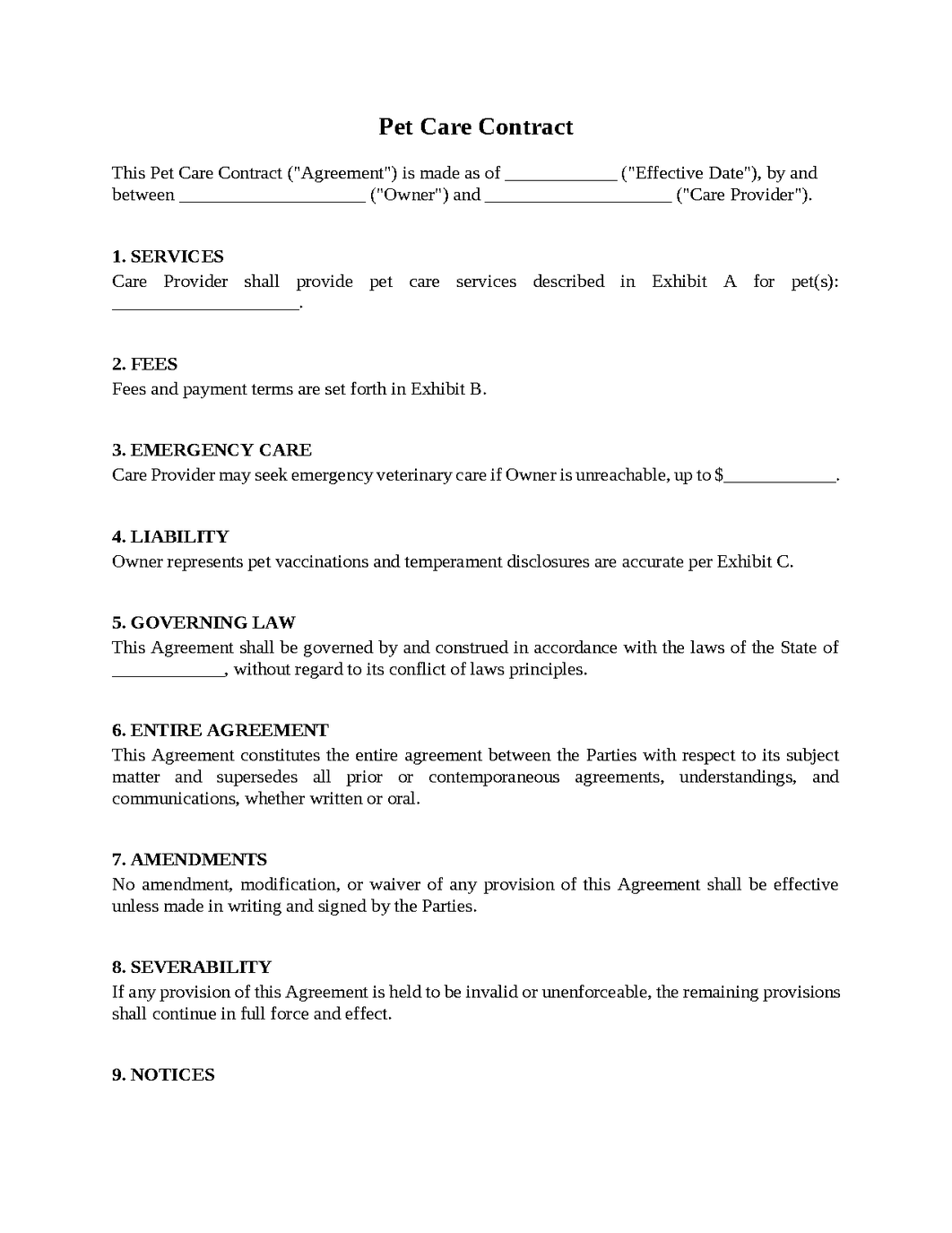
Pet Care Contract
A Pet Care Contract is a legal agreement that establishes the terms under which one party agrees to care for another person's pet. These contracts are commonly used between pet owners and pet sitters, dog walkers, boarding providers, pet care businesses, family members, and independent animal caregivers. A Pet Care Contract typically addresses the services being provided, feeding schedules, exercise requirements, medication administration, emergency procedures, veterinary care, liability issues, payment terms, and the duration of the arrangement. Because pets are often viewed as beloved family members, disputes can become highly emotional when expectations are not clearly documented. A well-drafted Pet Care Contract helps protect the pet, the owner, and the caregiver while providing clear guidance regarding responsibilities and decision-making.
An Emergency Medical Situation Requires Immediate Decisions
A family hires a pet sitter to care for their elderly dog while they travel overseas for two weeks. Before leaving, the owners provide feeding instructions, contact information, and a general overview of the dog's health.
Several days into the trip, the dog begins exhibiting signs of distress. The pet sitter notices labored breathing, a loss of appetite, and unusual lethargy. Concerned about the animal's condition, the sitter contacts the owners but cannot reach them because they are traveling in an area with limited communication access.
The sitter now faces a difficult decision. Veterinary treatment may be necessary, but the potential costs could be significant. The owners never provided instructions regarding emergency care authorization or spending limits.
As the dog's condition worsens, valuable time is lost while the sitter attempts to determine what authority exists to make medical decisions. When the owners eventually learn what happened, they disagree about whether treatment should have been pursued sooner.
What began as a routine pet-sitting arrangement becomes an emotional dispute regarding responsibility and decision-making.
To help avoid this problem, a Pet Care Contract should clearly authorize emergency veterinary treatment, identify approved veterinarians, establish spending limits, and provide procedures for obtaining care when the owner cannot be reached. These provisions can help ensure that critical decisions are made quickly when a pet's health is at risk.
Medication Instructions Are Misunderstood
A pet owner hires a caregiver to watch a cat that requires daily medication for a chronic health condition.
During a brief handoff meeting, the owner explains the medication schedule and provides the necessary supplies. Both parties believe the instructions are straightforward.
Several days later, the owner returns home and discovers that the medication was administered incorrectly. The caregiver misunderstood the dosage instructions and provided the medication at the wrong intervals.
Although the mistake was unintentional, the cat experiences complications that require veterinary treatment.
The owner becomes upset because the medication instructions seemed clear. The caregiver insists that the instructions were confusing and that additional written guidance should have been provided.
The disagreement quickly shifts from the mistake itself to who was responsible for preventing it.
To reduce these risks, a Pet Care Contract should require detailed written medication instructions, including dosage amounts, administration times, special precautions, and emergency contact information. The agreement should also confirm that the caregiver understands and accepts responsibility for following those instructions.
Property Damage Occurs During the Care Period
A dog owner hires a pet sitter to stay at the owner's home while caring for two energetic dogs during a weeklong vacation.
The arrangement works smoothly for several days. One afternoon, however, the dogs become excited while the sitter is away briefly and cause substantial damage inside the home. Furniture is damaged, decorations are broken, and a door is scratched severely.
When the owner returns, frustration immediately follows.
The owner believes the sitter failed to supervise the dogs appropriately. The sitter argues that the animals had never displayed similar behavior before and that reasonable care was exercised throughout the assignment.
The parties disagree about who should bear the cost of repairs.
What initially appeared to be a simple pet care arrangement now involves questions of negligence, supervision standards, and financial responsibility.
To help avoid these disputes, a Pet Care Contract should clearly define supervision expectations, identify responsibility for pet-related property damage, and address insurance coverage or reimbursement obligations when unexpected incidents occur.
The Pet Injures Another Animal or Person
A professional dog walker agrees to care for a client's dog several times each week.
During one walk, the dog becomes startled and pulls away unexpectedly. In the resulting confusion, another dog is injured and its owner incurs veterinary expenses.
The injured party seeks compensation and begins asking questions regarding responsibility.
The pet owner believes the dog walker should be responsible because the incident occurred during professional supervision. The dog walker argues that the pet owner knew the animal's behavioral history and failed to disclose certain tendencies.
The disagreement becomes increasingly complicated as insurance carriers, veterinary bills, and liability claims become involved.
Both parties feel the other should bear responsibility for the consequences.
To reduce these risks, a Pet Care Contract should address liability allocation, behavioral disclosures, indemnification obligations, insurance requirements, and procedures for reporting incidents. Clear drafting can help establish expectations before a claim arises.
The Owner Returns Later Than Expected
A pet sitter agrees to care for a pet for ten days while the owner travels out of state.
The arrangement is planned carefully, and both parties understand the expected return date.
Several days before the trip ends, the owner's return flight is canceled due to severe weather. Additional travel disruptions follow, extending the trip by nearly a week.
The sitter suddenly finds personal schedules disrupted and incurs unexpected costs caring for the pet longer than anticipated.
The owner assumes the sitter will simply continue providing care until arrival. The sitter believes additional compensation should apply because the original agreement covered only a specific period.
The disagreement creates unnecessary tension at the conclusion of an otherwise successful arrangement.
To help prevent these issues, a Pet Care Contract should address extended care situations, additional compensation, emergency travel delays, and procedures for obtaining authorization when services must continue beyond the original term. These provisions help both parties manage unexpected scheduling changes fairly.
Pet owners place tremendous trust in the individuals who care for their animals. At the same time, caregivers accept significant responsibility when they agree to supervise, protect, and make decisions affecting a pet's well-being. Misunderstandings regarding medical care, medication administration, liability, property damage, and scheduling can quickly become serious disputes if expectations are not documented clearly. A Pet Care Contract provides a structured framework for addressing these issues before problems arise. When drafted carefully, it can help protect the pet, clarify responsibilities, reduce misunderstandings, and support a successful caregiving relationship for everyone involved.

Get started with Upsign today!
Easily send, sign and track your documents