

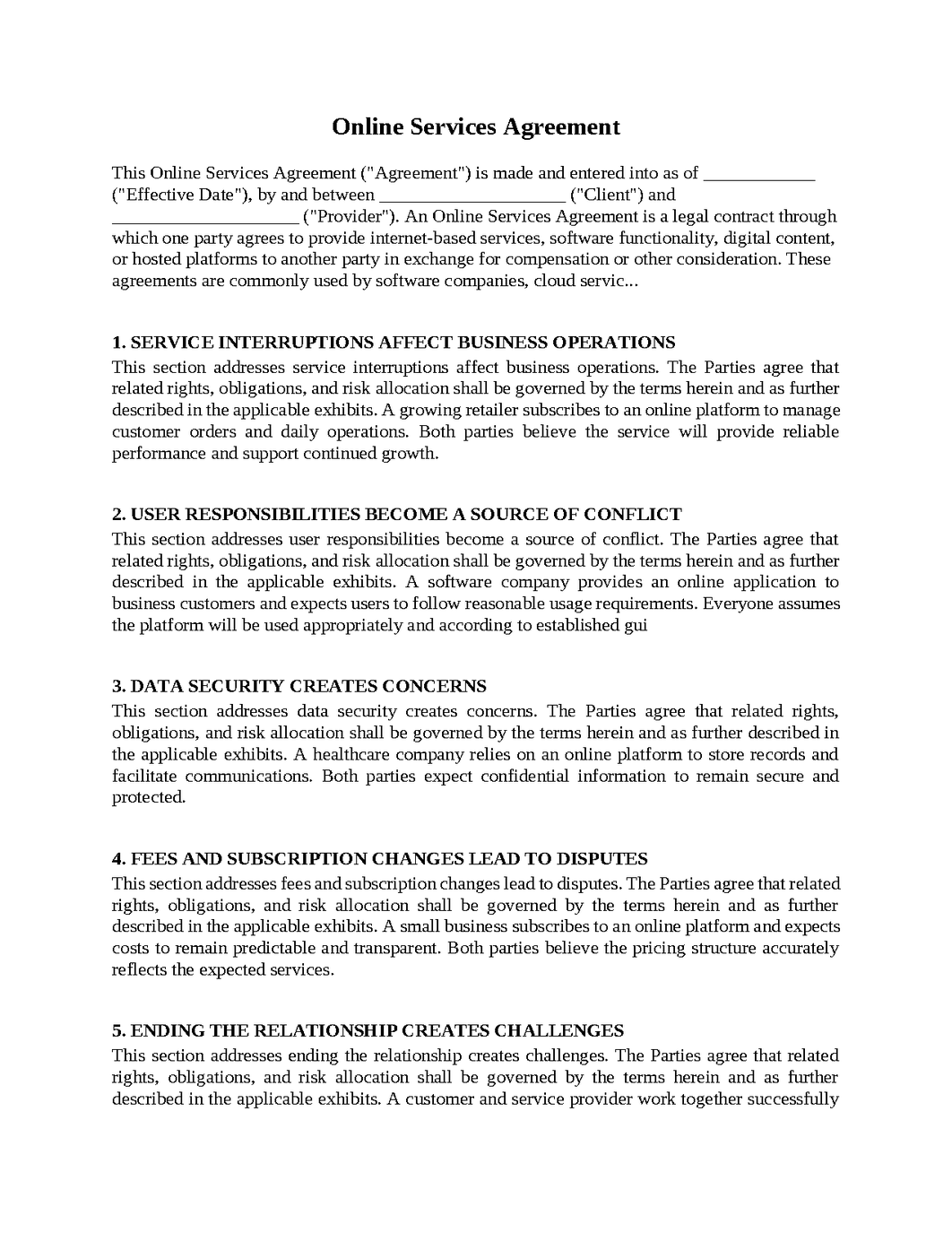
Online Services Agreement
An Online Services Agreement is a legal contract through which one party agrees to provide internet-based services, software functionality, digital content, or hosted platforms to another party in exchange for compensation or other consideration. These agreements are commonly used by software companies, cloud service providers, e-commerce businesses, consultants, content creators, and technology firms seeking to deliver services through websites and online platforms. An Online Services Agreement typically addresses service availability, user responsibilities, payment terms, intellectual property rights, data security, and procedures governing disputes and termination. Because online services depend upon evolving technology and third-party systems, disputes can arise when expectations regarding performance and responsibilities are not documented clearly. A carefully drafted Online Services Agreement helps establish certainty and protect the interests of both service providers and customers.
Service Interruptions Affect Business Operations
A growing retailer subscribes to an online platform to manage customer orders and daily operations. Both parties believe the service will provide reliable performance and support continued growth.
Initially, the platform functions efficiently and operations proceed without difficulty. Over time, however, unexpected outages begin disrupting customer transactions and causing delays.
The customer believes reliable access is essential because the business depends upon uninterrupted service. The provider believes temporary interruptions are unavoidable and argues that reasonable efforts are made to restore functionality promptly. As disruptions become more frequent, tensions emerge regarding service expectations.
To help avoid this problem, an Online Services Agreement should clearly establish service levels and define the procedures governing outages and maintenance activities.
User Responsibilities Become a Source of Conflict
A software company provides an online application to business customers and expects users to follow reasonable usage requirements. Everyone assumes the platform will be used appropriately and according to established guidelines.
As the customer base expands, certain users engage in activities that place unusual demands on the system or violate acceptable use policies. Questions arise regarding whether restrictions are being enforced consistently.
The provider believes usage limitations are necessary because protecting system stability benefits all customers. The users believe flexibility is important and argue that evolving business needs require broader access. As system demands increase, disagreements emerge regarding acceptable use.
To help prevent these issues, an Online Services Agreement should clearly establish user responsibilities and define prohibited activities and usage limitations.
Data Security Creates Concerns
A healthcare company relies on an online platform to store records and facilitate communications. Both parties expect confidential information to remain secure and protected.
As cyber threats evolve, concerns arise regarding unauthorized access and the possibility of data breaches. Questions emerge regarding whether sufficient safeguards are in place.
The customer believes protecting information is essential because privacy obligations and customer trust depend upon strong security measures. The provider believes reasonable protections have been implemented and argues that no technology system can eliminate every risk. As security concerns increase, tensions develop regarding accountability.
To help avoid these problems, an Online Services Agreement should clearly establish data security obligations and define the responsibilities associated with protecting information.
Fees and Subscription Changes Lead to Disputes
A small business subscribes to an online platform and expects costs to remain predictable and transparent. Both parties believe the pricing structure accurately reflects the expected services.
As new features and capabilities are introduced, subscription fees increase and service tiers change. Questions arise regarding whether additional charges are justified.
The customer believes pricing stability is important because technology expenses affect budgets and long-term planning. The provider believes changing market conditions and expanded services justify revised pricing and argues that innovation requires additional investment. As costs increase, disagreements emerge regarding compensation and service levels.
To help prevent these issues, an Online Services Agreement should clearly establish payment terms and define how pricing changes and service modifications will be communicated.
Ending the Relationship Creates Challenges
A customer and service provider work together successfully for many years and gradually integrate the platform into daily operations. Both parties assume the relationship will continue indefinitely and organize future plans around that expectation.
Eventually, changing priorities lead the customer to adopt a different platform. Questions arise regarding access to stored data, outstanding fees, and the procedures necessary to transition to another provider.
The customer believes a smooth transition is essential because business continuity depends upon preserving information and minimizing disruptions. The provider believes contractual obligations should be satisfied before providing additional assistance and expects its rights to be respected. As the relationship concludes, disagreements emerge regarding the obligations that survive termination.
To help avoid this problem, an Online Services Agreement should clearly establish termination procedures and identify the rights and responsibilities that continue after the relationship ends.
Online Services Agreements are valuable tools that allow businesses and consumers to access technology and digital resources efficiently. However, issues involving service interruptions, user responsibilities, data security, pricing changes, and post-termination obligations can become significant sources of conflict when expectations are not documented clearly. A carefully drafted Online Services Agreement provides a structured framework for allocating responsibilities and protecting the interests of both providers and customers. When prepared thoughtfully, it can reduce uncertainty, strengthen business relationships, encourage transparency, and provide the foundation necessary for successful long-term online services.

Get started with Upsign today!
Easily send, sign and track your documents