

Network Services Agreement
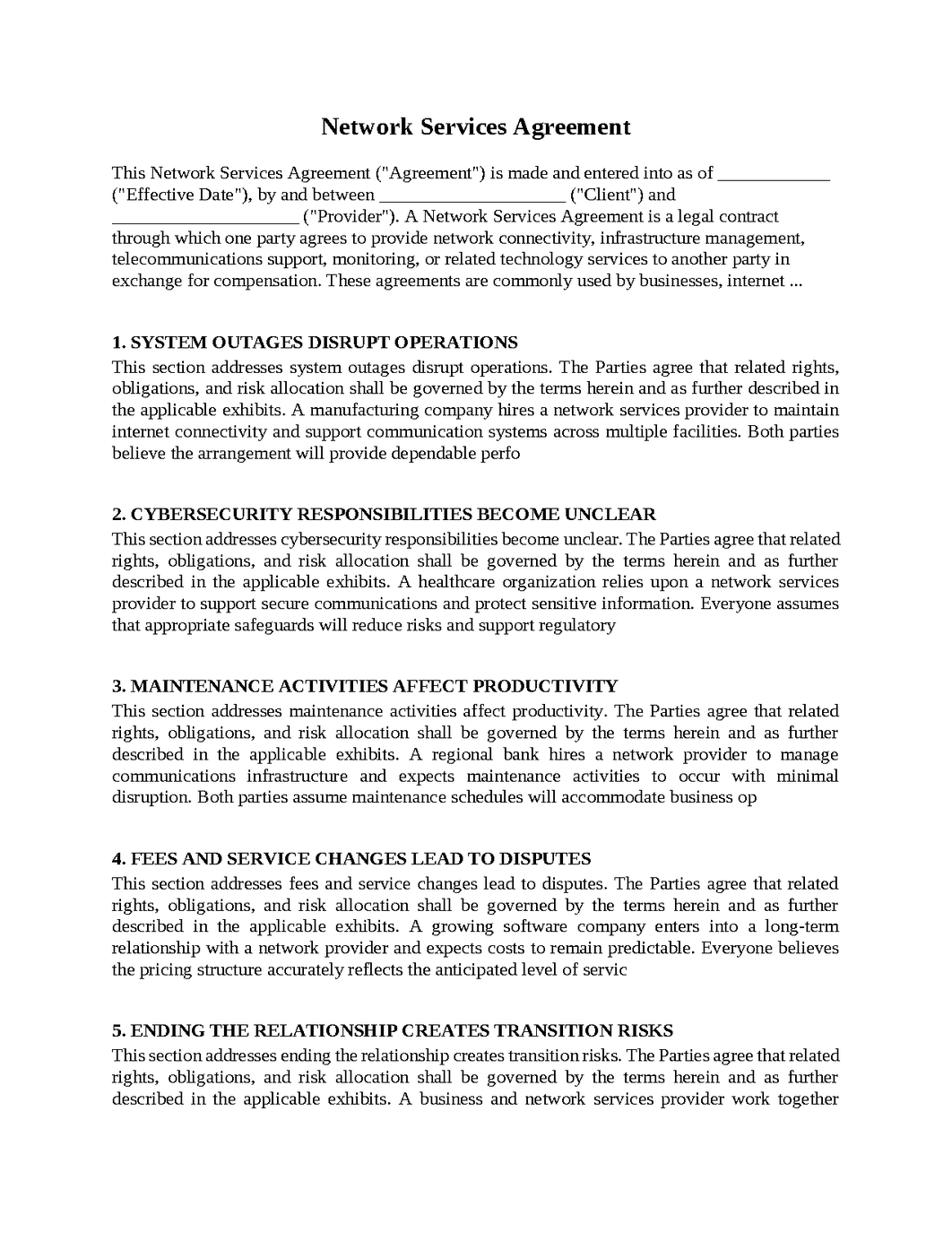
A Network Services Agreement is a legal contract through which one party agrees to provide network connectivity, infrastructure management, telecommunications support, monitoring, or related technology services to another party in exchange for compensation. These agreements are commonly used by businesses, internet service providers, managed service providers, healthcare organizations, financial institutions, and data centers seeking reliable communication and information systems. A Network Services Agreement typically addresses service levels, response times, security obligations, fees, maintenance responsibilities, and procedures governing disputes and termination. Because network availability is essential to daily operations, disputes can arise when expectations regarding performance and responsibilities are not documented clearly. A carefully drafted Network Services Agreement helps establish certainty and protect the interests of both customers and service providers.
System Outages Disrupt Operations
A manufacturing company hires a network services provider to maintain internet connectivity and support communication systems across multiple facilities. Both parties believe the arrangement will provide dependable performance and minimize disruptions.
Initially, systems operate efficiently and employees experience few interruptions. Over time, however, unexpected outages begin affecting production schedules and delaying customer orders.
The company believes the provider should maintain higher levels of reliability because uninterrupted service was one of the primary reasons for outsourcing network management. The provider believes certain interruptions resulted from external factors and argues that reasonable efforts were made to restore service promptly. As downtime increases, tensions emerge regarding responsibility for the disruptions.
To help avoid this problem, a Network Services Agreement should clearly establish service levels and define expectations regarding availability and response times.
Cybersecurity Responsibilities Become Unclear
A healthcare organization relies upon a network services provider to support secure communications and protect sensitive information. Everyone assumes that appropriate safeguards will reduce risks and support regulatory compliance.
Following a security incident, questions arise regarding whether sufficient protections were implemented and whether both parties fulfilled their obligations. Concerns increase regarding the handling of confidential information.
The healthcare provider believes the service company should bear responsibility because specialized expertise was one of the primary reasons for entering into the relationship. The provider believes security obligations are shared and argues that no network environment can eliminate every risk. As investigations and expenses increase, disagreements emerge regarding accountability.
To help prevent these issues, a Network Services Agreement should clearly establish security responsibilities and define the procedures governing data protection.
Maintenance Activities Affect Productivity
A regional bank hires a network provider to manage communications infrastructure and expects maintenance activities to occur with minimal disruption. Both parties assume maintenance schedules will accommodate business operations.
As upgrades and repairs become necessary, employees experience unexpected interruptions during important business hours. Questions arise regarding scheduling and advance notice.
The bank believes maintenance should be coordinated carefully because uninterrupted operations are essential to customer service. The provider believes periodic interruptions are unavoidable and argues that improvements are necessary to maintain long-term reliability. As disruptions continue, tensions develop regarding maintenance procedures.
To help avoid these problems, a Network Services Agreement should clearly establish maintenance schedules and define notification requirements for planned service interruptions.
Fees and Service Changes Lead to Disputes
A growing software company enters into a long-term relationship with a network provider and expects costs to remain predictable. Everyone believes the pricing structure accurately reflects the anticipated level of service.
As operations expand, additional bandwidth and support services become necessary. Questions arise regarding price increases and whether certain services are included under the original agreement.
The customer believes pricing should remain transparent because technology expenses affect budgets and long-term planning. The provider believes increased demand and changing requirements justify additional charges. As invoices increase, disagreements emerge regarding compensation and service levels.
To help prevent these issues, a Network Services Agreement should clearly establish pricing provisions and define how changes to services and fees will be handled.
Ending the Relationship Creates Transition Risks
A business and network services provider work together successfully for many years and gradually integrate systems and operational processes. Both parties assume the relationship will continue indefinitely and organize their activities around that expectation.
Eventually, changing priorities lead the business to select another provider. Questions arise regarding equipment, account transfers, documentation, and responsibilities involving ongoing support.
The customer believes a smooth transition is necessary to avoid interruptions and preserve operational continuity. The provider believes outstanding obligations should be resolved before providing additional assistance and expects contractual rights to be respected. As the relationship concludes, disagreements emerge regarding the obligations that survive termination.
To help avoid this problem, a Network Services Agreement should clearly establish termination procedures and identify the rights and responsibilities that continue after the relationship ends.
Network Services Agreements are valuable tools that allow organizations to maintain reliable communications and technology infrastructure while relying on specialized expertise. However, issues involving outages, cybersecurity concerns, maintenance activities, pricing disputes, and post-termination obligations can become significant sources of conflict when expectations are not documented clearly. A carefully drafted Network Services Agreement provides a structured framework for allocating responsibilities and protecting the interests of both customers and service providers. When prepared thoughtfully, it can reduce uncertainty, strengthen business relationships, improve operational stability, and provide the foundation necessary for dependable network services.

Get started with Upsign today!
Easily send, sign and track your documents