

Information Technology Services Agreement
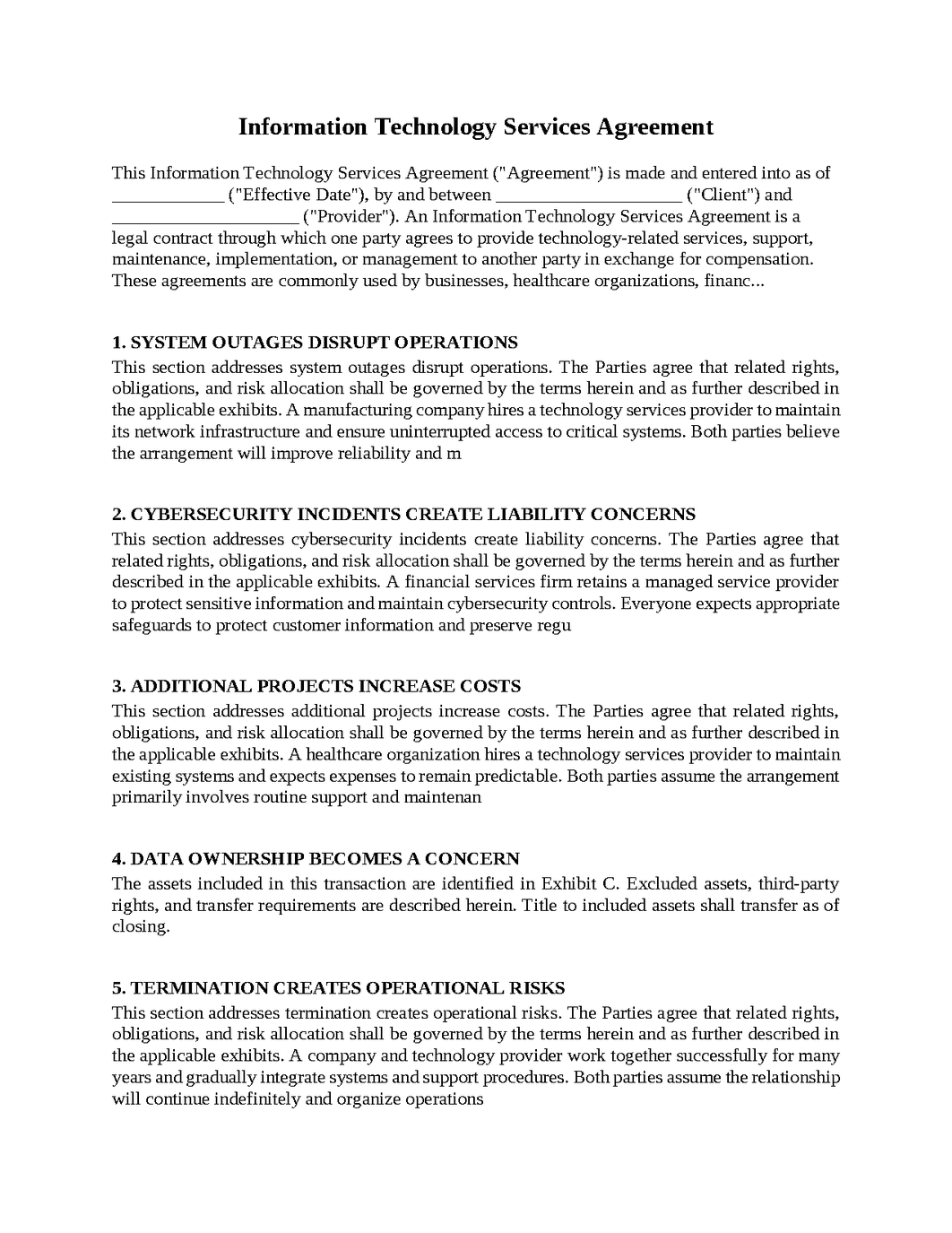
An Information Technology Services Agreement is a legal contract through which one party agrees to provide technology-related services, support, maintenance, implementation, or management to another party in exchange for compensation. These agreements are commonly used by businesses, healthcare organizations, financial institutions, manufacturers, software companies, and managed service providers seeking to maintain and improve critical technology systems. An Information Technology Services Agreement typically addresses the scope of services, response times, service levels, fees, security requirements, intellectual property rights, and procedures governing termination and disputes. Because modern organizations depend heavily on technology, disputes can arise when expectations regarding performance and responsibilities are not documented clearly. A carefully drafted Information Technology Services Agreement helps establish certainty and protect the interests of both providers and customers.
System Outages Disrupt Operations
A manufacturing company hires a technology services provider to maintain its network infrastructure and ensure uninterrupted access to critical systems. Both parties believe the arrangement will improve reliability and minimize disruptions.
For several years, systems operate smoothly and employees experience few technical problems. Eventually, however, a major outage prevents access to important applications and delays customer orders.
The company believes the service provider should have prevented the disruption because maintaining system availability was one of the primary reasons for outsourcing technology support. The provider believes unexpected failures and external factors contributed to the outage and argues that reasonable efforts were made to restore operations quickly. As losses and customer complaints increase, tensions emerge regarding responsibility for the downtime.
To help avoid this problem, an Information Technology Services Agreement should clearly establish service levels and define expectations regarding system availability and response times.
Cybersecurity Incidents Create Liability Concerns
A financial services firm retains a managed service provider to protect sensitive information and maintain cybersecurity controls. Everyone expects appropriate safeguards to protect customer information and preserve regulatory compliance.
After a cyberattack compromises confidential data, questions arise regarding whether recommended security measures were implemented and whether additional precautions should have been taken.
The client believes the provider should bear responsibility because protecting information systems was one of the central purposes of the engagement. The provider believes management decisions and user behavior contributed to the incident and argues that no security system can eliminate every risk. As investigations and legal expenses increase, disagreements emerge regarding liability.
To help prevent these issues, an Information Technology Services Agreement should clearly establish cybersecurity responsibilities and define the limitations applicable to security services.
Additional Projects Increase Costs
A healthcare organization hires a technology services provider to maintain existing systems and expects expenses to remain predictable. Both parties assume the arrangement primarily involves routine support and maintenance.
As operations expand, the organization requests software upgrades, cloud migrations, and new integrations that require substantial additional work. Questions arise regarding whether those projects are included within the original agreement.
The client believes many of the requests are natural extensions of the existing relationship because they support ongoing operations. The provider believes the additional services involve separate projects requiring additional compensation. As invoices increase, tensions develop regarding the scope of work.
To help avoid these problems, an Information Technology Services Agreement should clearly establish the scope of services and define how additional projects and expenses will be approved.
Data Ownership Becomes a Concern
A growing company relies upon an outside technology provider to host applications and maintain databases. Everyone expects access to information and continuity of operations to remain secure.
Over time, questions arise regarding ownership of backups, system documentation, and proprietary configurations developed during the relationship. Concerns increase when the company begins evaluating alternative service providers.
The client believes all data and supporting materials should remain under its control because the information is essential to the business. The provider believes certain tools and methodologies remain proprietary and argues that ownership rights should be limited accordingly. As transition discussions begin, disagreements emerge regarding intellectual property and access rights.
To help prevent these issues, an Information Technology Services Agreement should clearly establish ownership rights and define which materials belong to each party.
Termination Creates Operational Risks
A company and technology provider work together successfully for many years and gradually integrate systems and support procedures. Both parties assume the relationship will continue indefinitely and organize operations around that expectation.
Eventually, changing priorities lead the company to bring technology operations in-house. Questions arise regarding passwords, system documentation, outstanding invoices, and transition assistance.
The company believes a smooth transfer is necessary to avoid disruptions and preserve business continuity. The provider believes its obligations should conclude according to the agreement and expects all outstanding balances to be satisfied before providing additional support. As the relationship comes to an end, disagreements emerge regarding the rights and responsibilities that survive termination.
To help avoid this problem, an Information Technology Services Agreement should clearly establish termination procedures and identify the obligations that continue after the relationship ends.
Information Technology Services Agreements are valuable tools that allow organizations to obtain specialized expertise and maintain critical technology systems. However, issues involving system outages, cybersecurity incidents, expanding projects, ownership rights, and post-termination obligations can become significant sources of conflict when expectations are not documented clearly. A carefully drafted Information Technology Services Agreement provides a structured framework for allocating responsibilities and protecting the interests of both providers and customers. When prepared thoughtfully, it can reduce uncertainty, strengthen business relationships, support operational stability, and provide the foundation necessary for long-term technology success.

Get started with Upsign today!
Easily send, sign and track your documents