

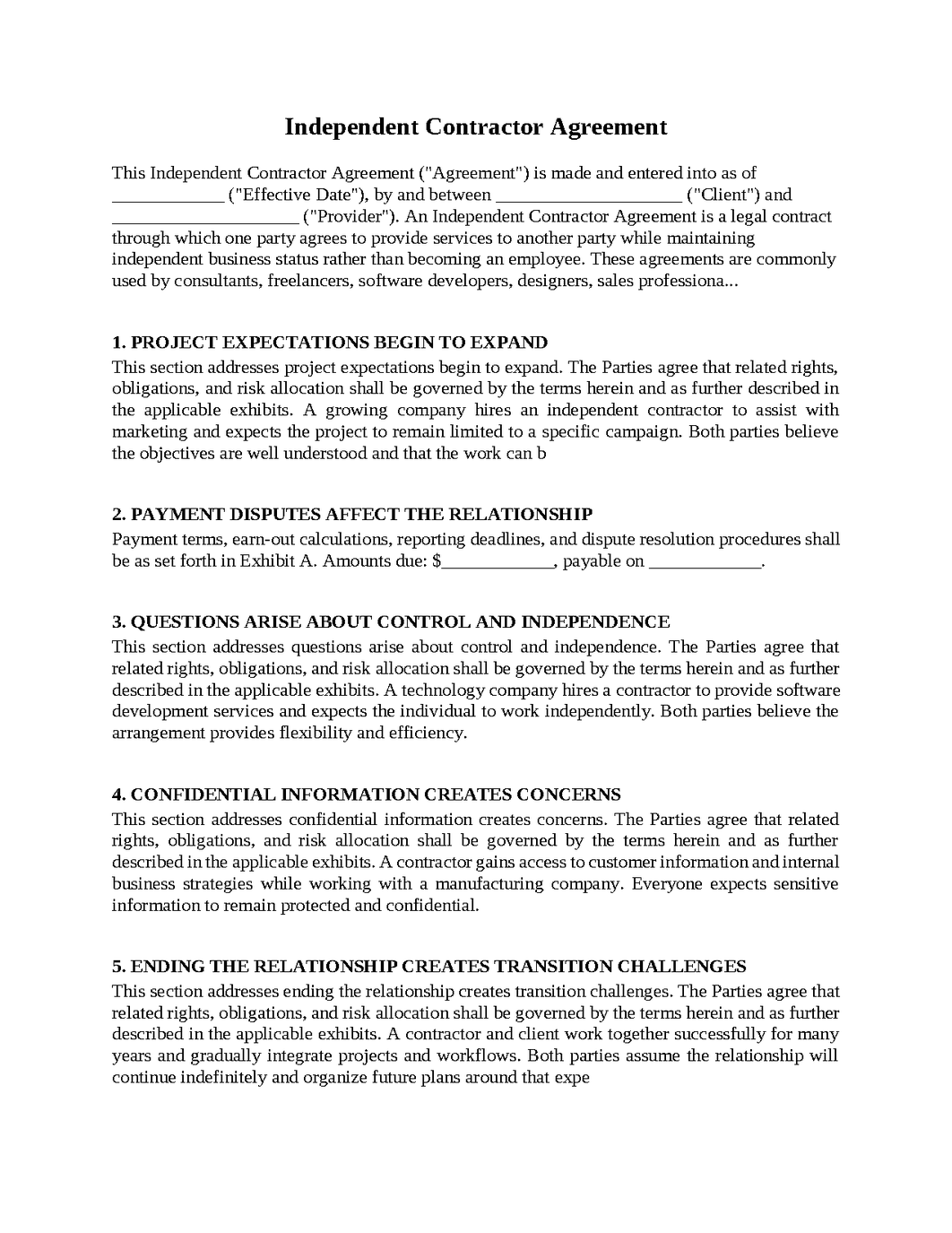
Independent Contractor Agreement
An Independent Contractor Agreement is a legal contract through which one party agrees to provide services to another party while maintaining independent business status rather than becoming an employee. These agreements are commonly used by consultants, freelancers, software developers, designers, sales professionals, construction specialists, and businesses seeking flexible access to specialized expertise. An Independent Contractor Agreement typically addresses the scope of services, compensation, deadlines, confidentiality obligations, ownership of work product, and procedures governing termination and disputes. Because independent contractors operate outside traditional employment relationships, disputes can arise when expectations regarding responsibilities and rights are not documented clearly. A carefully drafted Independent Contractor Agreement helps establish certainty and protect the interests of both contractors and clients.
Project Expectations Begin to Expand
A growing company hires an independent contractor to assist with marketing and expects the project to remain limited to a specific campaign. Both parties believe the objectives are well understood and that the work can be completed efficiently.
As the relationship develops, management begins requesting additional services involving social media, content creation, and customer outreach. The scope gradually expands beyond what was originally discussed.
The company believes the additional tasks are natural extensions of the engagement because they support the same overall goals. The contractor believes the expanded responsibilities represent new work and argues that additional compensation should be provided. As requests continue increasing, tensions emerge regarding the services included within the agreement.
To help avoid this problem, an Independent Contractor Agreement should clearly establish the scope of services and define how changes and additional work will be approved.
Payment Disputes Affect the Relationship
A contractor agrees to provide consulting services for a startup and expects compensation to be paid promptly according to the agreed schedule. Everyone involved assumes that invoicing and payments will proceed smoothly.
As business conditions become more difficult, the company delays several payments and questions certain invoices. The contractor becomes concerned about cash flow and the ability to continue providing services.
The contractor believes timely payment is essential because independent professionals rely on predictable income to operate their businesses. The company believes delays are temporary and argues that concerns regarding deliverables justify withholding certain amounts. As unpaid balances increase, disagreements emerge regarding compensation obligations.
To help prevent these issues, an Independent Contractor Agreement should clearly establish payment terms and define procedures governing disputed invoices.
Questions Arise About Control and Independence
A technology company hires a contractor to provide software development services and expects the individual to work independently. Both parties believe the arrangement provides flexibility and efficiency.
Over time, the company begins imposing work schedules, requiring attendance at meetings, and directing day-to-day activities. Questions arise regarding whether the relationship still reflects independent contractor status.
The contractor believes maintaining independence is essential because business flexibility and tax treatment depend on that status. The company believes close supervision is necessary to ensure quality and timely performance. As responsibilities become more structured, tensions develop regarding the degree of control that is appropriate.
To help avoid these problems, an Independent Contractor Agreement should clearly establish the nature of the relationship and define the responsibilities of each party.
Confidential Information Creates Concerns
A contractor gains access to customer information and internal business strategies while working with a manufacturing company. Everyone expects sensitive information to remain protected and confidential.
Following the completion of several projects, concerns arise regarding the use of proprietary information and whether confidential materials have been adequately safeguarded.
The company believes protecting sensitive information is essential because competitive advantages depend upon confidentiality. The contractor believes reasonable precautions have been taken and argues that industry knowledge and experience cannot be restricted completely. As concerns about disclosure increase, disagreements emerge regarding confidentiality obligations.
To help prevent these issues, an Independent Contractor Agreement should clearly establish confidentiality requirements and define the treatment of sensitive information.
Ending the Relationship Creates Transition Challenges
A contractor and client work together successfully for many years and gradually integrate projects and workflows. Both parties assume the relationship will continue indefinitely and organize future plans around that expectation.
Eventually, changing priorities lead the company to discontinue the engagement. Questions arise regarding unfinished work, access to files, final invoices, and ongoing support obligations.
The company believes a smooth transition is necessary to avoid disruptions and preserve business continuity. The contractor believes compensation should be paid for all completed work and expects contractual rights to be respected. As the relationship concludes, disagreements emerge regarding the responsibilities that survive termination.
To help avoid this problem, an Independent Contractor Agreement should clearly establish termination procedures and identify the rights and obligations that continue after the relationship ends.
Independent Contractor Agreements are valuable tools that allow businesses to obtain specialized expertise while preserving flexibility for both parties. However, issues involving expanding project scopes, payment disputes, independence concerns, confidentiality obligations, and post-termination responsibilities can become significant sources of conflict when expectations are not documented clearly. A carefully drafted Independent Contractor Agreement provides a structured framework for allocating responsibilities and protecting the interests of both contractors and clients. When prepared thoughtfully, it can reduce uncertainty, strengthen professional relationships, encourage successful collaboration, and provide the foundation necessary for productive working arrangements.

Get started with Upsign today!
Easily send, sign and track your documents