

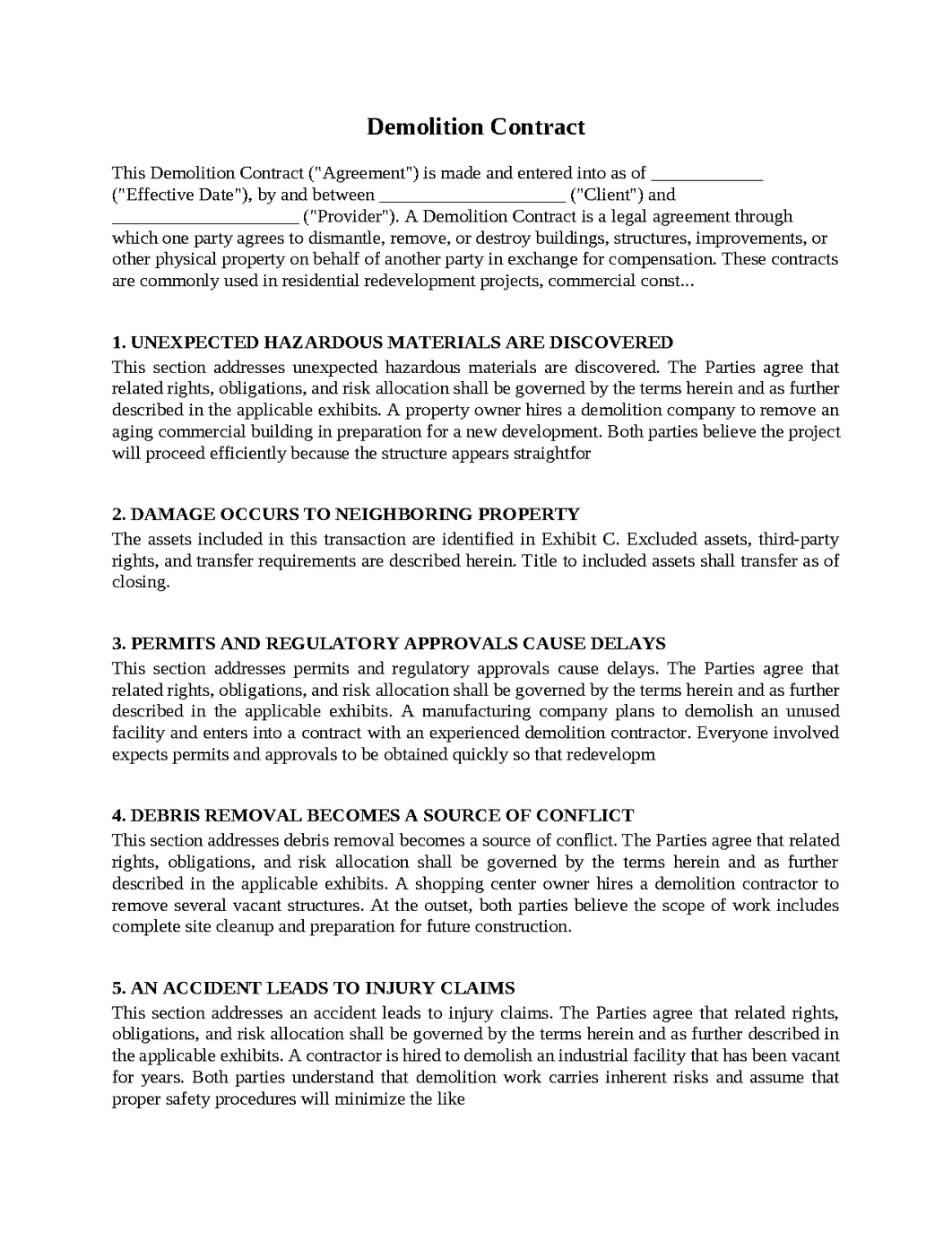
Demolition Contract
A Demolition Contract is a legal agreement through which one party agrees to dismantle, remove, or destroy buildings, structures, improvements, or other physical property on behalf of another party in exchange for compensation. These contracts are commonly used in residential redevelopment projects, commercial construction, industrial site preparation, municipal improvements, and environmental remediation efforts. A Demolition Contract typically addresses the scope of work, permits, hazardous materials, debris removal, insurance requirements, project timelines, and the allocation of liability for damages and injuries. Because demolition projects involve significant safety concerns and potential risks to neighboring properties, disputes can arise when expectations regarding responsibilities and performance are not documented clearly. A carefully drafted Demolition Contract helps establish certainty and protect the interests of both property owners and contractors.
Unexpected Hazardous Materials Are Discovered
A property owner hires a demolition company to remove an aging commercial building in preparation for a new development. Both parties believe the project will proceed efficiently because the structure appears straightforward and no major environmental concerns have been identified.
After work begins, the contractor discovers asbestos-containing materials and evidence of other hazardous substances hidden within portions of the building. Local regulations require additional testing and specialized removal procedures before demolition can continue.
The property owner believes the contractor should have anticipated these issues based on its experience with similar projects. The contractor argues that the hazardous materials were concealed and that the additional work falls outside the original scope of the agreement. As costs and delays increase, both parties begin disagreeing over who should bear the unexpected expenses.
To help avoid this problem, a Demolition Contract should clearly address hazardous materials and establish procedures for handling conditions that are discovered after work begins.
Damage Occurs to Neighboring Property
A developer hires a demolition company to clear a site located in a busy urban area. Both parties understand that nearby buildings and businesses require careful planning and expect the work to proceed without affecting neighboring properties.
During demolition operations, vibrations and debris cause damage to adjacent structures and disrupt neighboring businesses. Property owners begin filing complaints and demanding compensation for repairs and lost revenue.
The developer believes the contractor should be responsible because the damage resulted from demolition activities under the contractor's control. The contractor argues that certain conditions existed before the project began and believes some claims are exaggerated. As additional complaints emerge, both parties become increasingly concerned about liability and insurance coverage.
To help prevent these issues, a Demolition Contract should clearly address insurance requirements and establish responsibility for damages affecting neighboring properties.
Permits and Regulatory Approvals Cause Delays
A manufacturing company plans to demolish an unused facility and enters into a contract with an experienced demolition contractor. Everyone involved expects permits and approvals to be obtained quickly so that redevelopment can begin on schedule.
As preparations progress, unexpected regulatory requirements and permitting issues begin delaying the project. Government agencies request additional information and impose conditions that neither party anticipated during negotiations.
The property owner believes the contractor should have managed the permitting process more effectively and accounted for the regulatory requirements. The contractor argues that certain approvals fall outside its responsibilities and that changing regulations created delays beyond its control. As deadlines are missed and costs increase, frustrations begin affecting the relationship.
To help avoid these problems, a Demolition Contract should clearly establish responsibility for permits and define how delays caused by regulatory agencies will be handled.
Debris Removal Becomes a Source of Conflict
A shopping center owner hires a demolition contractor to remove several vacant structures. At the outset, both parties believe the scope of work includes complete site cleanup and preparation for future construction.
As demolition nears completion, disagreements arise regarding debris disposal, grading requirements, and the removal of underground materials. The owner expects the property to be delivered in a condition suitable for immediate development.
The contractor believes the original agreement only required demolition of the visible structures and argues that additional site work should be treated as extra services. The owner believes complete cleanup was always implied and becomes frustrated by the prospect of additional expenses. As the project reaches its final stages, tensions increase regarding what obligations remain unfinished.
To help prevent these issues, a Demolition Contract should clearly define the scope of debris removal and establish what site preparation services are included in the contract price.
An Accident Leads to Injury Claims
A contractor is hired to demolish an industrial facility that has been vacant for years. Both parties understand that demolition work carries inherent risks and assume that proper safety procedures will minimize the likelihood of accidents.
Despite precautions, an accident occurs that results in injuries to workers and raises concerns about compliance with safety regulations. Investigations begin, and questions emerge regarding supervision, training, and the adequacy of safety measures.
The property owner believes the contractor should bear responsibility because it controlled the worksite and managed daily operations. The contractor argues that certain site conditions and owner directives contributed to the accident and believes liability should be shared. As insurance carriers and attorneys become involved, the parties begin disputing responsibility for the resulting claims and expenses.
To help avoid this problem, a Demolition Contract should clearly address safety obligations and establish the allocation of responsibility for injuries and workplace accidents.
Demolition Contracts are essential tools for managing complex projects involving the removal of structures and preparation of sites for future use. However, issues involving hazardous materials, property damage, permitting delays, debris removal, and workplace injuries can become significant sources of conflict when expectations are not documented clearly. A carefully drafted Demolition Contract provides a structured framework for allocating risks and defining responsibilities throughout the project. When prepared thoughtfully, it can reduce uncertainty, improve safety, preserve working relationships, and provide the foundation necessary for successful demolition and redevelopment projects.

Get started with Upsign today!
Easily send, sign and track your documents