

Affidavit of Identity Theft
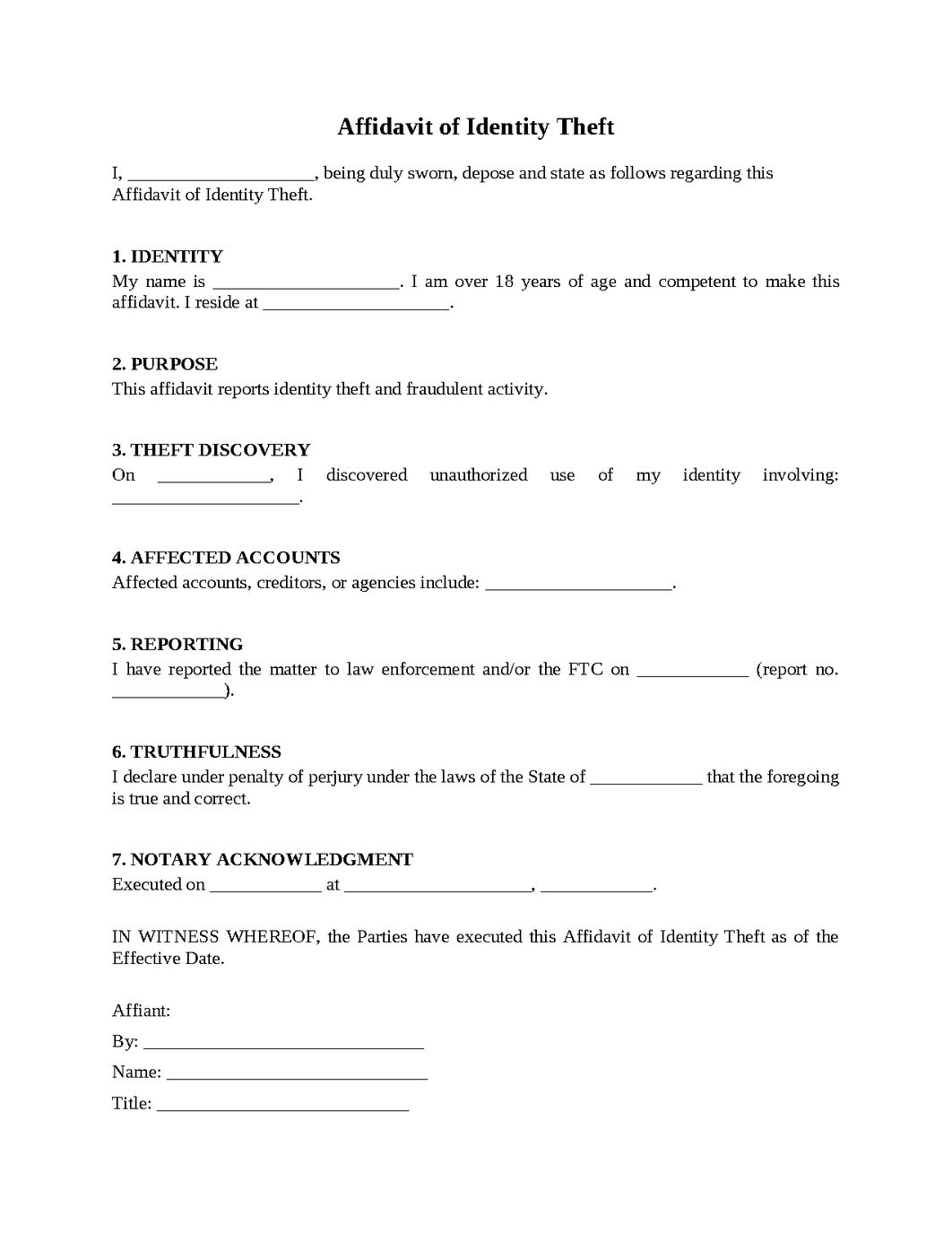
An Affidavit of Identity Theft is a sworn legal statement used by an individual to formally declare that personal information, financial accounts, identification documents, or other sensitive data were used by another person without authorization. These affidavits are commonly used when disputing fraudulent debts, unauthorized credit accounts, banking transactions, tax filings, government benefits, criminal impersonation, and other forms of identity-related fraud. Financial institutions, credit bureaus, law enforcement agencies, creditors, and government organizations often rely upon these affidavits when investigating claims of identity theft and determining whether fraudulent obligations should be removed or corrected. Because identity theft situations frequently involve incomplete information, disputed transactions, and multiple parties, conflicts can arise when the circumstances are not documented clearly. A carefully prepared Affidavit of Identity Theft helps establish a formal record of the fraud and supports efforts to restore the victim's financial and legal standing. fileciteturn3file0
A Victim Discovers Accounts That Were Never Opened
A consumer reviews a credit report while preparing to apply for a mortgage.
During the review, several unfamiliar credit accounts appear that the individual does not recognize. The accounts were opened years earlier and contain balances that have been reported as delinquent.
The individual immediately contacts the creditors and explains that the accounts were never opened personally. The creditors, however, possess applications, identifying information, and account records that appear to connect the accounts to the consumer.
As the investigation progresses, it becomes apparent that someone may have used stolen personal information to obtain credit fraudulently. The consumer insists the debts are not legitimate, while the creditors seek proof that identity theft actually occurred.
What begins as a routine credit review becomes a complex dispute involving multiple lenders and years of financial history.
To help avoid these problems, an Affidavit of Identity Theft should clearly identify the disputed accounts, describe the unauthorized activity, and provide a sworn statement explaining why the obligations do not belong to the victim.
Unauthorized Transactions Appear in Financial Accounts
A business owner regularly monitors company banking and payment activity.
While reviewing account statements, several transactions appear that were never authorized by the business. The transfers involve substantial amounts of money and were directed to unfamiliar recipients.
The financial institution begins investigating the activity and requests information regarding account access, internal controls, and transaction history. The business owner believes the transactions resulted from identity theft or account compromise.
The institution acknowledges the concern but must determine whether the transactions were truly unauthorized or whether someone with legitimate access initiated them. Both parties review records in an effort to reconstruct what occurred.
The investigation becomes more complicated because electronic transactions often leave limited evidence regarding the identity of the person initiating them.
To help prevent these issues, an Affidavit of Identity Theft should describe the disputed transactions, identify when they were discovered, and document the basis for believing they were unauthorized.
A Fraudulent Tax Filing Creates Problems
A taxpayer attempts to file an annual tax return electronically.
The filing is rejected because records indicate that a return has already been submitted using the taxpayer's Social Security number. The taxpayer immediately realizes that someone else may have filed a fraudulent return in an effort to obtain a refund.
Government agencies begin reviewing the matter and request documentation supporting the taxpayer's claim. The taxpayer must demonstrate that the prior filing was unauthorized and that the personal information involved was used improperly.
As the process unfolds, delays affect refunds, tax compliance obligations, and communications with government agencies. The taxpayer becomes increasingly frustrated because correcting the problem may take months.
What should have been a routine filing process becomes a lengthy identity theft investigation.
To help avoid these problems, an Affidavit of Identity Theft should clearly describe the fraudulent filing activity and provide a sworn statement supporting the victim's efforts to correct government records.
Criminal Activity Is Linked to the Wrong Person
An individual receives notice regarding a criminal citation, warrant, or legal proceeding involving conduct that never occurred personally.
After contacting the appropriate authorities, the individual learns that someone may have used stolen identification documents or personal information during interactions with law enforcement. The resulting records now appear connected to the victim's identity.
The individual attempts to explain the situation and provide evidence showing that another person was responsible. Authorities must evaluate the claim carefully because official records indicate that the victim's identity was used.
The situation becomes stressful because the consequences may affect employment opportunities, professional licenses, and personal reputation.
The victim finds it difficult to prove what happened without creating a clear and formal record of the identity theft.
To help prevent these issues, an Affidavit of Identity Theft should document the unauthorized use of personal information and provide detailed information supporting the victim's claim that the activity was committed by another individual.
Creditors Continue Collection Efforts After Fraud Is Reported
A consumer discovers that identity theft resulted in multiple fraudulent debts.
The consumer reports the matter to creditors, submits supporting documentation, and requests that collection activity stop immediately. Some creditors respond quickly and begin investigating the accounts.
Others continue collection efforts while reviewing the information provided. Collection notices, phone calls, and negative credit reporting continue despite the consumer's repeated explanations.
The creditors believe additional verification may be necessary before removing the accounts. The consumer believes sufficient evidence has already been provided to establish that the debts are fraudulent.
The disagreement prolongs the recovery process and increases the financial and emotional burden on the victim.
To help avoid these problems, an Affidavit of Identity Theft should provide a detailed account of the fraud, identify affected accounts, and serve as formal documentation supporting requests for account correction and collection relief.
Affidavits of Identity Theft play an important role in helping victims document fraudulent activity and restore their financial and legal standing. However, issues involving unauthorized accounts, fraudulent transactions, tax filings, criminal impersonation, and ongoing collection efforts can become significant sources of conflict when the facts are not documented clearly. A carefully prepared Affidavit of Identity Theft provides a structured framework for communicating essential information to creditors, government agencies, and other interested parties. When drafted thoughtfully, it can help reduce confusion, support investigations, improve record correction efforts, and assist victims in recovering from the effects of identity theft.

Get started with Upsign today!
Easily send, sign and track your documents